


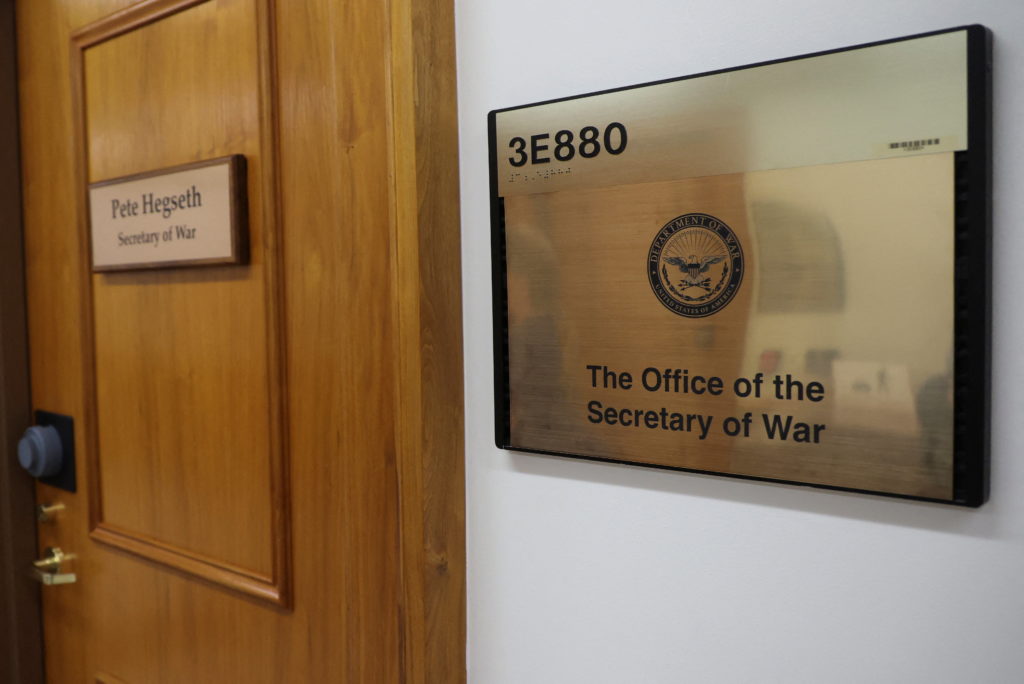
House Passes Defense Bill, Renaming Pentagon to Department of War Amid Partisan Debate
Translated from English, summarized and contextualized by DistantNews.
At a glance
News
From a news agency
New plan
- The U.S. House passed a defense policy bill that includes a $1.15 trillion spending request and would rename the Department of Defense to the Department of War.
- The bill also proposes a 5% to 7% pay raise for service members and includes controversial social policy riders, such as a prohibition on gender-related medical care under TRICARE.
- Partisan divisions were evident, with Democrats opposing steep spending increases and Republicans attaching an election overhaul bill, leading to a narrow 216-212 vote.
The U.S. House of Representatives has passed a sweeping defense policy bill, a measure that includes a substantial $1.15 trillion in national security spending and a historic renaming of the Department of Defense to the Department of War. The National Defense Authorization Act, typically a bipartisan effort, faced significant opposition this year, passing by a narrow margin of 216-212.
This bill will do that and much more. It will build the ready, capable and lethal fighting force we need to deter China and other adversaries.
Beyond the renaming and increased military funding, the bill addresses compensation for service members, proposing a pay raise ranging from 5% to 7% depending on rank. However, it also incorporates several conservative social policy riders that fueled partisan tensions. Notably, the legislation includes a prohibition on gender-related medical care within the military's TRICARE health program and eases restrictions on service members carrying privately owned firearms on base.
The partisan divide was further amplified by the decision to attach President Trump's election overhaul bill to the defense legislation. This move was aimed at pressuring the Senate to pass the SAVE America Act. House Speaker Mike Johnson is navigating these divisions, with Republican leaders insisting on its inclusion in must-pass bills.
The American people are struggling to pay their bills and we're going to put $1.6 trillion into the defense budget. It's not a reasonable thing to ask.
Despite the disagreements, House Armed Services Committee Chairman Rep. Mike Rogers stressed that the vote represents a step in a longer legislative process. He emphasized the need to reverse decades of underinvestment in the armed forces and defense industrial base, stating the bill will build a capable fighting force to deter adversaries like China. Conversely, ranking Democrat Rep. Adam Smith voiced concerns over the escalating defense budget, approaching $1.6 trillion with additional war funding, arguing it is unreasonable given domestic economic struggles. Smith also expressed apprehension about the ongoing conflict in Iran, fearing support for the defense bill implicitly endorses a war without a clear end.
We are in an incredibly, incredibly dangerous time.
DistantNews Editorial
Originally published by PBS NewsHour in English. Translated, summarized, and contextualized by our editorial team with added local perspective. Read our editorial standards.
More Stories


From Our Blog

How the Same Story Looks Different in Different Countries

What Gets Lost (and Found) When News Is Translated

The Critical Role of Diaspora Media in Global News

What Travellers Should Know About Countries with Restricted Press

A Digital Nomad's Guide to Following Local News
