


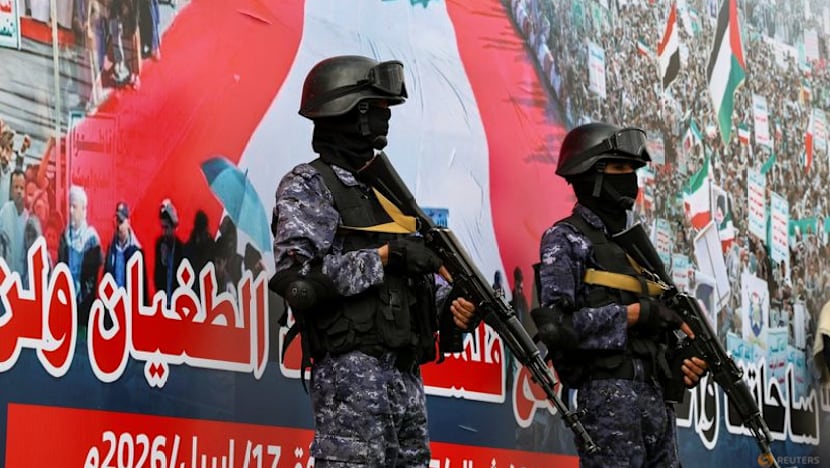
Houthis say they attacked Saudi tankers in the Red Sea, threatening new chokepoint in Iran war
Summarized and contextualized by DistantNews.
At a glance
News
Named sources
Ongoing story
- The Houthis claimed responsibility for missile and drone strikes on two Saudi oil tankers in the Red Sea, escalating tensions and threatening global oil supplies.
- This naval blockade on Saudi Arabia could create a second major chokepoint for oil, similar to Iran's actions in the Strait of Hormuz.
- The attacks have already caused some tankers to change course, raising concerns about increased costs and delivery times for oil shipments.
The Houthi movement in Yemen has escalated its conflict with Saudi Arabia, claiming to have struck two Saudi oil tankers in the Red Sea. The group announced a naval blockade on the kingdom, a move that analysts suggest could be an attempt by Iran to gain leverage in its ongoing tensions with the United States.
The Houthis said their forces carried out missile and drone strikes on two Saudi oil tankers in the Red Sea, identifying them as the Encelia and the Layla.
The attacks, which targeted the tankers Encelia and Layla, threaten to create a second critical chokepoint for global oil supplies, mirroring the disruptions caused by Iran's near-blockade of the Strait of Hormuz. The Bab el-Mandeb Strait, a crucial maritime passage at the southern end of the Red Sea, is vital for oil shipments from Saudi Arabia. If passage through this strait is severely restricted, oil must be rerouted through the Suez Canal, significantly increasing transit times and costs.
Even before these latest threats, disruptions in the Red Sea had already impacted global markets. Shipping data revealed that several tankers had altered their routes to avoid the Bab el-Mandeb Strait. On Tuesday, three tankers carrying Saudi oil bound for China and India reportedly made U-turns. The Encelia reportedly transmitted a distress call after being struck near the Saudi port of Jizan, according to a maritime security source.
Saudi state news agency SPA cited an official source as saying the Encelia was struck, causing a fire at the bow. The attack on the Layla remained unconfirmed.
The potential widening of the conflict and the strain on U.S. military resources were highlighted by current and former U.S. officials. Meanwhile, the United States military has continued its strikes on Iran, marking the twelfth consecutive night of American attacks, as directed by President Donald Trump. The situation underscores the volatile geopolitical landscape and its direct impact on international energy markets.
A maritime security source said Encelia had transmitted a distress call, reporting it had been struck by a missile near the Saudi port of Jizan in the Red Sea late on Wednesday.
DistantNews Editorial
Originally published by CNA. Summarized and contextualized by our editorial team with added local perspective. Read our editorial standards.
More Stories


From Our Blog

What Gets Lost (and Found) When News Is Translated

The Critical Role of Diaspora Media in Global News

What Travellers Should Know About Countries with Restricted Press

A Digital Nomad's Guide to Following Local News

How the Same Story Looks Different in Different Countries
