


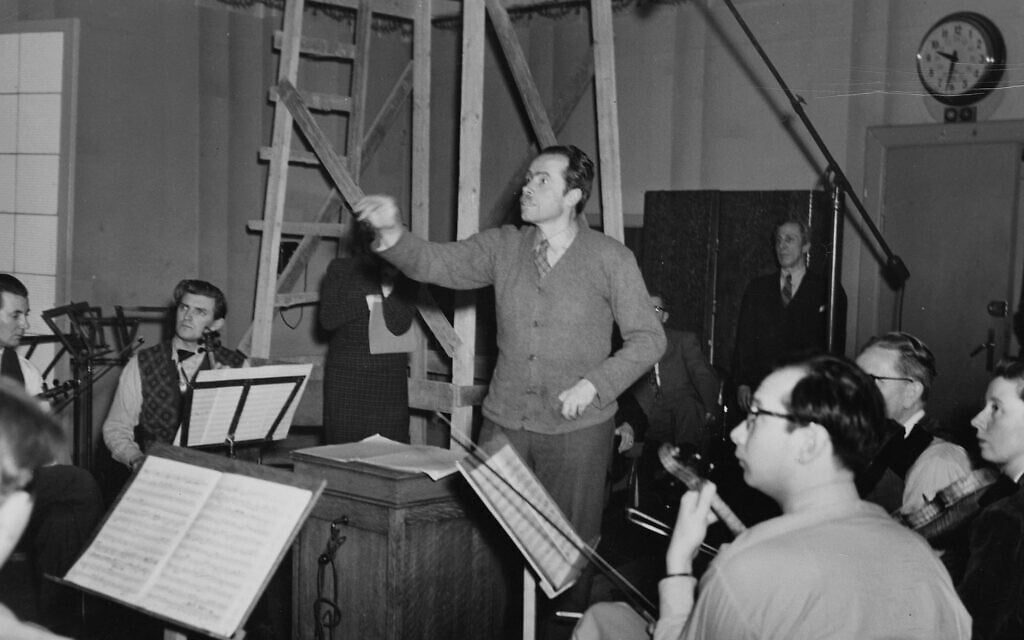
How 3 Jewish refugees from the Nazis built Iceland’s classical music scene from scratch
Summarized and contextualized by DistantNews.
At a glance
In-depth
Sources not specified
Context piece
- Three Jewish refugees from Nazi Germany built Iceland's classical music scene from the ground up.
- Robert Abraham, Victor Urbancic, and Heinz Edelstein arrived in Iceland between 1935 and 1938, fleeing persecution.
- Their efforts established institutions that continue to define Icelandic classical music today.
In the small, windswept fishing port of Reykjavik in 1935, classical music was virtually non-existent. The city, with fewer than 30,000 inhabitants, lacked a concert hall, a proper orchestra, and a dedicated conservatory. Onto this unlikely stage stepped Robert Abraham, a 22-year-old pianist from Berlin, carrying little more than hope and a desire to avoid scrutiny.
Abraham was soon joined by others fleeing Nazi persecution. In 1938, conductor Victor Urbancic arrived with his Jewish wife, Melitta, after struggling to find refuge elsewhere in Europe. Cellist and teacher Heinz Edelstein also made his way to Iceland with his family around the same time. For musicians trained in the heart of European culture, Iceland, a remote island near the Arctic Circle with a government reportedly hostile to Jewish immigration, was far from an ideal sanctuary.
Despite the challenging circumstances, these three musicians, Urbancic, Abraham, and Edelstein, embarked on a mission to build the foundations of Iceland's classical music landscape. Their dedication and expertise led to the creation of institutions that remain central to the country's musical life to this day.
The story of these refugees is now the subject of a newly translated book, "Music at World’s End: Three Refugee Musicians from Nazi Germany and Their Contribution to Iceland’s Music Life," by Icelandic musicologist Árni Heimir Ingólfsson. The book details their individual journeys to Iceland and reconstructs a crucial, yet largely untold, chapter of the nation's history, serving as a poignant reminder of the broader Holocaust era.
Victor Urbancic, born in Vienna in 1903, was a trained pianist, composer, and conductor. Though raised Catholic, his marriage to Melitta, who came from a Jewish family, made him a target under Nazi rule, ending his career. After facing closed doors in Switzerland and the United States, an old acquaintance helped him find a position in Iceland. Robert Abraham, born in Berlin in 1912, was the son of musicologist Otto Abraham and trained at the Berlin Hochschule.
DistantNews Editorial
Originally published by Times of Israel. Summarized and contextualized by our editorial team with added local perspective. Read our editorial standards.
More Stories


From Our Blog

What Gets Lost (and Found) When News Is Translated

The Critical Role of Diaspora Media in Global News

What Travellers Should Know About Countries with Restricted Press

A Digital Nomad's Guide to Following Local News

How the Same Story Looks Different in Different Countries
