


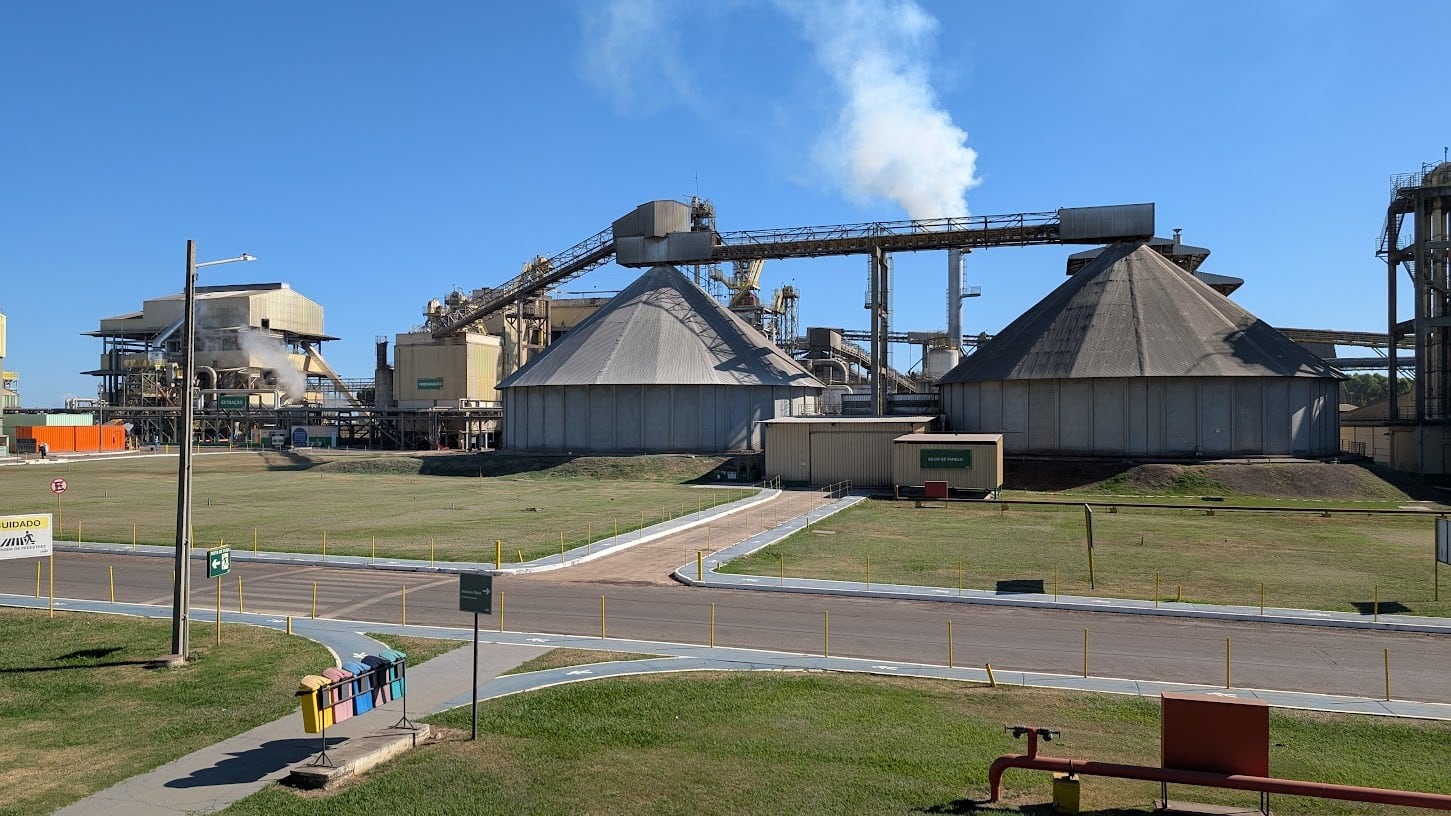
How Brazil's Mato Grosso Became an Agro-Industrial Global Leader
Translated from Spanish, summarized and contextualized by DistantNews.
At a glance
In-depth
Named sources
Context piece
- Mato Grosso, Brazil, has become a global agro-industrial powerhouse, producing 12% of the world's soybeans and leading in corn and cotton, despite soil limitations and distance from ports.
- The state's success stems from producer entrepreneurship and significant state support, fostering a strong collective organization through bodies like Famato and IMEA.
- Brazilian agricultural enterprises, such as the Bom Jesus model managing 380,000 hectares, showcase large-scale operations integrating crops and livestock, contributing to impressive economic and social development.
Twenty years ago, Brazil and Argentina's soybean and corn harvests were comparable. Today, Brazil's neighbor produces 180 million tons of soybeans compared to Argentina's 50 million, and 140 million tons of corn versus Argentina's 60 million. This dramatic divergence is not accidental but the result of strategic decisions, according to an AZ-Group report.
A delegation of producers visited Mato Grosso, Brazil, to study the dynamics of one of the world's most vibrant agro-industrial hubs. Mato Grosso, Brazil's third-largest state, faces challenges with soil quality and remoteness from export ports. However, it has achieved remarkable economic and social growth driven by producer initiative and substantial national government backing.
The state now accounts for 12% of global soybean production and 24% of Brazil's agricultural GDP, leading the nation in soybeans, corn, and cotton. Producers have established and funded a robust political representation structure, Famato, which functions as a trade association. Its technical arm, IMEA, provides crucial statistics, market analysis, and strategic projections for the entire agro-industrial chain. This highly organized collective approach, fueled by voluntary producer contributions, ensures institutions align with the sector's real needs. Notably, 204 out of 520 members of Brazil's Congress represent agro-industrial interests.
Beyond this powerful sectoral organization, Brazilian agriculture exhibits several positive attributes. AZ-Group director Diego Curat highlights four key factors. Firstly, scale: many Brazilian agribusiness ventures are vast. The delegation visited Bom Jesus, an integrated farming and livestock operation managing 380,000 hectares. This model combines soybeans, corn, cotton, eucalyptus, storage, and intensive cattle raising. The livestock system employs pasture-based rearing and intensive finishing, enabling high daily gains. The pasture-based system relies on Brachiaria grasses.
DistantNews Editorial
Originally published by La Nación in Spanish. Translated, summarized, and contextualized by our editorial team with added local perspective. Read our editorial standards.
More Stories



From Our Blog

What Gets Lost (and Found) When News Is Translated

The Critical Role of Diaspora Media in Global News

What Travellers Should Know About Countries with Restricted Press

A Digital Nomad's Guide to Following Local News

How the Same Story Looks Different in Different Countries
