


How disinformation in Congo is worsening Ebola epidemic
Summarized and contextualized by DistantNews.
At a glance
News
Sources not specified
Ongoing story
- The Democratic Republic of Congo is facing its 17th Ebola epidemic, with 397 confirmed cases and 63 deaths reported.
- Despite the official confirmation, many residents in affected areas, particularly Mongbwalu, do not believe the disease is Ebola, attributing deaths to other causes or spreading rumors.
- Disinformation, including false claims about coffins spreading the virus and aid workers intentionally spreading it, has led to attacks on health facilities and the withdrawal of aid workers, hindering response efforts.
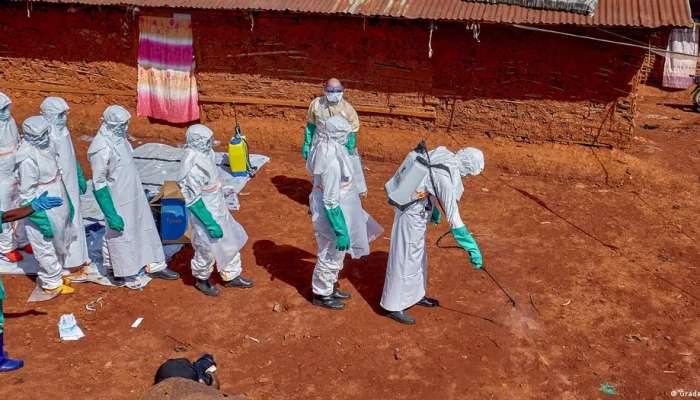
The Democratic Republic of Congo is grappling with its 17th recorded Ebola epidemic, which has resulted in 397 confirmed cases and 63 deaths in just three weeks, according to the African Union's Africa Centres for Disease Control and Prevention. However, a significant challenge to containing the outbreak stems from widespread community disbelief in the disease itself.
The community does not believe in this disease. Despite the deaths, people don't believe in it.
In Mongbwalu, an epicenter of the epidemic in the northeastern Ituri province, health officials report that many residents reject the scientific confirmation of Ebola. John Tumujimbe, head of a team for dignified and safe burials, noted that initial deaths were attributed to malaria, typhoid, or diarrheal diseases. Even after samples confirmed Ebola, rumors circulated, including claims that coffins were the source of transmission and that aid workers were deliberately spreading the virus via vehicle antennas.
When there were the first deaths, there was talk that the coffins were a problem, that it spread from there.
This wave of disinformation has had severe consequences. At Mongbwalu's general hospital, an angry crowd demanded the return of bodies, eventually setting fire to a tent belonging to Doctors Without Borders. The resulting panic forced the organization to withdraw its staff, leading to the escape of 18 patients under observation. Health workers now fear these individuals may have spread the disease to those sheltering them, complicating containment efforts.
There was a panic. This allowed several suspected cases to escape. Eighteen patients who were under observation have disappeared.
Researchers like Christopher Nehring, who studies disinformation, note that these rumors are not new and echo narratives seen in past health emergencies. Common themes include claims of the disease being a bioweapon, vaccines being harmful, simple cures being hidden, or the disease not being real, often implicating "Big Pharma." Nehring, co-author of a report on the current epidemic for the Konrad Adenauer Foundation, highlights that these "100 different variations of these narratives" have been circulating for decades, significantly blunting the effectiveness of Ebola response efforts in Congo.
They say the disease comes from the lab as a bioweapon; that the vaccination is more harmful than the virus; that there is a simple cure that is being concealed; that the disease is not real. Big Pharma is mentioned either as the profiteer of the crisis or as the ones who originated it.
DistantNews Editorial
Originally published by Times of Oman. Summarized and contextualized by our editorial team with added local perspective. Read our editorial standards.
More Stories


From Our Blog

What Gets Lost (and Found) When News Is Translated

The Critical Role of Diaspora Media in Global News

What Travellers Should Know About Countries with Restricted Press

A Digital Nomad's Guide to Following Local News

How the Same Story Looks Different in Different Countries
