


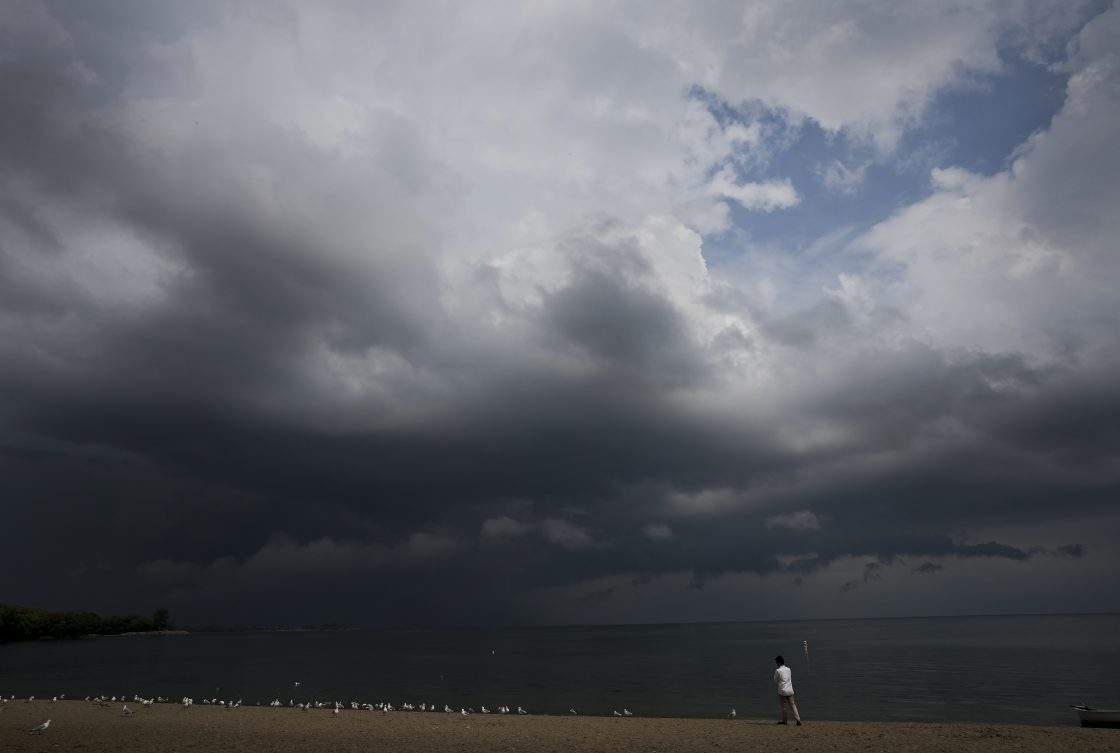
How extreme heat and humidity fuels more dangerous storms — and tornadoes
Summarized and contextualized by DistantNews.
At a glance
News
Sources not specified
Context piece
- Extreme heat and humidity in Canada are fueling more dangerous thunderstorms and increasing the risk of tornadoes.
- Climate change is making heat waves more frequent and intense, with current temperatures significantly warmer than they would be otherwise.
- Warmer air holds more water vapor, which acts as fuel for thunderstorms, intensifying their power.
Experts are warning that the extreme heat and humidity blanketing parts of Canada are creating conditions ripe for severe thunderstorms and even tornadoes. Heat waves are becoming a more frequent and intense phenomenon across the country, significantly elevating the risk of these dangerous weather events.
If they're really severe thunderstorms, one can get tornadoes developing as well. So, there’s the possibility that you’ll get a tornadic thunderstorm during a heat wave.
One such storm recently hit the Prairies, with tornadoes reported in Saskatchewan following a period of humid heat. Atmospheric physics professor Kent Moore from the University of Toronto explains that severe thunderstorms often develop during periods of extreme heat, especially when humidity is high. "If they're really severe thunderstorms, one can get tornadoes developing as well," he stated, linking the possibility of tornadic activity directly to heat waves.
Environment Canada has issued alerts for several provinces, including Ontario, Quebec, and Manitoba, where temperatures are reaching between 30 and 40 degrees Celsius with the humidex. While summer naturally brings warmer weather, climate change is exacerbating these conditions, making peak temperatures higher than they would normally be. Moore estimates that current extreme heat is "twice as likely" due to global warming, making temperatures "two to three degrees warmer than we would have been without global warming."
The extreme heat we’re seeing today is twice as likely because of the effect of global warming. We’re probably maybe two to three degrees warmer than we would have been without global warming.
Heat waves are typically caused by high-pressure systems that trap warm air and draw in moisture from regions like the Gulf of Mexico. This combination of intense heat and atmospheric moisture creates ideal conditions for thunderstorms. Meteorologist Anthony Farnell described the current situation as a "heat dome," comparing it to a lid on a boiling pot that traps heat and feeds on itself. "Severe thunderstorms are also likely to form around the ‘ring of fire’ surrounding the heat dome," he added.
A heat dome is the equivalent of putting a lid on a boiling pot of water. It traps in the heat (in this case from solar radiation) and feeds back on itself day after day until the dome breaks down.
While heat doesn't directly cause tornadoes, the warmer air's increased capacity to hold water vapor acts as fuel for thunderstorms. "When it's hotter, the atmosphere can hold more water vapor, and water vapor is like fuel for the atmosphere," Moore explained. "Most weather systems are driven by essentially the energy that's released when water vapour condenses from its gaseous form to its liquid form."
Severe thunderstorms are also likely to form around the ‘ring of fire’ surrounding the heat dome.
DistantNews Editorial
Originally published by Global News. Summarized and contextualized by our editorial team with added local perspective. Read our editorial standards.
More Stories


From Our Blog

What Gets Lost (and Found) When News Is Translated

The Critical Role of Diaspora Media in Global News

What Travellers Should Know About Countries with Restricted Press

A Digital Nomad's Guide to Following Local News

How the Same Story Looks Different in Different Countries
