


'How Many Will Die?': The Mysterious Ailment Killing Kenyan Elephants
Summarized and contextualized by DistantNews.
At a glance
News
Named sources
Context piece
- At least 20 elephants have died from a mysterious ailment in southern Kenya since June.
- Symptoms include partial paralysis, and while toxicology reports found cyanide, local experts doubt poisoning, suggesting a disease.
- The deaths are a concern for Kenya's vital tourism industry, with investigations ongoing.
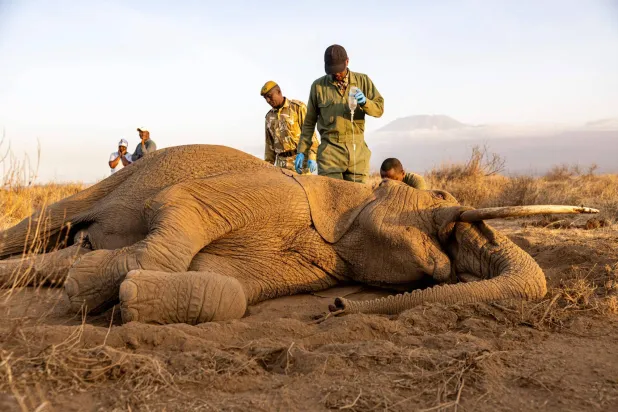
A mysterious ailment is baffling wildlife experts in southern Kenya, claiming the lives of at least 20 elephants since June. The pachyderms, primarily females and young males, exhibit symptoms of partial paralysis before succumbing. The latest victim, an 11-year-old male named Genghis Khan, died on Tuesday after struggling to breathe.
You would find one struggling for a day, struggling for two or even three days. Until they completely die.
Initial toxicology reports from the Kenya Wildlife Service (KWS) detected high concentrations of cyanide, suggesting pesticide poisoning from nearby farms. However, this explanation faces skepticism from local communities and wildlife managers. Patrick Papatiti, head of operations for Olgulului communal lands, insists it is a disease, pointing out that scavengers and flies that consumed the supposedly poisoned carcasses have not died.
If another animal feeds on that carcass and it is not dying, then definitely it is not a chemical.
"If another animal feeds on that carcass and it is not dying, then definitely it is not a chemical," said Joel Nyika, the Amboseli ecosystem manager for the Kajiado County authorities, dismissing the poisoning theory. He added that local livestock have also not been affected, further questioning the cyanide findings. "As wildlife managers, we believe it could be a disease that is only affecting these elephants."
As wildlife managers, we believe it could be a disease that is only affecting these elephants.
The KWS stated on August 7 that their findings "do not indicate an infectious or transmissible disease," and assured tourists that the Amboseli region, a popular tourist destination known for its views of Mount Kilimanjaro, remains safe to visit. Despite assurances, AFP journalists observed six elephant carcasses in the Kimana reserve in a single day, with rangers noting the partial paralysis preventing the animals from standing. Local Maasai farmers, like Noah Saatia, also reject the poisoning theory, expressing distress over the unexplained deaths.
our findings to date do not indicate an infectious or transmissible disease
DistantNews Editorial
Originally published by Asharq Al-Awsat. Summarized and contextualized by our editorial team with added local perspective. Read our editorial standards.
More Stories


From Our Blog

What Gets Lost (and Found) When News Is Translated

The Critical Role of Diaspora Media in Global News

What Travellers Should Know About Countries with Restricted Press

A Digital Nomad's Guide to Following Local News

How the Same Story Looks Different in Different Countries
