

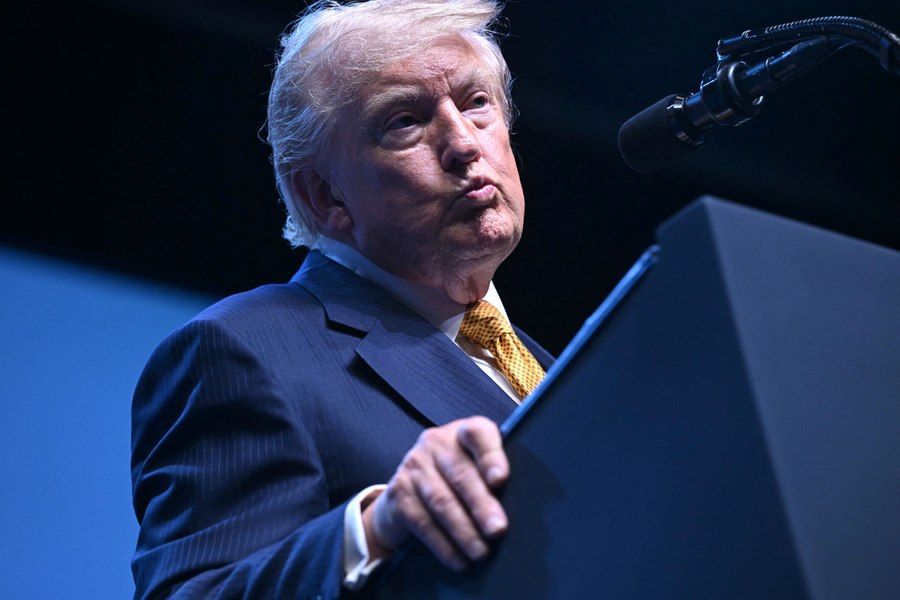

How Putin's Imperial Illusion Crumbles Under the Weight of a No-Win War
Translated from Romanian and summarized by DistantNews. Read the original for the full story.
At a glance
News
Named sources
Context piece
- Analysts suggest Vladimir Putin's imperial ambitions are proving unsustainable, leading Russia towards a strategic dead end following the invasion of Ukraine.
- Internal disputes are intensifying within the Kremlin, with oligarchic and security elites vying for influence and observing signs of Putin's weakness.
- Despite aggressive propaganda, Putin exhibits cautious decision-making, avoiding major risks that could jeopardize his personal survival or stability, while also refusing to end the conflict.
The narrative of Vladimir Putin's revived Russian empire is rapidly unraveling, revealing itself as an unviable project teetering on the brink of collapse. The strategic miscalculation of invading Ukraine has plunged the Russian Federation into a quagmire, with profound consequences now being tallied. Behind the scenes, the Kremlin is a cauldron of escalating factional disputes, as oligarchic elites and security services engage in a high-stakes power struggle, keenly observing any perceived signs of weakness from their leader.
The version of empire proposed by Vladimir Putin is proving to be unviable, rapidly approaching its denouement, while the Russian Federation is counting the effects of a major strategic error: the invasion of Ukraine.
This internal turmoil is subtly reflected in state-controlled media, such as the program "Marele Joc" (The Great Game) on Russia's Channel One. While ostensibly loyal to the regime, figures like Dmitri Trenin and Karen Shahnazarov, appearing on the show, cannot entirely ignore the grim realities on the front lines and the strain on the economy. Their cautious pronouncements, carefully couched in diplomatic language, hint at a desire for a course correction, an attempt to salvage the imperial vision they share, even as they navigate the constraints of state propaganda.
Behind the scenes, the new Tsar in the Kremlin is forced to navigate increasingly acute factional disputes, in an environment where oligarchic elites and security services vie for influence, watching for signs of his weakness.
What is particularly striking from our perspective at Adevărul is the stark contrast between the aggressive rhetoric amplified by state media and Putin's own glacial sobriety when it comes to concrete actions. Following Moscow's release of a list of potential NATO targets, calls for escalation were loud on Russian television. Yet, Putin's response, relayed through the show's moderator, was a chillingly pragmatic dismissal of impulsive strikes as "not a sign of state wisdom." This deliberate avoidance of major risks underscores a leader prioritizing personal survival and stability above all else, even as he remains unwilling to extricate Russia from the conflict. The historical parallels drawn to Nicholas II, another 'last Tsar' presiding over a collapsing empire, are not merely academic; they resonate deeply within a Russian context, highlighting a pattern of passive drift towards catastrophe when decisive leadership is most needed.
Although their loyalty to the Kremlin leader is beyond any doubt, these influencers cannot remain blind to the reality on the front and in the economy, trying to suggest – with maximum caution – course corrections to save the imperial idea they share.
About this summary
Originally published by Adevărul in Romanian. Translated, summarized, and contextualized automatically by DistantNews, with a note on how the source frames the story. Not individually reviewed before publishing. How this works.
More Stories
From Our Blog

News in Translation: What Gets Lost, and How We Keep the Framing

Diaspora Media: How Communities Abroad Follow Home

Traveling Where the Press Is Not Free: How to Read the News There

The Digital Nomad's Guide to Local News

The Same Story, Different Countries: How Coverage Changes at the Border
