


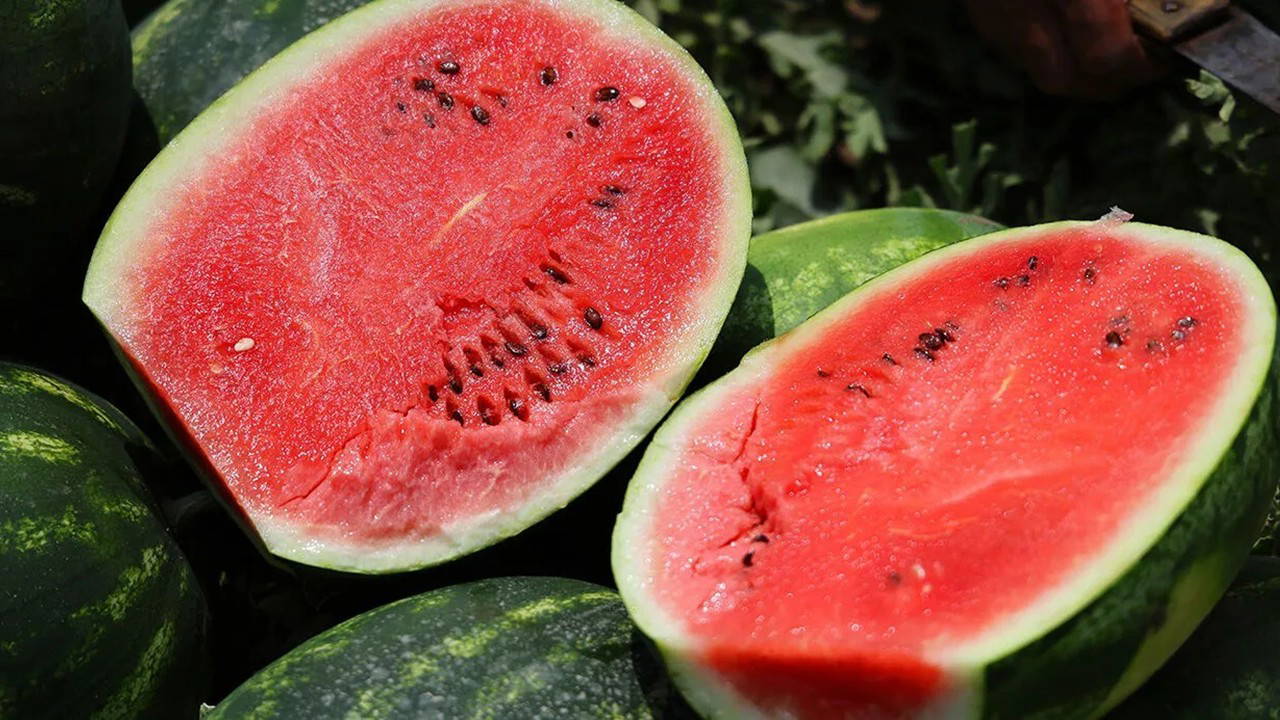
How to Pick the Best Watermelon: Tips for a Sweet and Juicy Summer Fruit
Translated from Turkish, summarized and contextualized by DistantNews.
At a glance
In-depth
Sources not specified
Context piece
- Selecting a ripe watermelon involves checking its ground spot, skin, weight, shape, and stem.
- A creamy yellow ground spot indicates ripeness, while a matte skin and heavier weight suggest more juice.
- Tapping the watermelon should produce a deep, hollow sound, and the stem should be dry and brown for optimal ripeness.
Choosing the perfect watermelon, a staple of summer tables, can be made easier by paying attention to several key indicators. While a watermelon's appearance can be deceiving, its ground spot, skin texture, weight, shape, and stem can offer crucial clues to its ripeness and sweetness.
The spot where the watermelon rested on the ground is a significant indicator. A creamy yellow or deep yellow hue suggests the fruit ripened sufficiently on the vine. Conversely, a white or very light-colored spot might mean it was harvested too early. The skin of a ripe watermelon typically has a matte finish; an overly shiny rind could signal premature harvesting.
When selecting, opt for the heavier fruit among watermelons of the same size, as this often correlates with higher juice content. A symmetrical shape, whether round or oval, is also desirable, as irregular bumps or dents may indicate uneven growth. Inspect the stem: a dry, brown stem points to natural ripening, while a green stem might suggest early picking.
Sound can also be a guide. A gentle tap should yield a deep, hollow sound, indicating a juicy interior. A dull or short sound might suggest the flesh is not yet fully ripe. Finally, examine the rind for deep cracks, bruises, or signs of mold, avoiding any damaged fruit. While fine, brown, web-like lines on the surface are sometimes seen as a sign of good pollination, they are not a sole guarantee of quality.
DistantNews Editorial
Originally published by Cumhuriyet in Turkish. Translated, summarized, and contextualized by our editorial team with added local perspective. Read our editorial standards.
More Stories



From Our Blog

What Gets Lost (and Found) When News Is Translated

The Critical Role of Diaspora Media in Global News

What Travellers Should Know About Countries with Restricted Press

A Digital Nomad's Guide to Following Local News

How the Same Story Looks Different in Different Countries
