


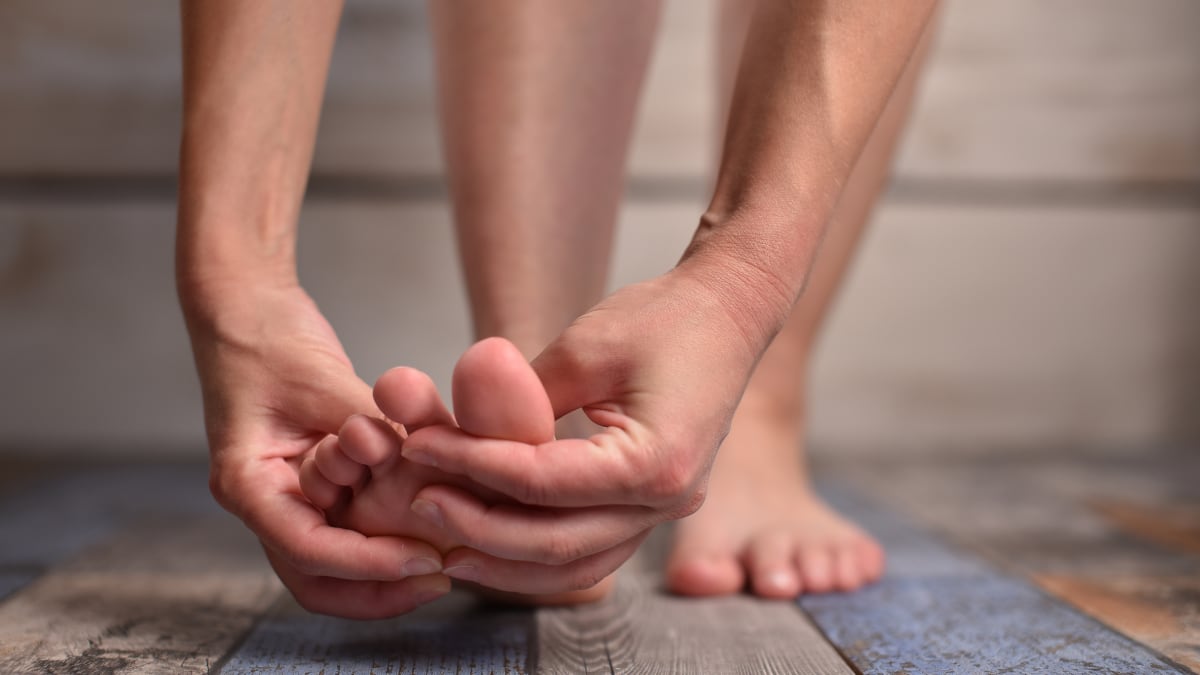
How to Relieve Plantar Fasciitis Pain: Products That Can Help
Translated from Spanish, summarized and contextualized by DistantNews.
At a glance
In-depth
Named sources
Context piece
- Plantar fasciitis, a common foot ailment causing heel pain, results from inflammation of the tissue connecting the heel to the toes.
- Causes include improper gait, foot structure, and tight calf muscles, often exacerbated by summer footwear like flip-flops.
- Treatments involve gait analysis, personalized insoles, and massage rollers to alleviate tension and improve foot biomechanics.
Plantar fasciitis, a prevalent foot condition often causing intense heel pain, involves inflammation of the tissue connecting the heel to the toes. This ailment, alongside bunions and calluses, requires proper treatment to prevent further complications.
Podiatrist and Biomechanics Specialist María Herreros explains that the causes are varied. "It can be the way of walking, which is not correct, for example, when the foot flattens too much (pronated feet) or, conversely, when we have a higher arch than normal (with increased plantar arch)," she told EL PAÍS Escaparate. Tightness in the posterior leg muscles, such as the calves or hamstrings, can also increase tension on the fascia.
Herreros notes that this is a common injury treated at her clinic, with Podoactiva seeing over 10,000 cases annually and achieving a resolution rate above 95%. She observes that cases often increase after summer due to prolonged use of inappropriate footwear like flip-flops.
It can be the way of walking, which is not correct, for example, when the foot flattens too much (pronated feet) or, conversely, when we have a higher arch than normal (with increased plantar arch).
While women and athletes are more affected, studies suggest up to 10% of the population may experience plantar fasciitis at some point. Herreros emphasizes the importance of a gait analysis to identify the root cause of the tension and any muscle shortening. Treatments can include custom insoles designed to improve biomechanics, relax fascia and calf muscles, and cushion the heel.
To help manage the condition, products like gel heel cups are recommended. These are designed to reduce pressure on the sole, cushion the heel, and distribute pressure evenly. Massage foot rollers are also suggested for alleviating pain and tension in the plantar fascia.
It is important to be able to perform a study of the patient's gait to find out the origin of this tension and if there is any type of muscle shortening.
DistantNews Editorial
Originally published by El País in Spanish. Translated, summarized, and contextualized by our editorial team with added local perspective. Read our editorial standards.
More Stories


From Our Blog

What Gets Lost (and Found) When News Is Translated

The Critical Role of Diaspora Media in Global News

What Travellers Should Know About Countries with Restricted Press

A Digital Nomad's Guide to Following Local News

How the Same Story Looks Different in Different Countries
