


Hundreds dead, over 1,300 missing after Nepal-Tibet glacier collapse floods
Translated from English and summarized by DistantNews. Read the original for the full story.
At a glance
Newswire
From a news agency
Ongoing story
- A glacier collapse triggered catastrophic floods and mudslides along the Nepal-China border, killing hundreds and leaving over 1,300 missing.
- The disaster swept through communities, destroying buildings and bridges, with rescue efforts hampered by damaged roads.
- Melting glaciers due to climate change are increasing the vulnerability of the Himalayan region to such events.
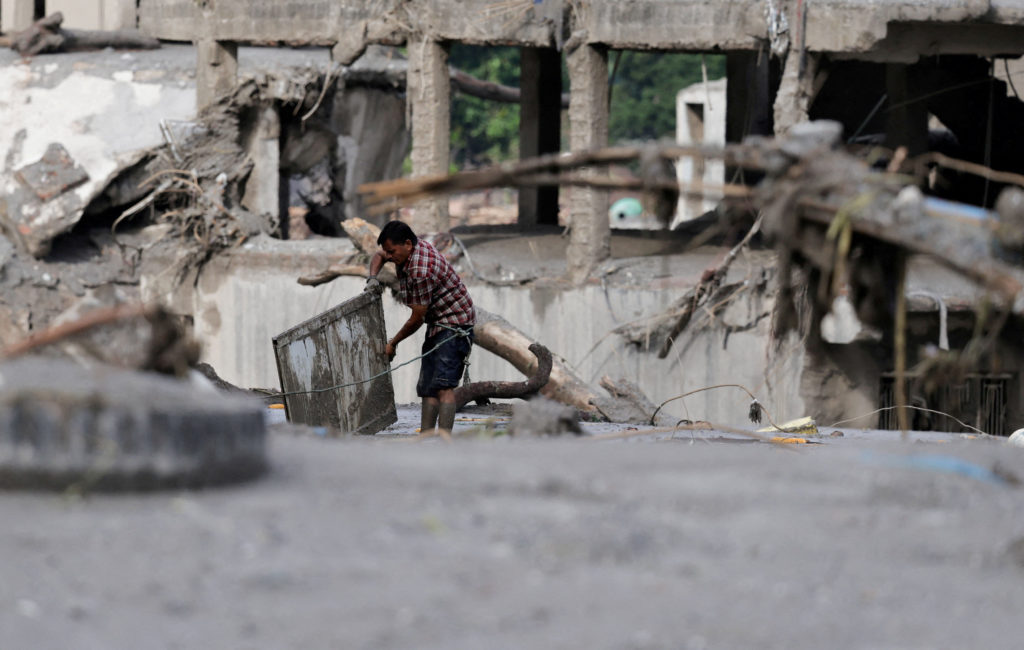
Hundreds have died and over 1,300 are missing after a catastrophic glacier collapse unleashed a torrent of water and mud along the Nepal-China border. Rescue teams are desperately searching for survivors amidst the devastation, which has swept through communities, destroying homes and infrastructure.
The disaster, which occurred on Wednesday, saw walls of water and mud several stories high inundate villages. Videos captured the terrifying moments as people fled the advancing floodwaters, which swallowed buildings and washed away bridges. Police confirmed over 350 deaths in Nepal, with more than 1,300 people missing, including foreign nationals and pilgrims.
Search efforts are severely complicated by the extensive damage to roads and bridges. Nepalese authorities reported that nearly 40 kilometers (25 miles) of roads were destroyed, forcing the army to deploy helicopters for rescue operations. The army has successfully evacuated over 100 people and rescued others trapped in facilities linked to the Trishuli hydropower project.
I fear there won't be any update.
In Tibet, Chinese authorities reported at least three dead and 558 missing. Mudslides in the region reached depths of over 1.5 meters (5 feet) near the Gyirong Port border crossing, with further landslides possible due to ongoing rain. China's premier, Li Qiang, arrived in Gyirong to oversee rescue efforts, which involve hundreds of military and paramilitary personnel.
Experts note that the Himalayan region, with its steep slopes and remaining glaciers, is particularly vulnerable to such events. Human-caused climate change is accelerating glacier melt, increasing the frequency and intensity of glacial lake outburst floods and landslides.
The agency has shifted its focus from rescue to large-scale relief operations in the flood-hit districts.
About this summary
Originally published by PBS NewsHour in English. Translated, summarized, and contextualized automatically by DistantNews, with a note on how the source frames the story. Not individually reviewed before publishing. How this works.
More Stories


From Our Blog

How the Same Story Looks Different in Different Countries

What Gets Lost (and Found) When News Is Translated

The Critical Role of Diaspora Media in Global News

What Travellers Should Know About Countries with Restricted Press

A Digital Nomad's Guide to Following Local News
