

Hundreds feared dead in Nepal-Tibet border floods and landslides
Translated from English, summarized and contextualized by DistantNews.
At a glance
News
Named sources
Ongoing story
- Hundreds of people are feared dead or missing following massive landslides and flash floods on the Nepal-Tibet border.
- The disaster has caused widespread damage, submerging buildings and destroying roads and vehicles in northern Nepalese towns.
- Search and rescue operations are underway, with governments coordinating responses and offering humanitarian assistance.
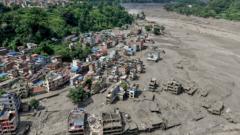
Massive landslides and flash floods along the Nepal-Tibet border have resulted in widespread devastation, with hundreds feared dead or missing. Search and rescue operations are actively underway in the affected regions.
Nepalese officials anticipate a "huge scale loss," while Chinese state media has reported significant casualties. The disaster struck northern Nepalese towns, including areas popular with mountaineering tourists and pilgrims. Footage captured a terrifying wall of mud and rock sweeping away buildings, roads, and vehicles, forcing residents to flee.
Severe flooding has also been reported along the Bhote Koshi, Trishuli, and Narayani rivers. While initial reports suggested an earthquake might have triggered the landslide, the US Geological Survey's analysis indicates no such seismic event, leaving the cause of the landslide itself under question.
Hundreds of people are believed to be missing, including a significant number of foreign nationals from countries such as India, the US, and the UK. Governments, including those of Nepal, China, India, and the UK, have pledged coordination and humanitarian assistance to support the relief efforts.
DistantNews Editorial
Originally published by BBC News in English. Translated, summarized, and contextualized by our editorial team with added local perspective. Read our editorial standards.
More Stories


From Our Blog

What Gets Lost (and Found) When News Is Translated

The Critical Role of Diaspora Media in Global News

What Travellers Should Know About Countries with Restricted Press

A Digital Nomad's Guide to Following Local News

How the Same Story Looks Different in Different Countries
