

Hungarian politician laments party's 'arrogant' style, calls for return to 'lightness'
Translated from Hungarian, summarized and contextualized by DistantNews.
At a glance
News
Sources not specified
Context piece
- Hungarian politician Balázs Hidvéghi criticized the party's recent communication style, citing arrogance and a focus on foreign policy over domestic issues.
- He argued that the party's stance on Ukraine and Brussels alienated voters, leading to slogans like "Russians, go home!" against them.
- Hidvéghi called for a return to a more approachable tone, emphasizing domestic concerns and the party's achievements while defending against new political challenges.
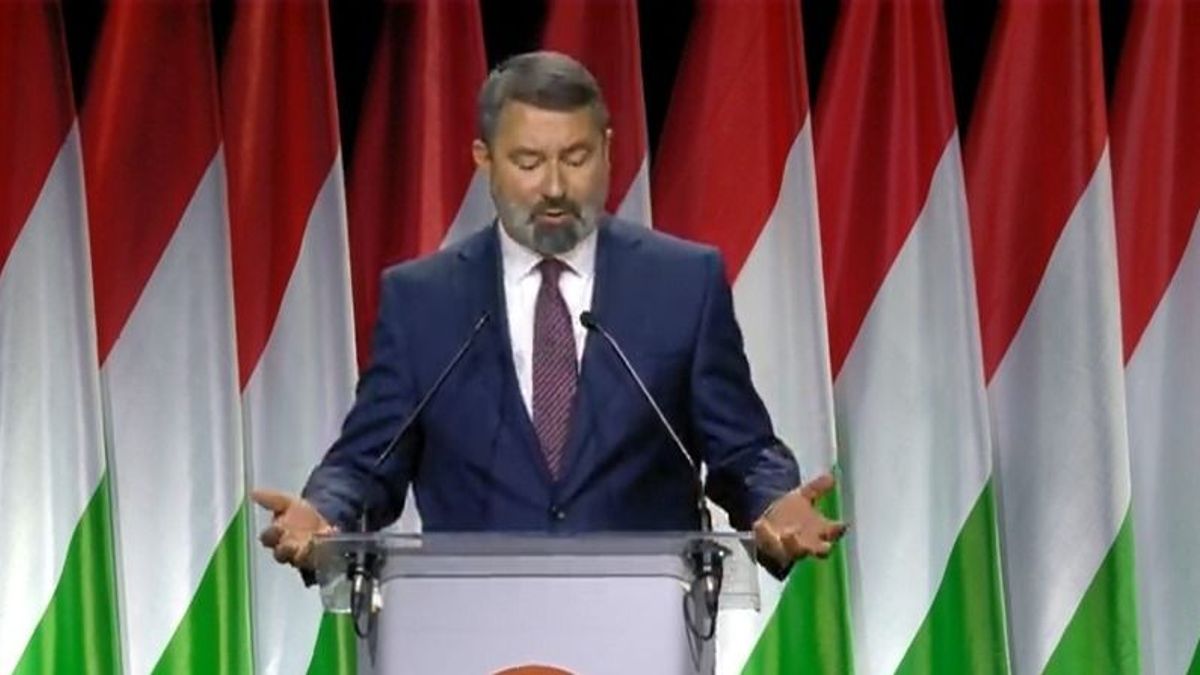
Balázs Hidvéghi, a Hungarian politician, has called for a significant shift in his party's communication strategy, lamenting a recent style characterized by "mannerism, haughtiness, arrogance, and conceit." He believes this approach, coupled with the "arrogant behavior" of elites enriched during the government's tenure, fostered a sense of abuse of power among voters.
Unfortunately, we have been speaking and reacting in a bad style recently. Mannerism, haughtiness, arrogance, and conceit have become dominant.
Hidvéghi argued that the party's campaign excessively focused on foreign policy and international conflicts, particularly the struggle with Brussels and the ongoing confrontation with Ukraine. This, he suggested, created an "absurdity" where the slogan "Russians, go home!" emerged against Viktor Orbán and Fidesz, 36 years after the regime change. He feels this positioning against Europe and the West does not align with Hungarian identity.
So the absurdity happened that the slogan "Russians, go home!" appeared against Orbán Viktor and Fidesz, 36 years after the regime change.
Addressing the emergence of Péter Magyar as a new political force, Hidvéghi described him as a "bullying character" in public life, mirroring his private behavior. He accused Magyar of aggressively denying the Fidesz government's successes, labeling everyone as criminals and mafiosi, while simultaneously attempting to co-opt the party's core issues like the Hungarian diaspora, nationhood, and migration.
Péter Magyar, who is the same bullying character in public life as in his private life, pursues a strategy based on aggression and stigmatization.
To navigate this transformed political landscape, Hidvéghi stressed the need to protect the party's and the country's shared achievements and find a "new voice." He urged a return to a lighter, more humorous, and even self-ironic tone. "We need to defend ourselves, the common achievements of Fidesz and the people, and Viktor Orbán's exceptional political performances at home and abroad," he stated, emphasizing the need for the right style and figures to achieve this. He concluded by highlighting the importance of addressing the real problems and concerns of the people.
We need to defend ourselves, the common achievements of Fidesz and the people, and Viktor Orbán's exceptional political performances at home and abroad.
DistantNews Editorial
Originally published by Magyar Nemzet in Hungarian. Translated, summarized, and contextualized by our editorial team with added local perspective. Read our editorial standards.
More Stories

From Our Blog

Countries Without a Free Press: What You Need to Know

What Press Freedom Means for the News You Read

What Gets Lost (and Found) When News Is Translated

The Critical Role of Diaspora Media in Global News

What Travellers Should Know About Countries with Restricted Press
