


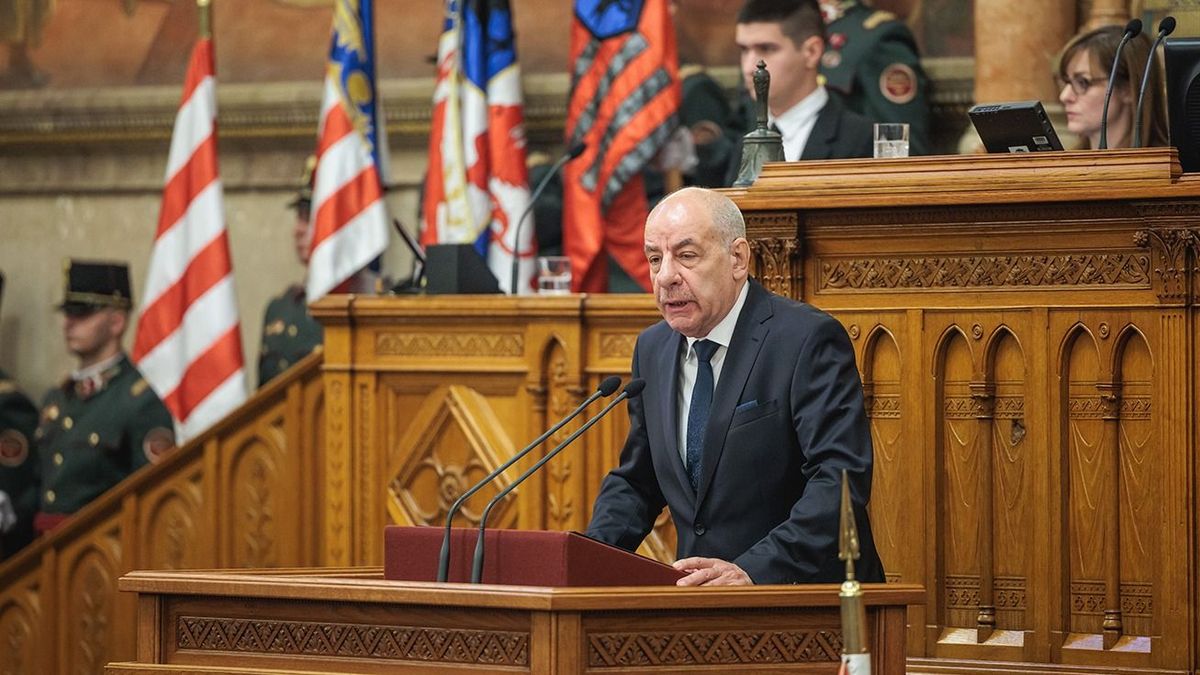
Hungary Faces Constitutional Deadlock Over Presidential Powers Amendment
Translated from Hungarian, summarized and contextualized by DistantNews.
At a glance
News
Named sources
Under investigation
- A proposed amendment to Hungary's Fundamental Law could lead to a constitutional deadlock, particularly concerning the president's powers.
- Experts warn that a provision allowing one-fifth of parliamentary representatives to initiate impeachment proceedings against the president could result in the Speaker of Parliament assuming presidential duties during the process.
- This situation raises concerns about the potential for the Speaker to sign and promulgate the constitutional amendment while the president's impeachment is pending, creating legal complexities.
A potential constitutional crisis looms in Hungary as a proposed amendment to the Fundamental Law could significantly alter the balance of power, particularly concerning the presidential office. Legal experts are raising alarms about a specific provision that could allow a fifth of parliamentary representatives to initiate impeachment proceedings against the president.
Under the proposed amendment, if impeachment proceedings are launched, the president would be barred from exercising their powers. During this period, the Speaker of Parliament would assume the president's duties. This scenario could enable the Speaker to sign and enact the very constitutional amendment that led to the president's suspension, creating a complex legal and political situation.
The provision's key element is that from the Parliament's decision until the completion of the impeachment proceedings, the president cannot exercise their powers. During this period, the Speaker of Parliament exercises these powers, thus they can sign and promulgate the constitutional amendment.
Legal scholar Ifj. Lomnici highlighted the peculiarity of this arrangement, noting that if the Constitutional Court upholds the impeachment, the president could be stripped of their office. However, he emphasized that no such grounds have arisen concerning the current president, Tamás Sulyok, since his election, suggesting any impeachment proceedings would lack legal basis.
An alternative, though seemingly absurd, mechanism involves the Parliament determining the president's temporary incapacity with a simple majority. This, too, would transfer presidential powers to the Speaker, facilitating the swift promulgation of the amendment. The Constitutional Court's role in reviewing such amendments is limited to procedural compliance, not substantive content, a restriction established by a previous amendment.
If the Constitutional Court finds public law responsibility, they can strip the president of their office. However, it must be stressed that no such public law aspect has arisen concerning Tamás Sulyok since his election, thus any potential impeachment proceedings would be devoid of all legal basis.
DistantNews Editorial
Originally published by Magyar Nemzet in Hungarian. Translated, summarized, and contextualized by our editorial team with added local perspective. Read our editorial standards.
More Stories


From Our Blog

Countries Without a Free Press: What You Need to Know

What Press Freedom Means for the News You Read

What Gets Lost (and Found) When News Is Translated

The Critical Role of Diaspora Media in Global News

What Travellers Should Know About Countries with Restricted Press
