

/s3/static.nrc.nl/wp-content/uploads/2026/07/13193259/130726VER_2035191110_.jpg)
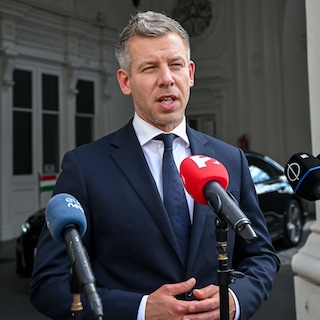
Hungary Limits Prime Minister's Term to Eight Years, Potentially Barring Orbán's Return
Translated from Dutch, summarized and contextualized by DistantNews.
At a glance
News
Named sources
Context piece
- Hungary's parliament has passed a law limiting the prime minister's term to 10 years, potentially barring Viktor Orbán from future leadership.
- The legislation, which also sets a maximum of two consecutive terms, was approved with a significant majority.
- Supporters argue it strengthens democracy and prevents the concentration of power, while critics question its timing and intent.
Hungary's parliament has taken a decisive step towards reshaping its political landscape with the passage of a law limiting the prime minister's tenure. This legislation, capping a premier's term at ten years, effectively signals a potential end to Viktor Orbán's long-standing grip on power, should he seek to continue beyond this limit.
The bill, which passed with a substantial majority, stipulates that a prime minister can serve a maximum of two consecutive terms. While proponents hail it as a victory for democratic principles and a safeguard against the over-consolidation of power, the timing and underlying motivations have inevitably drawn scrutiny. The move comes after years of Orbán's Fidesz party dominating Hungarian politics, leading many to question whether this is a genuine reform or a strategic maneuver.
From the perspective of De Volkskrant, this law represents a significant development in Hungarian politics. While the stated aim is to enhance democratic accountability and prevent the entrenchment of any single leader, the practical implications for Orbán's political future are undeniable. The debate surrounding the law highlights the ongoing tension between strengthening democratic institutions and the political realities of a deeply entrenched ruling party.
This development is particularly noteworthy within the European Union, where Hungary's democratic backsliding has been a recurring concern. The law could be interpreted as an attempt by Hungary to address some of these criticisms, or conversely, as a calculated move to manage the succession of power within Fidesz. Regardless, it sets a precedent for term limits in a country that has seen remarkable political stability under Orbán's leadership.
DistantNews Editorial
Originally published by De Volkskrant in Dutch. Translated, summarized, and contextualized by our editorial team with added local perspective. Read our editorial standards.
More Stories
/s3/static.nrc.nl/wp-content/uploads/2026/07/13075111/130726VER_2035161121_machado.jpg)


From Our Blog

What Gets Lost (and Found) When News Is Translated

The Critical Role of Diaspora Media in Global News

What Travellers Should Know About Countries with Restricted Press

A Digital Nomad's Guide to Following Local News

How the Same Story Looks Different in Different Countries
