


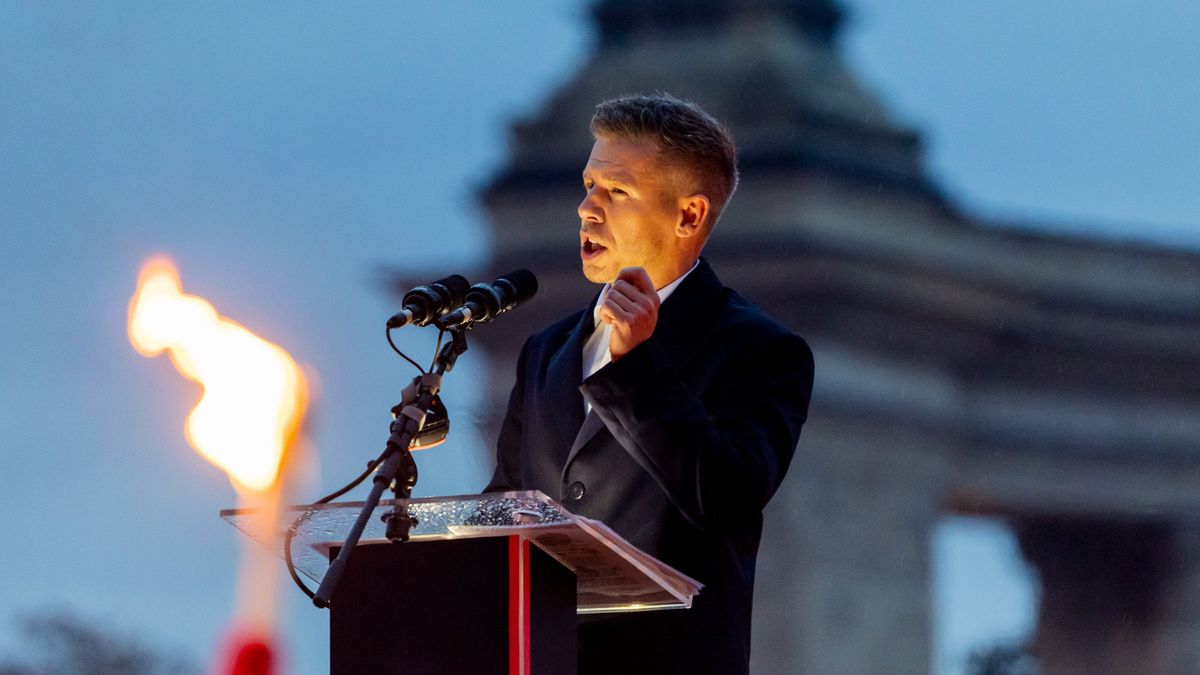
Hungary's 'new Bolsheviks': Echoes of history in modern politics
Translated from Hungarian, summarized and contextualized by DistantNews.
At a glance
Analysis
Sources not specified
Context piece
- The article draws a parallel between historical Marxist parties and a contemporary "new Bolshevik party" in Hungary.
- It criticizes the current party's leadership, accusing them of hypocrisy and undemocratic practices.
- The author highlights perceived similarities in tactics, such as silencing opposition and controlling information.
The article draws a stark parallel between historical Marxist parties and a contemporary "new Bolshevik party" in Hungary, suggesting a cyclical pattern of political behavior. It references historical accounts of the Russian Social Democratic Labour Party, noting that the Bolsheviks and Mensheviks had no connection to the liberal revolution that overthrew the Romanovs, with Lenin in Switzerland and Stalin in exile.
The most important Marxist party, the Russian Social Democratic Labour Party, which included the Bolsheviks and Mensheviks, had nothing to do with the liberal revolution that overthrew the Romanovs. Lenin was in Switzerland, and Stalin had lived in isolation in exile in Western Siberia since 1913.
This historical context is used to critique the current party's leadership. The author claims the leader of this "new Bolshevik party" was previously in Brussels on behalf of Fidesz and later held well-paid, low-responsibility positions within Fidesz's circle. Despite this, the leader allegedly engaged in prolonged, harsh criticism of a candidate for constitutional judge, András Schiffer, based on his political past.
The leader of the new Bolshevik party was first in Brussels on behalf of Fidesz, and then held positions with good pay and zero work as a member of the Fidesz circle.
The piece further alleges that these "Bolsheviks," described as having "no spark of moral doubt," are in the process of electing a new constitutional judge. Simultaneously, opposition members in parliament are reportedly being silenced, leading to their withdrawal in protest. The narrative is punctuated by a seemingly coincidental appearance of investigators at the premises storing the Fidesz faction's documents.
The Bolsheviks, 'without a spark of moral doubt,' are electing a new constitutional judge.
Echoing the historical narrative, the article quotes that Lenin considered class struggle to be synonymous with civil war and believed communism must be enforced through violence. The author extends this sentiment to a perceived pursuit of "global totalitarian power," implying a continuation of forceful ideological imposition.
[Lenin] took for granted that class struggle meant civil war. He was convinced that communism had to be enforced by force.
DistantNews Editorial
Originally published by Magyar Nemzet in Hungarian. Translated, summarized, and contextualized by our editorial team with added local perspective. Read our editorial standards.
More Stories


From Our Blog

Countries Without a Free Press: What You Need to Know

What Press Freedom Means for the News You Read

What Gets Lost (and Found) When News Is Translated

The Critical Role of Diaspora Media in Global News

What Travellers Should Know About Countries with Restricted Press
