


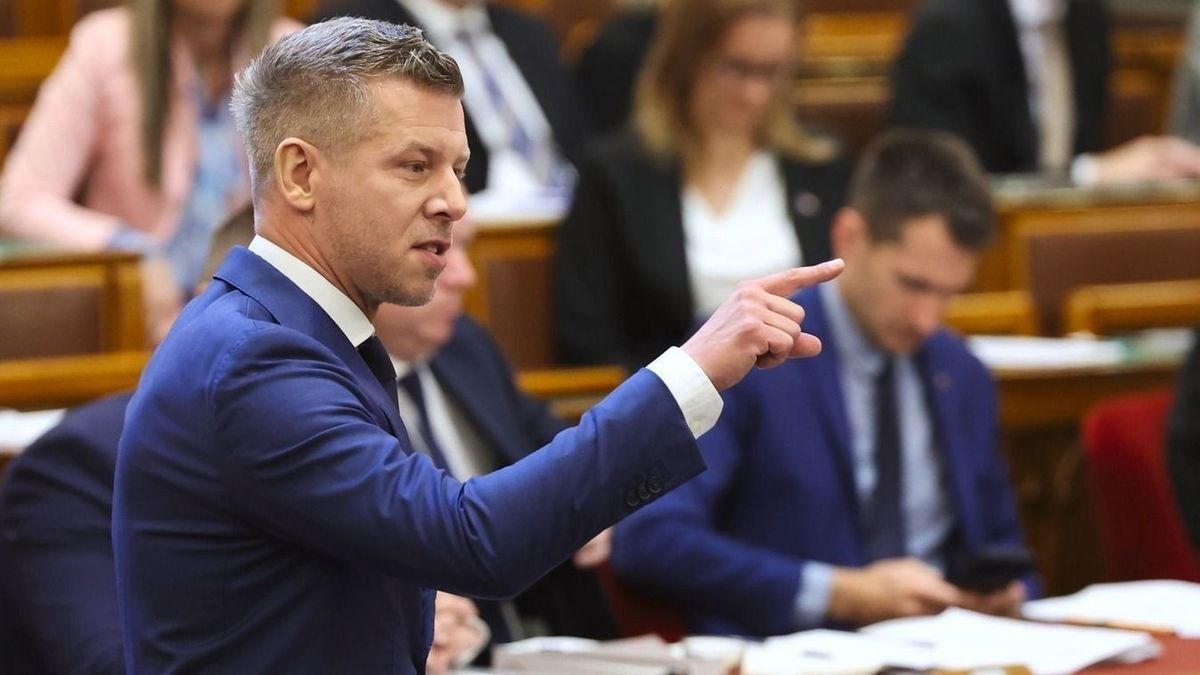
Hungary's parliament to vote on "Lex Orbán," criticized for restricting electoral rights
Translated from Hungarian, summarized and contextualized by DistantNews.
At a glance
News
Named sources
New plan
- Hungary's parliament is set to vote on the "Lex Orbán," a law that critics argue infringes upon the right to stand for election.
- The Constitutional Court has previously emphasized that fundamental rights cannot be limited, even by legislation.
- Political analysts suggest the law might be a strategic move by Prime Minister Viktor Orbán to potentially return to the political forefront, drawing parallels to international practices regarding prime ministerial term limits.
The Hungarian parliament is preparing to vote on legislation known as "Lex Orbán," which critics contend fundamentally restricts the right to be elected, a basic political right guaranteed by the constitution.
In its essence, it limits the right to stand for election, which is a fundamental political right guaranteed by the fundamental law.
According to legal experts, the most severe unconstitutional aspect of "Lex Orbán" lies in its potential to limit the eligibility of individuals to run for office. The Constitutional Court has consistently maintained that the essential content of fundamental rights cannot be infringed upon, even through legislative measures.
The Constitutional Court consistently emphasizes that the essential content of fundamental rights cannot be affected even by legal restrictions.
Political analyst Zoltán Kiszelly of the Századvég think tank suggested that the "Lex Orbán" legislation could be a strategic maneuver by Prime Minister Viktor Orbán. He posited that Orbán might be positioning himself for a potential return to the forefront of politics, citing international examples where prime ministerial term limits are rare or non-existent.
Tisza and Péter Magyar may fear that Viktor Orbán, similar to international examples, may return to the forefront of politics.
Kiszelly raised questions about which international models Hungary is emulating with this legislation, contrasting Thailand and Belize with Western European countries where no such restrictions on prime ministers apply. The debate centers on whether this law is a genuine legislative reform or a calculated move to shape future political landscapes.
There are no prime ministerial term limits in Europe, and they are very rare worldwide.
DistantNews Editorial
Originally published by Magyar Nemzet in Hungarian. Translated, summarized, and contextualized by our editorial team with added local perspective. Read our editorial standards.
More Stories

From Our Blog

Countries Without a Free Press: What You Need to Know

What Press Freedom Means for the News You Read

What Gets Lost (and Found) When News Is Translated

The Critical Role of Diaspora Media in Global News

What Travellers Should Know About Countries with Restricted Press
