


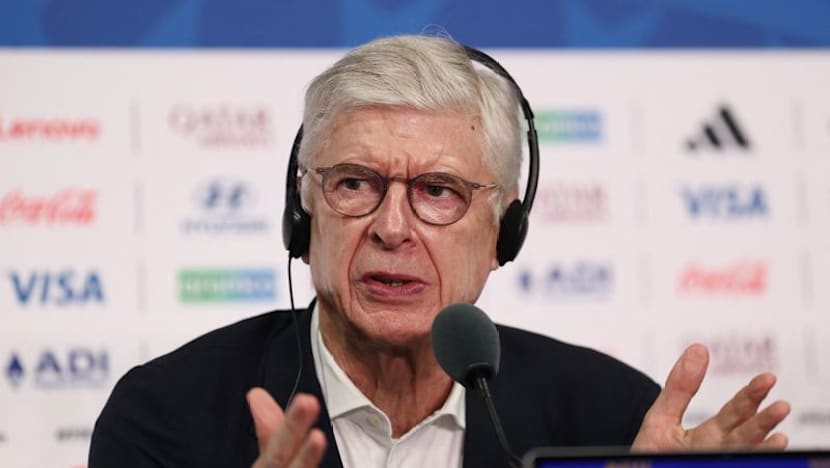
Hydration breaks did not impact World Cup results but future undecided, says FIFA's Wenger
Summarized and contextualized by DistantNews.
At a glance
News
Named sources
Context piece
- FIFA's Chief of Global Football Development Arsene Wenger stated that hydration breaks at the World Cup did not affect match results.
- Wenger confirmed FIFA will review the breaks after the tournament to decide on their future use.
- Some coaches and fans criticized the breaks for disrupting game momentum and questioning their necessity in varied conditions.
Hydration breaks introduced during the World Cup did not influence match outcomes, according to Arsene Wenger, FIFA's Chief of Global Football Development. Speaking ahead of the final match, Wenger indicated that FIFA would conduct a post-tournament review to determine whether these breaks will be implemented in future competitions.
No, sometimes they did not like them and we have to analyse after the World Cup what is the impact.
FIFA mandated three-minute hydration breaks midway through each half of every World Cup match. However, the initiative faced criticism, with some arguing that the breaks, which effectively divided games into four quarters, disrupted the flow and momentum. Broadcasters also benefited from extended commercial opportunities during these intervals, and some fans expressed their displeasure by booing early in the tournament.
It did not look to me that it (hydration break) changed the results of the competition.
Wenger acknowledged that the breaks were not universally popular but stated, "It did not look to me that it (hydration break) changed the results of the competition." He added that FIFA's priority is to serve the fans of football. The necessity of the breaks was also debated, given the varied playing conditions across Mexico, Canada, and the United States, ranging from extreme heat to much cooler temperatures, particularly in Canada and Boston.
But we are here to serve people who watch football.
While some coaches, like Spain's Luis de la Fuente and the Netherlands' Virgil van Dijk, supported the intention behind the rule for extreme heat, they questioned its application in milder weather or covered stadiums. Others, including England's Thomas Tuchel and Uruguay's Marcelo Bielsa, were more critical. Tuchel suggested the breaks had a greater impact than anticipated, while Bielsa argued they added nothing to the sport and detracted from its cultural essence. Wenger conceded that the breaks were medically necessary in many games, but acknowledged that their implementation in all matches, including those in cooler or covered venues, led to dissatisfaction.
In some games it was really needed and because we did not want to make any difference between games we decided to do it (for every match).
DistantNews Editorial
Originally published by CNA. Summarized and contextualized by our editorial team with added local perspective. Read our editorial standards.
More Stories
From Our Blog

What Gets Lost (and Found) When News Is Translated

The Critical Role of Diaspora Media in Global News

What Travellers Should Know About Countries with Restricted Press

A Digital Nomad's Guide to Following Local News

How the Same Story Looks Different in Different Countries
