


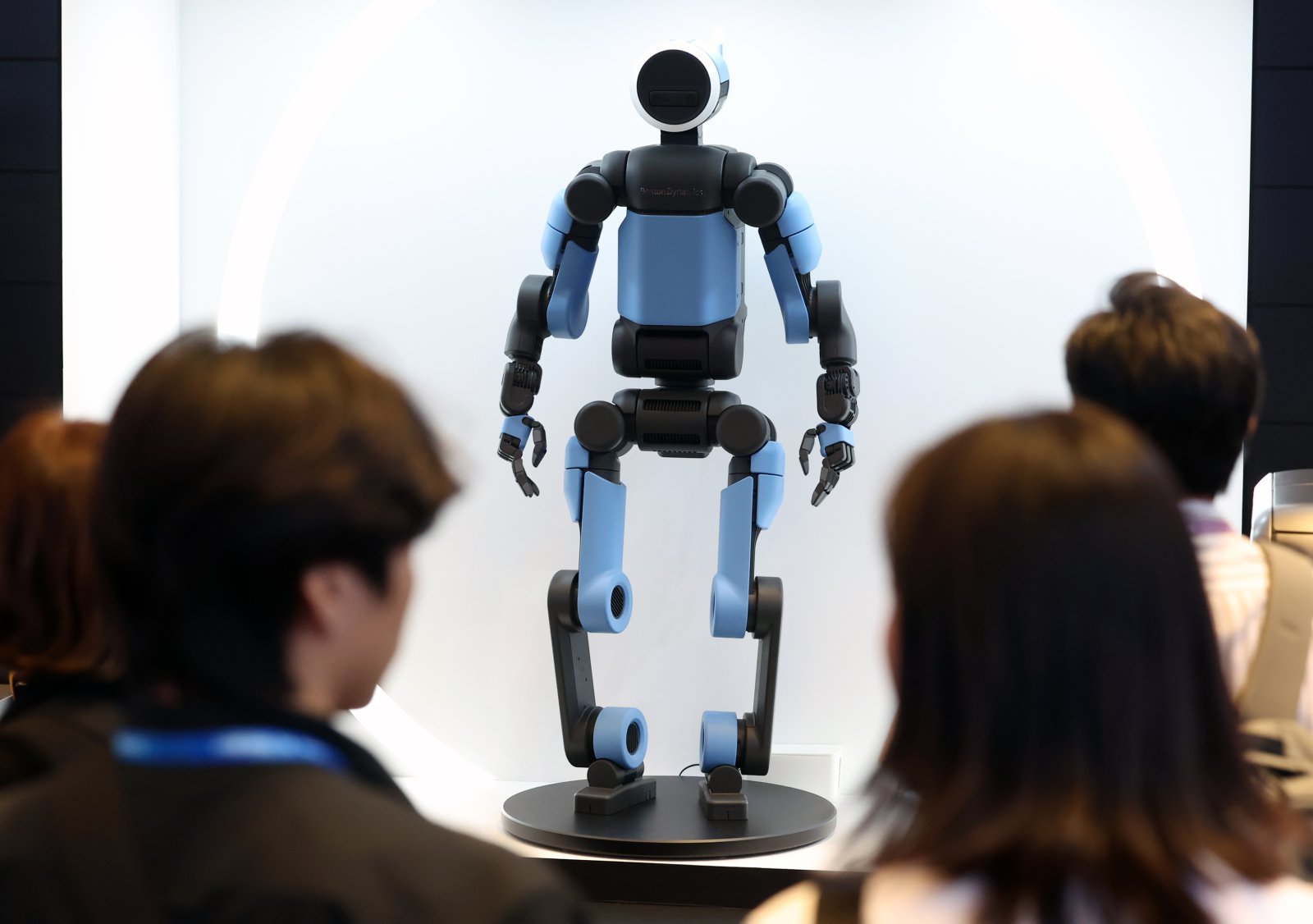
Hyundai Accelerates Humanoid Robot Production Amidst Chinese Capital Influx
Translated from Korean and summarized by DistantNews. Read the original for the full story.
At a glance
News
Named sources
Context piece
- Global automakers are shifting competition from EVs to humanoid robots, with Hyundai, XPeng, and BYD leading the charge.
- Chinese firms XPeng and BYD are significantly investing in humanoid robot development and production.
- Hyundai Motor Group, leveraging Boston Dynamics, is accelerating its own efforts in mass-producing and commercializing humanoid robots.
The automotive industry's competitive landscape is rapidly evolving, with the focus shifting from electric vehicles to humanoid robots. Major global players, including South Korean and Chinese manufacturers, are intensifying their efforts in this new frontier.
Chinese companies are making significant strides, with XPeng Robotics securing over $1 billion (approximately 1.25 trillion won) in funding. This investment will fuel the development, AI training, and production facilities for their humanoid robot, 'IRON.' BYD is also bolstering its robotics division, establishing a dedicated team for embedded AI products and expanding its in-house humanoid robot development.
In response, Hyundai Motor Group, through its subsidiary Boston Dynamics, is accelerating its plans for mass production and commercialization of humanoid robots. This strategic push signifies a broader industry trend where automakers are diversifying into robotics, anticipating future growth and technological advancements beyond traditional vehicle manufacturing.
The race to develop and deploy advanced humanoid robots highlights a significant technological pivot, with substantial capital being injected into research, development, and manufacturing capabilities. This competition is expected to drive innovation and potentially reshape various industries in the coming years.
About this summary
Originally published by Dong-A Ilbo in Korean. Translated, summarized, and contextualized automatically by DistantNews, with a note on how the source frames the story. Not individually reviewed before publishing. How this works.
More Stories



From Our Blog

What Gets Lost (and Found) When News Is Translated

The Critical Role of Diaspora Media in Global News

What Travellers Should Know About Countries with Restricted Press

A Digital Nomad's Guide to Following Local News

How the Same Story Looks Different in Different Countries
