


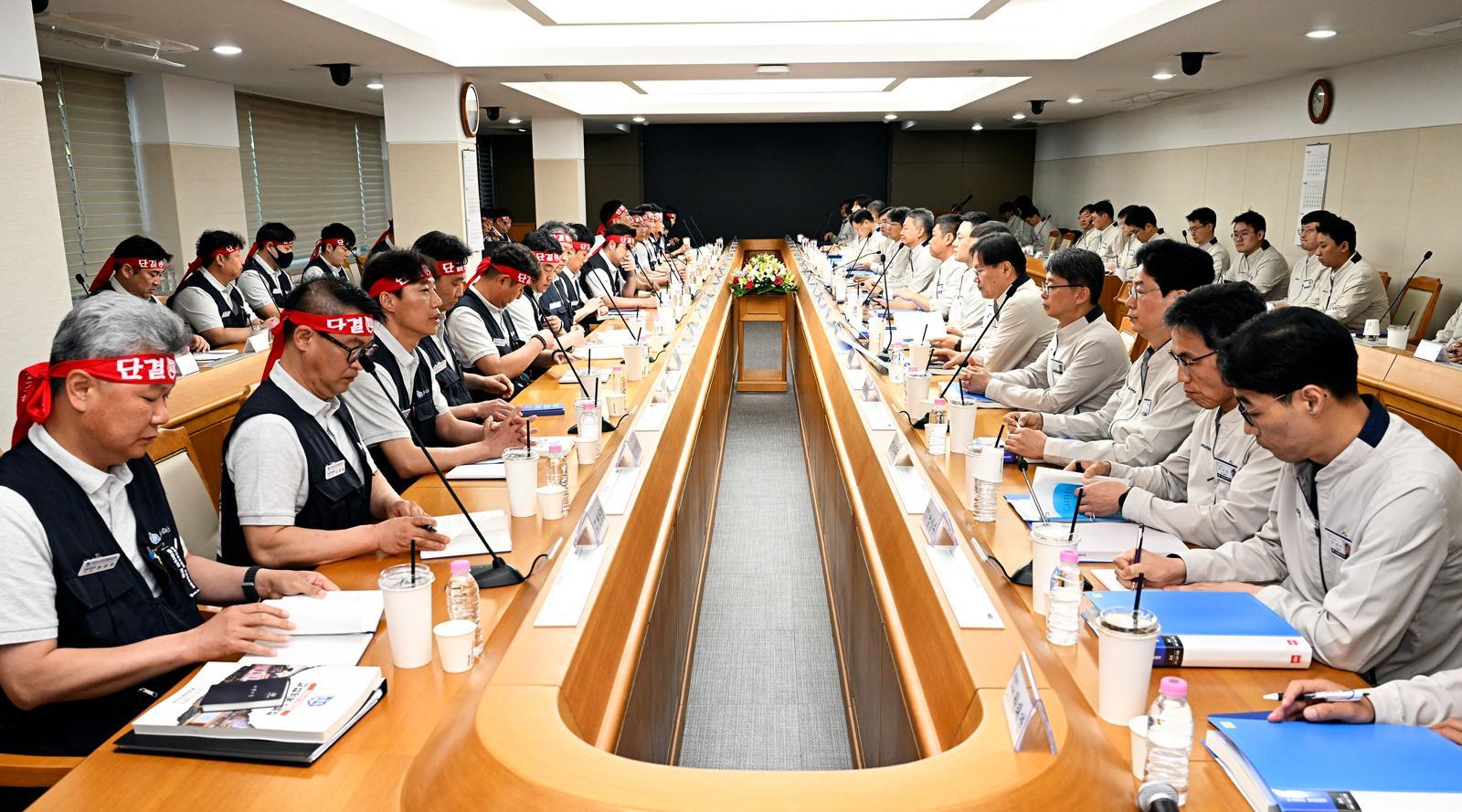
Hyundai Motor reaches tentative wage agreement with union
Translated from Korean, summarized and contextualized by DistantNews.
At a glance
News
Official statement
New plan
- Hyundai Motor labor and management have reached a tentative agreement on the 2026 wage negotiations, concluding 111 days of talks since May 6.
- The agreement includes a 100,000 KRW base wage increase, a performance bonus of 400% plus 12.7 million KRW, 15 shares of stock, and 500,000 KRW in welfare points.
- Key issues like extending the retirement age were resolved by agreeing to implement it only if related laws are amended, without expanding the wage peak system.
Hyundai Motor's labor union and management have reached a tentative agreement on the 2026 wage negotiations, concluding 111 days of discussions that began on May 6. The agreement addresses key points including wage increases, performance bonuses, and the contentious issue of extending the retirement age.
The tentative deal includes a base wage increase of 100,000 Korean Won (KRW), incorporating the annual wage increment. Additionally, workers will receive a performance bonus equivalent to 400% of their base salary plus 12.7 million KRW. The agreement also provides for the distribution of 15 shares of company stock and 500,000 KRW in welfare points to employees.
A significant point of contention, the extension of the retirement age, was resolved through a compromise. The parties agreed to implement the extended retirement age only if relevant legislation is amended, crucially without expanding the existing wage peak system. This addresses concerns about potential reductions in income for older workers while acknowledging the need for workforce adjustments.
Furthermore, the agreement outlines plans for future recruitment, with Hyundai Motor committing to hiring 500 new employees by the second half of 2027 and an additional 300 in 2028, primarily in technical roles. Both labor and management also shared a consensus on the necessity of adopting physical AI and robotics for the company's survival, agreeing to transparently share progress on new business and technology initiatives and to jointly respond to industrial transformation. The pact also includes provisions for enhancing adaptability to change, improving systems, and strengthening productivity and manufacturing competitiveness, moving beyond traditional manufacturing practices.
DistantNews Editorial
Originally published by Dong-A Ilbo in Korean. Translated, summarized, and contextualized by our editorial team with added local perspective. Read our editorial standards.
More Stories


From Our Blog

What Gets Lost (and Found) When News Is Translated

The Critical Role of Diaspora Media in Global News

What Travellers Should Know About Countries with Restricted Press

A Digital Nomad's Guide to Following Local News

How the Same Story Looks Different in Different Countries
