

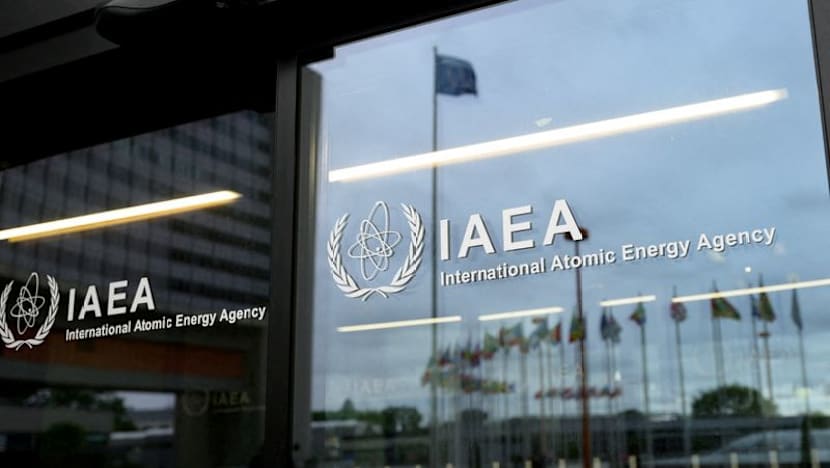
IAEA calls on Iran to 're-engage' as West pressures it with resolution
Summarized and contextualized by DistantNews.
At a glance
News
Named sources
Under investigation
- The UN nuclear watchdog chief urged Iran to resume cooperation for inspections at recently bombed sites.
- The U.S. is leading efforts at the IAEA board for a resolution demanding Iran provide information on the sites and nuclear material.
- Iran warned the board against being used to shift blame, stating that coercion hinders diplomatic solutions.
The head of the UN nuclear watchdog, Rafael Grossi, has called on Iran to "re-engage" with the agency to allow inspections to resume at sites bombed a year ago, as the United States pushes for a resolution at the International Atomic Energy Agency's board.
It's very important that we re-engage.
Iran has yet to provide the IAEA with details about the fate of nuclear sites and materials, including uranium enriched to near weapons-grade, that were present at the bombed locations. While the bombings damaged enrichment facilities, a significant amount of highly enriched uranium is believed to have survived. Grossi noted that communication channels with Iran are largely "broken," despite sporadic contacts.
I call on Iran to engage the Agency constructively in order to facilitate the full and effective implementation of safeguards in Iran.
Simultaneously, the U.S., supported by Britain, France, and Germany, is advocating for a board resolution that would compel Iran to "without delay" supply "precise information" regarding the bombed sites and enriched uranium. Diplomats anticipate the resolution's passage, similar to one in November, but acknowledge it could complicate ongoing U.S.-Iran talks aimed at extending a ceasefire and discussing broader issues, including Iran's nuclear program.
I have sporadic contacts with the foreign minister and others, but basically the channel of communication is broken.
Tehran has cautioned the IAEA board against becoming a tool to absolve those responsible for the attacks, stating, "Responsibility for an internationally wrongful act rests with the perpetrator and cannot be transferred to the victim." Iran's mission to the IAEA warned that "coercion and confrontation do not lead to cooperation" and undermine prospects for a diplomatic solution, referencing past resolutions that often led to Iran escalating its nuclear activities or reducing cooperation.
Responsibility for an internationally wrongful act rests with the perpetrator and cannot be transferred to the victim. The Board must not be instrumentalised to relieve those who carried out these attacks of their responsibility.
DistantNews Editorial
Originally published by CNA. Summarized and contextualized by our editorial team with added local perspective. Read our editorial standards.
More Stories

From Our Blog

What Gets Lost (and Found) When News Is Translated

The Critical Role of Diaspora Media in Global News

What Travellers Should Know About Countries with Restricted Press

A Digital Nomad's Guide to Following Local News

How the Same Story Looks Different in Different Countries
