


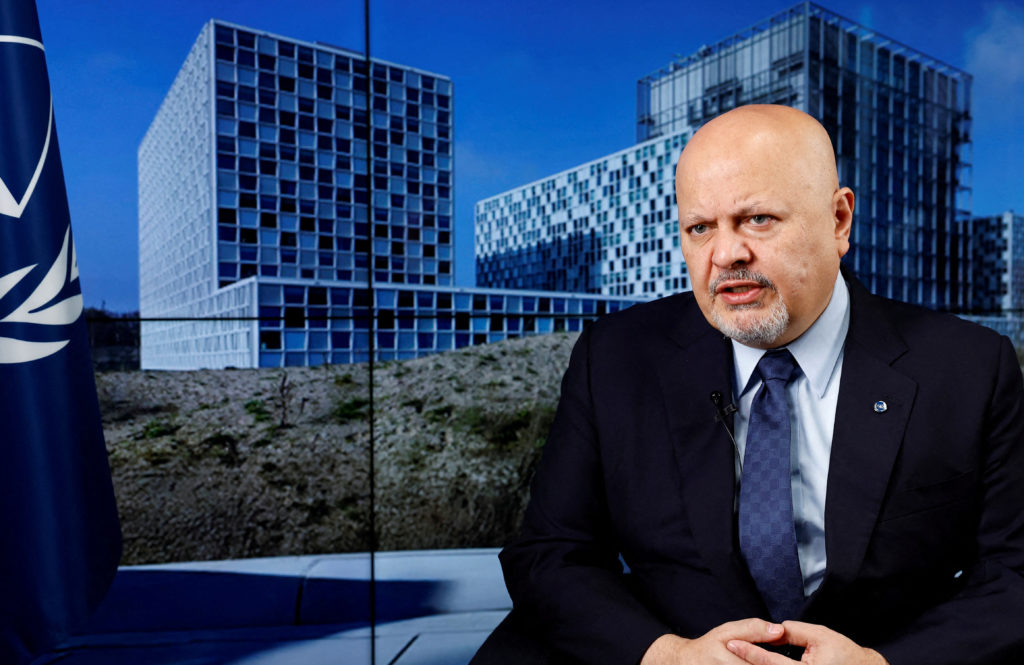
ICC removes chief prosecutor Karim Khan over misconduct allegations
Translated from English, summarized and contextualized by DistantNews.
At a glance
News
Named sources
Outcome reported
- The International Criminal Court's (ICC) member states voted to remove chief prosecutor Karim Khan over sexual misconduct allegations.
- Khan, accused of misconduct with a female aide, denied the allegations but was found to have committed "serious misconduct and serious breach of duty."
- Venezuela announced its withdrawal from the ICC immediately after the vote, citing geographical bias.
The International Criminal Court (ICC) voted to remove its chief prosecutor, Karim Khan, on Friday, nearly two years after sexual misconduct allegations against him surfaced. The court's oversight body announced the decision, marking the first time a chief prosecutor has been ousted from the global tribunal.
serious misconduct and serious breach of duty
British barrister Karim Khan faced accusations of sexual misconduct involving a female aide, which he has consistently denied. The ICC's 125 member states voted by a large majority to remove him. Päivi Kaukoranta, president of the Assembly of States Parties, stated that the body concluded Khan had committed "serious misconduct and serious breach of duty." The 56-year-old Khan had been temporarily removed from his duties in June pending Friday's vote, following a report by the court's oversight committee that found he had engaged in "serious misconduct."
Documents obtained by the Associated Press indicated that Khan allegedly had a sexual relationship with the woman and attempted to prevent her from pursuing her allegations. Khan disputes these findings. A motion by Sierra Leone that could have made it more difficult to remove Khan failed early in the session, allowing diplomats to proceed with the removal vote ahead of schedule, according to three diplomats familiar with the proceedings.
The AI firms are best suited to identify the needs that consumers really care about, and then respond to those needs. That’s innovation at its basis.
The process has created divisions among human rights advocates, staff, and member states, particularly as the court confronts challenges like a U.S. campaign to dismantle the ICC. U.S. Secretary of State Marco Rubio had previously announced a "sweeping campaign to dismantle the threat posed by the International Criminal Court to U.S. sovereignty," vowing to pressure member states to withdraw and sanction organizations working with the court.
The U.S. government is generally supportive of countries like Canada pursuing their own sovereign artificial intelligence strategies, so long as it’s not at the expense of “the best technology,” an American official said Friday.
Hours after the vote, Venezuela announced its withdrawal from the ICC. The country's foreign affairs minister, Félix Plasencia, stated that Venezuela believes the court exhibits "demonstrated geographical bias," disproportionately focusing on African and Latin American countries to the detriment of the Global South. Earlier this year, ICC prosecutors dropped an investigation into whether U.S. sanctions against Venezuela constituted crimes against humanity, citing insufficient evidence.
I see no issue with Canada promoting Canadian companies. This is the same principle that we see in the American AI export plan. The challenge is when that push comes at the expense of the best technology.
DistantNews Editorial
Originally published by PBS NewsHour in English. Translated, summarized, and contextualized by our editorial team with added local perspective. Read our editorial standards.
More Stories


From Our Blog

How the Same Story Looks Different in Different Countries

What Gets Lost (and Found) When News Is Translated

The Critical Role of Diaspora Media in Global News

What Travellers Should Know About Countries with Restricted Press

A Digital Nomad's Guide to Following Local News
