


IMF backs Yemeni reforms to restore economic stability
Translated from English, summarized and contextualized by DistantNews.
At a glance
News
Official statement
New plan
- Yemen and the IMF agreed on an 18-month economic reform program to support stability.
- The program aims to advance fiscal and monetary reforms and improve public resource management.
- The IMF projects Yemen's economy to contract by 1.5% in 2026 due to regional conflict and energy crisis, but expects recovery in 2027.
Yemen and the International Monetary Fund (IMF) have reached a staff-level agreement on an 18-month economic reform program designed to bolster economic stability and advance crucial fiscal and monetary reforms. The initiative also seeks to enhance the management of public resources, aiming to build a credible reform track record that will boost confidence among international donors and financial institutions.
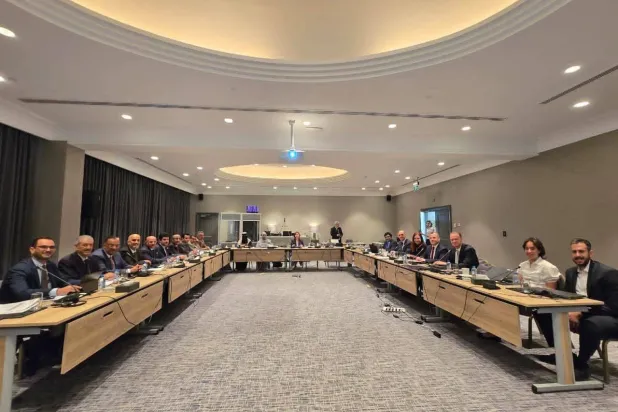
The agreement follows discussions between an IMF mission and Yemeni officials in Amman, Jordan. The proposed program requires final approval from the IMF's management. It is structured to maintain macroeconomic stability amidst the ongoing regional conflict while simultaneously pushing forward economic and institutional reforms. The IMF forecasts Yemen's economy will shrink by 1.5% in 2026, marking the fifth consecutive year of economic decline. This contraction is attributed to worsening terms of trade influenced by the regional conflict, a persistent energy crisis, and weak domestic demand.
Despite the projected downturn, the IMF anticipates Yemen's economy will begin to stabilize in 2027 as regional conditions improve and economic activity gradually recovers. The nation will continue to depend heavily on remittances from its expatriate workforce and donor aid to finance imports, particularly humanitarian assistance, given its fragile public finances and dwindling traditional revenue streams. The current account deficit is expected to remain around 3.4% of GDP, with foreign exchange reserves staying at insufficient levels.
The reform program includes measures to reduce the budget deficit in 2026 and 2027 by boosting domestic revenue, following a significant drop in government spending after oil exports were halted in 2022. Key fiscal measures include liberalizing the customs exchange rate to increase customs duties and goods and services tax revenues, and strengthening tax compliance, especially among large taxpayers and state-owned enterprises. The plan also emphasizes fiscal transparency by integrating previously off-budget revenues and expenditures into official accounts and improving oversight of government spending through a Treasury Single Account.
On the monetary front, the program prioritizes price stability and the gradual rebuilding of foreign exchange reserves. It advocates for greater exchange rate flexibility to better absorb external shocks, reduce reliance on monetary financing of the deficit, and improve the efficiency of the foreign exchange market. Reforms to the financial and banking sector are also part of the agreement.
DistantNews Editorial
Originally published by Asharq Al-Awsat in English. Translated, summarized, and contextualized by our editorial team with added local perspective. Read our editorial standards.
More Stories



From Our Blog

What Gets Lost (and Found) When News Is Translated

The Critical Role of Diaspora Media in Global News

What Travellers Should Know About Countries with Restricted Press

A Digital Nomad's Guide to Following Local News

How the Same Story Looks Different in Different Countries
