


Immersive experiences: tension, mirages, and an impossible portrait in a free tour
Translated from Spanish, summarized and contextualized by DistantNews.
At a glance
In-depth
Sources not specified
Context piece
- Artist Gabriel Valansi explores the nature of information and the limits of photography in his immersive installation 'Unpunkt'.
- The exhibition at Fundación Andreani pays homage to photography's bicentennial by examining the evolution from analog to virtual imagery.
- Valansi uses AI and microscopic images to question how we perceive reality when digital information lacks physical substance.
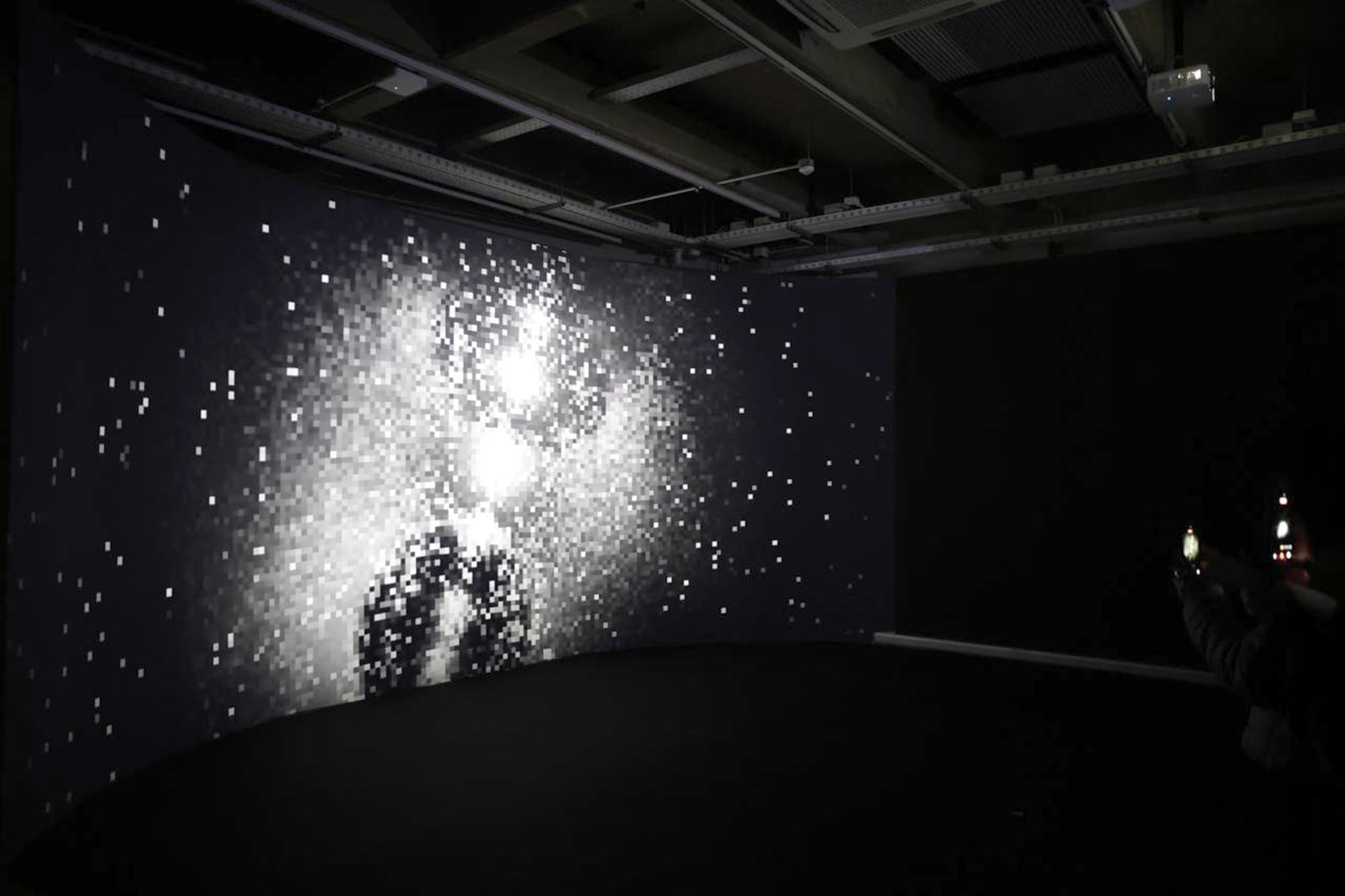
Artist Gabriel Valansi is challenging perceptions of reality and the essence of photography with his immersive installation, 'Unpunkt,' at Fundación Andreani. The exhibition, coinciding with the bicentennial of photography, delves into the evolution from analog images to the virtual abyss of digital information.
This is a real-time process: what is happening here is not a movie. It is a search conducted by artificial intelligence.
Valansi describes the experience as a real-time process, emphasizing that it's an AI-driven search, not a film. Visitors are surrounded by a constant flow of light points, representing the futile attempt to capture a single pixel – the smallest unit of visual information. "The pixel has no matter. It has no body, no mass, no shadow, and does not reflect light. Therefore, it cannot be photographed," Valansi explains. His work probes what happens to information when it detaches from physical matter.
The pixel has no matter. It has no body, no mass, no shadow, and does not reflect light. Therefore, it cannot be photographed.
'Unpunkt' traces the journey from the genesis of the analog image to the virtual realm. The exhibition features portraits of a silver grain, a key component of photographic film, captured with an electron microscope from the University of Buenos Aires. Evoking Borges' concept of the Aleph, a hologram spins to represent this powerful, minuscule element. Valansi suggests that while photography has provided two centuries of world representation, the perfect digital image of an object, like a table, no longer requires the actual table.
What happens to information when it ceases to belong to the realm of matter.
Complementing Valansi's exploration, artist Ernesto Ballesteros presents 'Espejismo' (Mirage), inspired by the Klein bottle, a surface with no distinct inside or outside. His installation creates a labyrinth of carpeted corridors leading nowhere, with windows displaying intricate human body structures. Ballesteros notes that we inhabit a world with eleven dimensions, but the unperceived ones are folded into a tiny space, making our worldview scale-dependent. He aims for viewers to become more self-aware in environments with few elements, finding a connection with their own bodies through this seemingly austere yet colorful analog creation.
Photography has gone as far as it could, and bequeathed us two hundred years of world representation. Today, the perfect image of a table does not need the table.
DistantNews Editorial
Originally published by La Nación in Spanish. Translated, summarized, and contextualized by our editorial team with added local perspective. Read our editorial standards.
More Stories


From Our Blog

What Gets Lost (and Found) When News Is Translated

The Critical Role of Diaspora Media in Global News

What Travellers Should Know About Countries with Restricted Press

A Digital Nomad's Guide to Following Local News

How the Same Story Looks Different in Different Countries
