


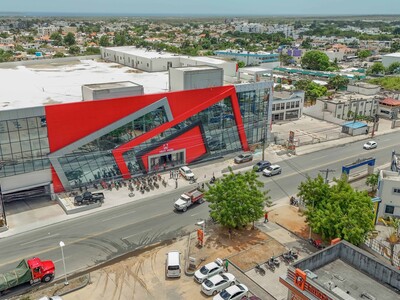
Impact of Chinese megastores on Dominican commerce
Translated from Spanish, summarized and contextualized by DistantNews.
At a glance
News
Sources not specified
Context piece
- Chinese megastores are expanding rapidly across the Dominican Republic, opening in intermediate cities and competing with local businesses.
- Concerns exist regarding the exact number of these stores, their import volumes, job creation, and tax compliance.
- Dominican merchants allege undervaluation and tax evasion, while Chinese business representatives cite economies of scale and efficient cost structures.
Chinese megastores are rapidly expanding throughout the Dominican Republic, moving beyond major cities like Santo Domingo and establishing a significant presence in intermediate towns. These large retail spaces, often occupying former commercial sites, offer a wide array of products, from household items to furniture, and are supplying resellers, fundamentally altering the market with their competitive pricing.
A key issue is the lack of precise data on these businesses. Authorities struggle to quantify their exact number, the volume of goods imported from China, the number of jobs they create, and their adherence to the same regulatory obligations as local competitors. This data gap fuels concerns among Dominican merchants who allege practices such as undervaluation of imported goods and tax evasion.
Representatives of Chinese businesses attribute their competitive edge to economies of scale, direct access to merchandise, and a more efficient cost structure. However, there is a lack of official, comprehensive data to verify these claims or the allegations made by local merchants. The core of the problem, according to observers, lies in ensuring that fiscal, customs, labor, and immigration regulations are applied equally to all businesses operating in the country.
The expansion signifies a shift from the traditional model of small, family-run businesses associated with Chinese immigrants in the Dominican Republic. The new wave of larger stores, often established by migrants from Fujian province, not only operate on a larger scale but also integrate import, warehousing, wholesale, and direct sales. This vertical integration allows them to offer prices that traditional Dominican retailers find difficult to match, impacting the local commercial landscape nationwide.
DistantNews Editorial
Originally published by Diario Libre in Spanish. Translated, summarized, and contextualized by our editorial team with added local perspective. Read our editorial standards.
More Stories

From Our Blog

What Gets Lost (and Found) When News Is Translated

The Critical Role of Diaspora Media in Global News

What Travellers Should Know About Countries with Restricted Press

A Digital Nomad's Guide to Following Local News

How the Same Story Looks Different in Different Countries
