


In 1953, Emma tried hiking the Appalachian Trail, got lost and was rescued; two years later...
Summarized and contextualized by DistantNews.
At a glance
In-depth
Named sources
Outcome reported
- Emma Gatewood, a 67-year-old woman, became the first woman to complete a solo thru-hike of the Appalachian Trail in 1955.
- Gatewood's journey covered 2,190 miles in 146 days, challenging perceptions of long-distance hiking and endurance.
- Her story of survival and independence is preserved in historical archives and a book.
In 1955, Emma Gatewood, then 67, achieved a remarkable feat by becoming the first woman to complete a solo thru-hike of the 2,190-mile Appalachian Trail. Her journey, which took 146 days, began two years after an initial attempt in 1953 ended with her getting lost and needing rescue. This time, Gatewood kept her plans secret from her adult children, fearing they would try to stop her.
She started at Mount Oglethorpe in Georgia, kept her plans secret from her adult children and walked all 2,190 miles alone.
Known widely as Grandma Gatewood, her accomplishment significantly altered public views on long-distance hiking and physical capabilities, particularly for women. Her story of strength and independence is documented in historical archives, including the Appalachian Mountain Club Library & Archives, and detailed in Ben Montgomery's 2014 book, "Grandma Gatewood's Walk."
Gatewood's life was marked by hardship. Born in 1887 in Ohio, she grew up in a log cabin with 14 siblings, facing a challenging family environment. Her marriage at 19 to Perry Clayton Gatewood brought decades of severe hardship, including documented domestic violence. A violent attack in 1939 left her with significant injuries, and she later obtained a divorce in 1940, raising her three youngest children alone.
She became the first woman to complete a solo thru-hike of the Appalachian Trail in a single season.
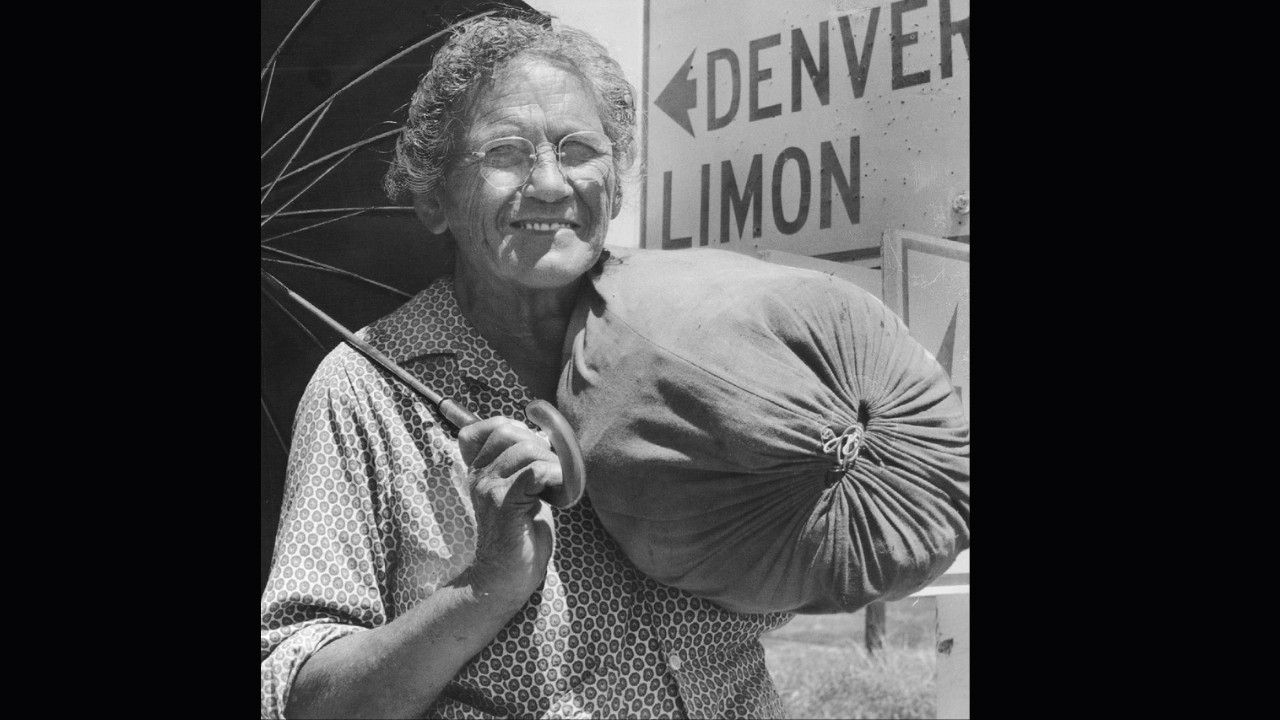
Inspired by an article about Earl Shaffer's 1948 hike, Gatewood decided to attempt the trail herself, noting no woman had completed it solo. For her successful 1955 hike, she adopted a minimalist approach, eschewing expensive gear for a handmade denim sack. Her equipment was basic, including a wool blanket, a few clothes, and simple food. She carried no sleeping bag, tent, compass, or detailed map, relying instead on her knowledge of wild plants and finding shelter where she could. She averaged about 14 miles a day, often starting at dawn and walking until exhaustion.
She carried her belongings in a handmade denim sack over her shoulder.
Her final push to Mount Katahdin in Maine on September 25, 1955, was arduous. She had fallen the previous day, breaking her glasses, spraining her ankle, and bruising her face. Despite these injuries, she persevered to reach the trail's northern terminus, completing her historic journey.
She did not carry a sleeping bag, tent, compass or detailed map.
DistantNews Editorial
Originally published by Times of India. Summarized and contextualized by our editorial team with added local perspective. Read our editorial standards.
More Stories



From Our Blog

What Press Freedom Means for the News You Read

What Gets Lost (and Found) When News Is Translated

The Critical Role of Diaspora Media in Global News

What Travellers Should Know About Countries with Restricted Press

A Digital Nomad's Guide to Following Local News
