


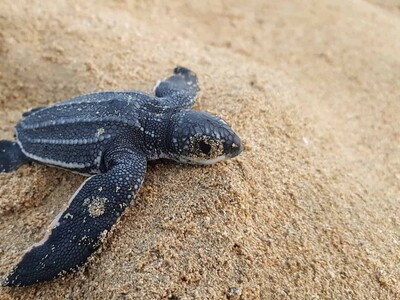
In Miches, former turtle egg poacher now protects sea turtle nests
Translated from Spanish and summarized by DistantNews. Read the original for the full story.
At a glance
In-depth
Named sources
Context piece
- Guillermo Sosa Amparo, a former turtle egg collector, now works as a coastal monitor for Protortuga in the Dominican Republic.
- Protortuga protects nests of leatherback, green and hawksbill turtles along beaches in Miches.
- Egg theft has fallen sharply, with the program reporting protection for about 95% of registered eggs and a 97.5% protection rate in 2025.
At 57, Guillermo Sosa Amparo can read a beach like few others. He follows tracks in the sand, identifies likely nesting sites and notices signs that might escape other observers.
For years, that knowledge served a different purpose. Sosa was a “huevero”, the local term for people who searched for turtle nests and took their eggs. Today, he does the opposite as a coastal monitor with Protortuga. Younger monitors, some barely in their twenties, now learn from his intimate knowledge of Miches’ beaches and turtles.
His story reflects a broader change along the eastern Dominican coast. People from communities where turtle eggs were extracted for decades have become part of the effort to protect the animals. Protortuga monitors the beaches of Limón, Celedonio, Esmeralda and La Vacama, where leatherback, green and hawksbill turtles come to reproduce.
The program combines beach patrols, nest identification and protection, hatchling monitoring, releases and scientific data collection. José Manuel Pérez, a monitor at Celedonio Beach, says the greatest satisfaction comes from recovering a nest and helping as many turtles as possible hatch.
The work demands early starts, long walks and night patrols. Protortuga estimates that about 90% of eggs were stolen before systematic monitoring began. It now protects roughly 95% of registered eggs, reporting a 97.5% anti-poaching protection rate in 2025. As theft has declined, erosion, excess moisture, roots entering nests and feral animals, especially dogs, have become more visible threats. Monitors say daily patrols remain essential.
About this summary
Originally published by Diario Libre in Spanish. Translated, summarized, and contextualized automatically by DistantNews, with a note on how the source frames the story. Not individually reviewed before publishing. How this works.
More Stories



From Our Blog

What Gets Lost (and Found) When News Is Translated

The Critical Role of Diaspora Media in Global News

What Travellers Should Know About Countries with Restricted Press

A Digital Nomad's Guide to Following Local News

How the Same Story Looks Different in Different Countries
