


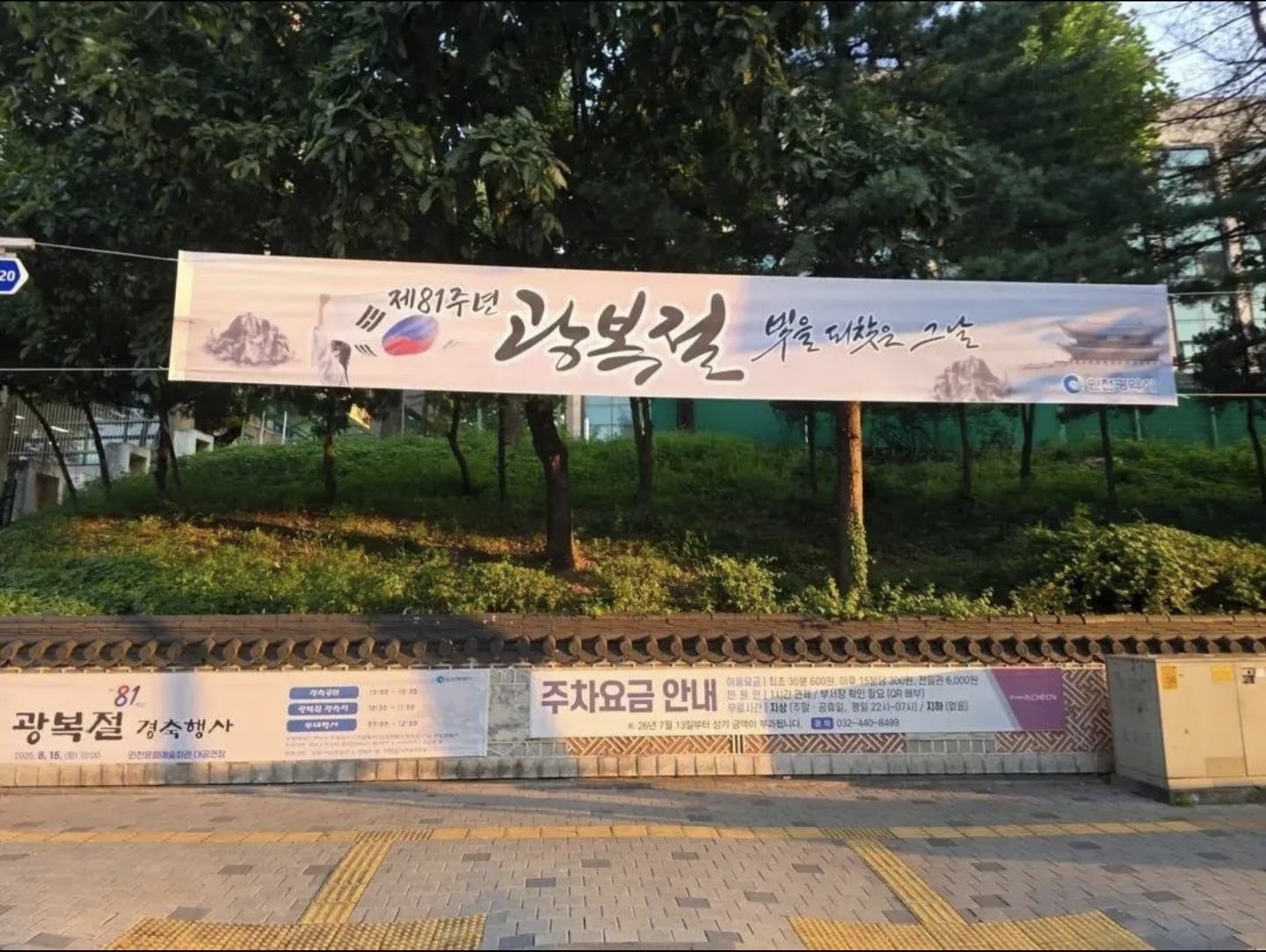
Incheon Removes Independence Day Banner After Taegeukgi Depiction Sparks Controversy
Translated from Korean, summarized and contextualized by DistantNews.
At a glance
News
Sources not specified
Outcome reported
- An Independence Day banner in Incheon, South Korea, featuring a Taegeukgi (national flag) was removed following controversy.
- Some social media users claimed the flag's colors were inverted, sparking debate.
- The city stated the flag's depiction was intentional, reflecting how an independence activist might hold it, but removed the banner to prevent further misunderstanding.
An Independence Day banner displayed by the Incheon city government in South Korea was taken down after a controversy erupted over the depiction of the national flag, the Taegeukgi. The banner, intended to commemorate Liberation Day, featured an image of an independence activist holding the flag.
Social media users pointed out that the colors on the flag appeared inverted, with the red and blue elements seemingly swapped. This sparked widespread discussion and criticism online. Some posts included reactions from celebrities like Kim Heechul and Choi Siwon, who commented with Taegeukgi emojis.
Incheon city officials defended the banner's design, explaining that the flag's orientation was depicted as it would be held by an independence activist. They argued that from that perspective, the colors were correctly represented. However, acknowledging the potential for misinterpretation and the spread of unnecessary misunderstandings, the city decided to remove the banner.
An Incheon city official stated, "The Taegeukgi on the banner reflects the position of an independence activist holding it, and there is no problem with the pattern itself. However, we removed it to prevent any potential for misunderstanding."
The Taegeukgi on the banner reflects the position of an independence activist holding it, and there is no problem with the pattern itself. However, we removed it to prevent any potential for misunderstanding.
DistantNews Editorial
Originally published by Dong-A Ilbo in Korean. Translated, summarized, and contextualized by our editorial team with added local perspective. Read our editorial standards.
More Stories


From Our Blog

What Gets Lost (and Found) When News Is Translated

The Critical Role of Diaspora Media in Global News

What Travellers Should Know About Countries with Restricted Press

A Digital Nomad's Guide to Following Local News

How the Same Story Looks Different in Different Countries
