


‘Inconvenient beneficial insects’ Lovebugs are back; peak expected this week
Translated from Korean, summarized and contextualized by DistantNews.
At a glance
News
Named sources
Context piece
- "Lovebugs" (red-backed leaf beetles) are swarming again in the Seoul metropolitan area, with peak activity expected around June 24.
- These beetles are ecologically beneficial, aiding soil purification and pollination, but their large-scale appearance causes significant public inconvenience.
- Authorities are implementing control measures like traps and water spraying, while experts link the surge to climate change and expanding habitats.
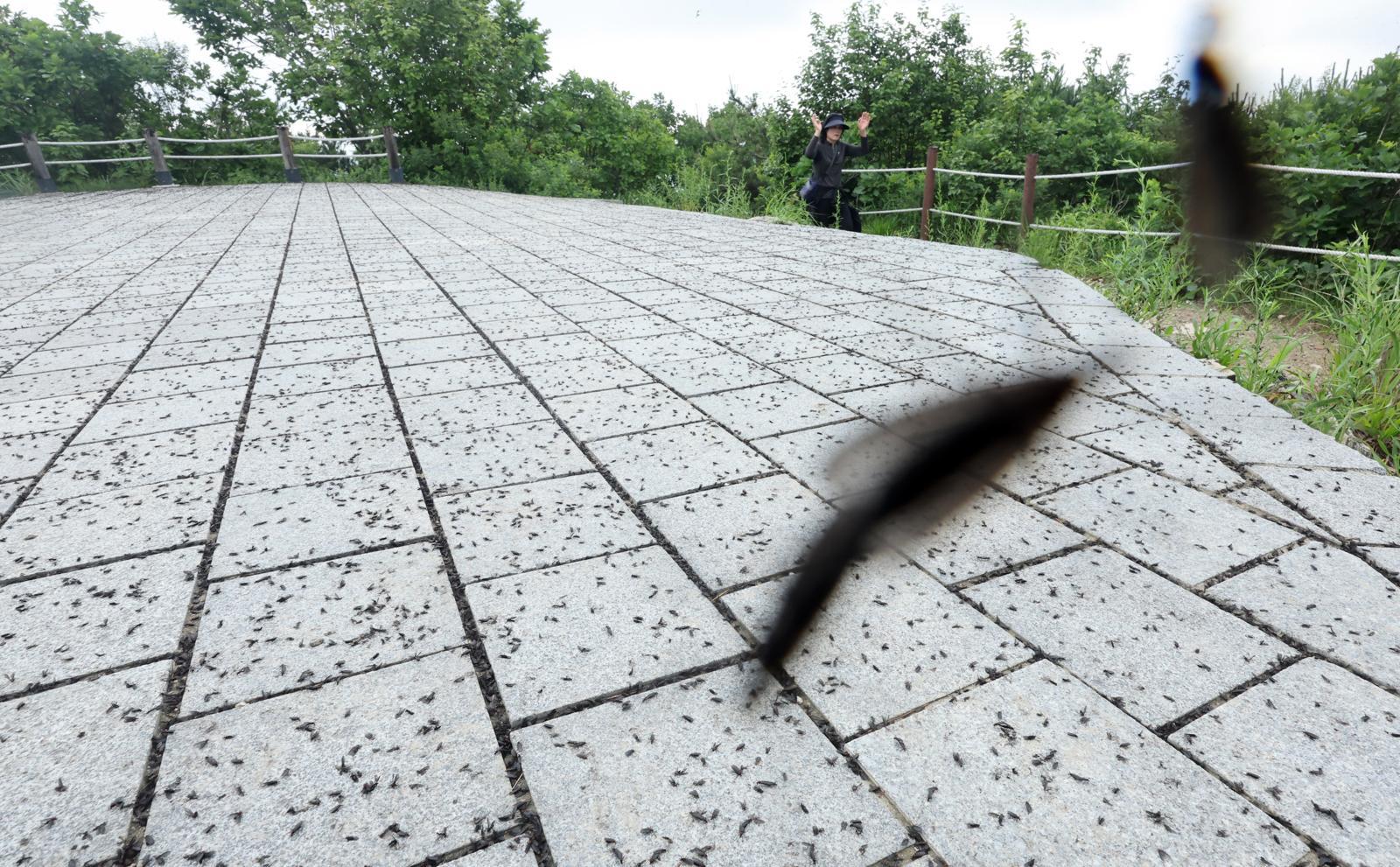
The 'lovebug' season has returned to South Korea's capital region, with large numbers of the red-backed leaf beetle, known locally as 'lovebugs,' emerging. The insects are predicted to be most active around June 24, with their numbers expected to decline significantly about two weeks after the peak, owing to their short lifespan.
Lovebug complaints have been coming in since the 15th.
Despite being harmless and ecologically beneficial, they help purify soil as larvae and act as pollinators as adults, the lovebugs' mass appearances since 2022 have caused considerable public nuisance and a surge in complaints. Seoul's infectious disease management division reported receiving complaints about the beetles starting mid-June, mirroring the situation in areas like Incheon's Gyeyangsan mountain, which was heavily infested last year.
Adults live for only 3-4 days for males and 7 days for females, so numbers tend to decrease rapidly about two weeks after a large outbreak.
Experts attribute the increased proliferation of lovebugs to rising temperatures linked to climate change, which has also expanded their habitats. Investigations reveal larvae are now present in many areas of Seoul, Incheon, and surrounding Gyeonggi Province, including regions where they were not previously observed. To manage the situation, Seoul has deployed over 4,800 traps using attractants, and local districts are planning large-scale water spraying operations, leveraging the beetles' sensitivity to water. Residents are advised to wear dark clothing outdoors, as the bugs are attracted to light colors, and to wash vehicles promptly to prevent paint damage from accumulated insect bodies.
Lovebugs are not toxic and do not transmit diseases. As larvae, they purify soil by decomposing organic matter, and as adults, they contribute to ecological cycles by transferring pollen like bees; they are beneficial insects.
DistantNews Editorial
Originally published by Hankyoreh in Korean. Translated, summarized, and contextualized by our editorial team with added local perspective. Read our editorial standards.
More Stories

From Our Blog

What Gets Lost (and Found) When News Is Translated

The Critical Role of Diaspora Media in Global News

What Travellers Should Know About Countries with Restricted Press

A Digital Nomad's Guide to Following Local News

How the Same Story Looks Different in Different Countries
