


India's data centre capacity may reach 3-3.6 GW by 2030, hyperscalers to drive growth: Axis Capital
Summarized and contextualized by DistantNews.
At a glance
News
Named sources
Context piece
- India's data center capacity is projected to reach 3-3.6 GW by 2030, driven by hyperscalers and AI cloud demand.
- Hyperscalers like AWS, Microsoft, and Google are expected to account for 90% of demand by 2030.
- Execution, supply chain, and power availability challenges may limit actual operational capacity below industry targets.
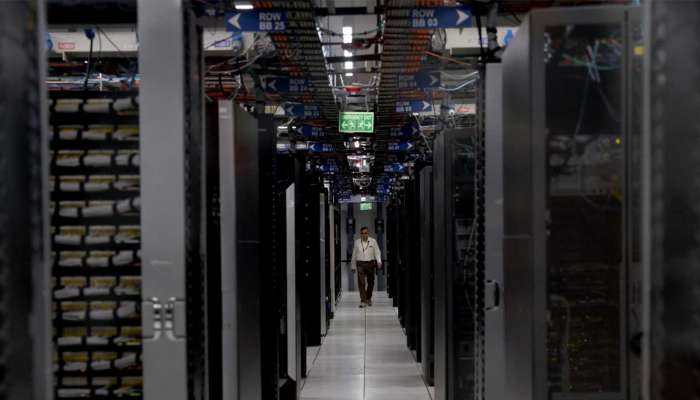
India's data center capacity is poised for significant growth, potentially reaching 3-3.6 gigawatts (GW) by 2030, according to a report cited by Axis Capital. This expansion is expected to be primarily fueled by hyperscalers and emerging AI-focused cloud providers, who are projected to become the dominant forces in new demand. Companies such as Amazon Web Services, Microsoft, and Google are expanding their infrastructure, while the demand for hosting large language models is also accelerating.
Hyperscalers are anticipated to represent approximately 90% of the data center demand by 2030, a substantial increase from their current 60% share. In contrast, enterprise demand is expected to remain relatively stable in absolute terms. Currently, India's installed data center capacity stands at about 1.3-1.4 GW. Third-party colocation facilities hold the largest market share (60-65%), followed by hyperscaler captive or leased capacity (25-30%), and then enterprise and edge data centers (8-10% and 2-3%, respectively).
Despite ambitious public targets of 6-8 GW by 2030, the report suggests a more realistic operational capacity of around 2.8 GW, with planned capacity reaching 3.4-3.6 GW by mid-2030. This conservative outlook is attributed to challenges in project execution, securing adequate power supply, obtaining necessary equipment, and meeting construction timelines. Supply chain bottlenecks are a significant concern, with hyperscaler-grade backup generation equipment facing a two-year booking period. Furthermore, shortages of EPC contractors, manpower, and lengthy power-sanctioning processes (around 18 months) could impede progress.
The capital intensity for data centers is also on the rise, particularly for AI-enabled facilities. These advanced infrastructures require more expensive components, leading to a 10-15% cost premium compared to traditional colocation builds. AI-enabled infrastructure costs approximately Rs 48-54 crore per MW, excluding IT hardware, whereas traditional builds cost around Rs 44-46.6 crore per MW. If all announced projects are realized, India's data center capacity could reach 7-8 GW by 2035, presenting long-term opportunities in various sectors including power, cooling, construction, and electrical equipment.
DistantNews Editorial
Originally published by Times of Oman. Summarized and contextualized by our editorial team with added local perspective. Read our editorial standards.
More Stories



From Our Blog

What Gets Lost (and Found) When News Is Translated

The Critical Role of Diaspora Media in Global News

What Travellers Should Know About Countries with Restricted Press

A Digital Nomad's Guide to Following Local News

How the Same Story Looks Different in Different Countries
