


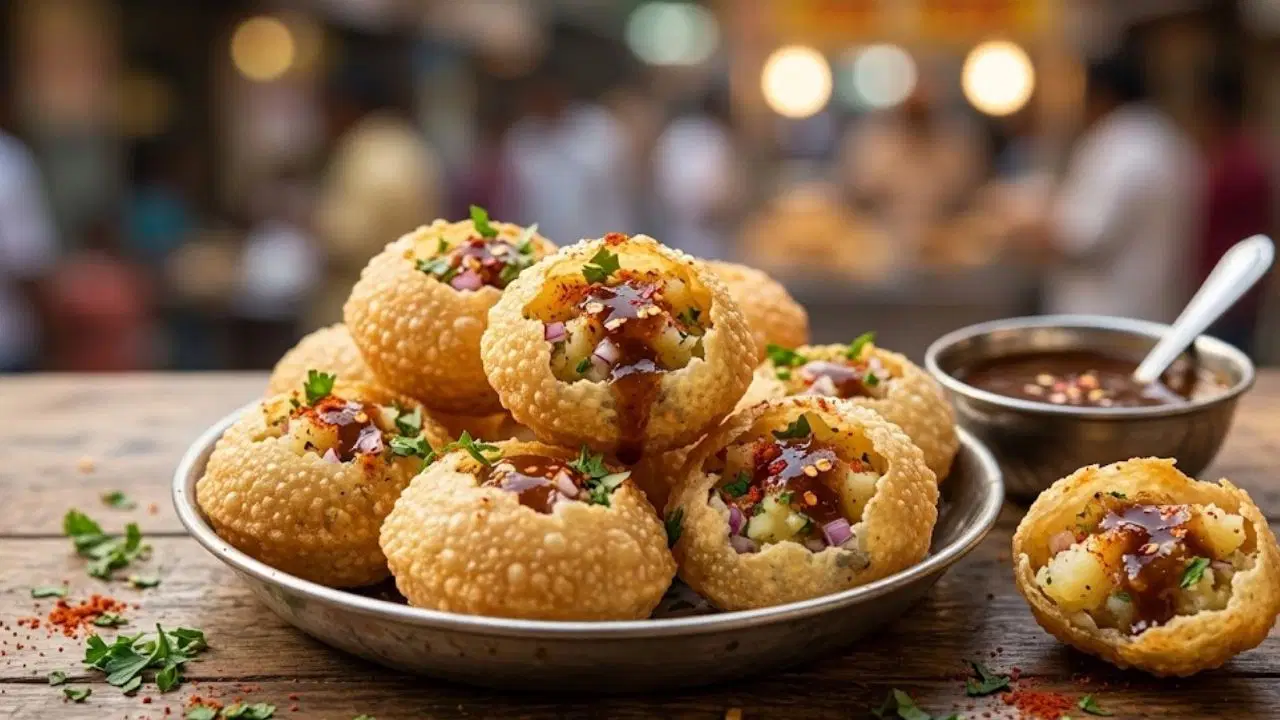
India’s Famous Street Food: How to Make Pani Puri
Translated from Turkish and summarized by DistantNews. Read the original for the full story.
At a glance
In-depth
Sources not specified
Context piece
- Pani puri is a popular Indian street snack made from crisp, fried dough shells filled with potato, spices and flavored water.
- The recipe serves about four people and makes 24 to 30 pani puris.
- The puris should be eaten immediately after filling because the spiced water can soften them.
Pani puri brings together crisp fried shells, a spiced potato filling and tangy, aromatic water in one of India’s best-known street foods.
The snack uses hollow, fried dough balls. Cooks typically fill them with boiled potatoes, chickpeas or sprouted mung beans, then add water flavored with mint, coriander, tamarind and spices. The dish is known as pani puri in Mumbai, while other parts of India call it golgappa, puchka or gupchup.
The filling in this recipe combines two or three medium potatoes with a small onion, chopped coriander, roasted cumin, chaat masala, red pepper and salt. The spiced water uses fresh mint, coriander, ginger, green chilies, tamarind, jaggery or sugar, roasted cumin, chaat masala, salt and water. Tamarind or date chutney and boondi can be added according to taste.
To prepare it, cooks boil and chop the potatoes before mixing them with the onion, coriander and seasonings. They blend the herbs, ginger and chilies for the pani, then add the remaining ingredients and enough water to reach the desired consistency. After chilling the mixture, they open each puri, add the filling, and finish it with chutney and spiced water. The recipe is designed for roughly four people and 24 to 30 shells.
About this summary
Originally published by Cumhuriyet in Turkish. Translated, summarized, and contextualized automatically by DistantNews, with a note on how the source frames the story. Not individually reviewed before publishing. How this works.
More Stories


From Our Blog

What Gets Lost (and Found) When News Is Translated

The Critical Role of Diaspora Media in Global News

What Travellers Should Know About Countries with Restricted Press

A Digital Nomad's Guide to Following Local News

How the Same Story Looks Different in Different Countries
