


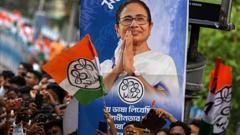
India's Mamata Banerjee faces party revolt after losing power
Translated from English, summarized and contextualized by DistantNews.
At a glance
News
Sources not specified
Context piece
- Mamata Banerjee's Trinamool Congress party faces a significant crisis after losing power in West Bengal.
- A large number of legislators have revolted against the leadership, and MPs are reportedly seeking to align with the ruling BJP.
- The party, once India's most successful regional force, is now grappling with internal divisions and questions about its future unity.
Mamata Banerjee, once hailed as one of India's most influential female politicians, is facing an existential challenge as her Trinamool Congress (TMC) party unravels weeks after losing power in West Bengal. The party, which ended 34 years of Communist rule in 2011 and governed the state for 15 years, is now experiencing a severe internal crisis.
Within weeks of the election defeat, approximately three-quarters of the TMC's state legislators revolted against Banerjee and her nephew, Abhishek Banerjee, who is widely considered her heir. The rebels seized control of the legislative wing, appointed their own opposition leader, and accused the leadership of forging signatures. This internal mutiny has now extended to the national level, with reports indicating that 20 of the party's 28 Members of Parliament have written to the speaker seeking to break away and align with the BJP-led ruling alliance.
Despite the BJP's victory, the TMC remains a substantial political force, having secured 26 million votes and about 40% of the popular vote. However, instead of regrouping, the party appears to be fragmenting. The scale of the legislative revolt and the potential parliamentary split signal a profound crisis for the TMC's leadership and unity, raising serious doubts about its ability to navigate the post-election landscape.
DistantNews Editorial
Originally published by BBC News in English. Translated, summarized, and contextualized by our editorial team with added local perspective. Read our editorial standards.
More Stories



From Our Blog

What Gets Lost (and Found) When News Is Translated

The Critical Role of Diaspora Media in Global News

What Travellers Should Know About Countries with Restricted Press

A Digital Nomad's Guide to Following Local News

How the Same Story Looks Different in Different Countries
