


India's Space Startups Take Flight, But Scaling Remains a Challenge
Translated from English, summarized and contextualized by DistantNews.
At a glance
News
Named sources
Context piece
- Skyroot Aerospace's Vikram-1 launch makes India the third nation with private orbital launch capability.
- The startup achieved a US$1 billion valuation after raising US$60 million in May.
- Despite breakthroughs, Indian space startups face funding hurdles for scaling beyond technology validation.
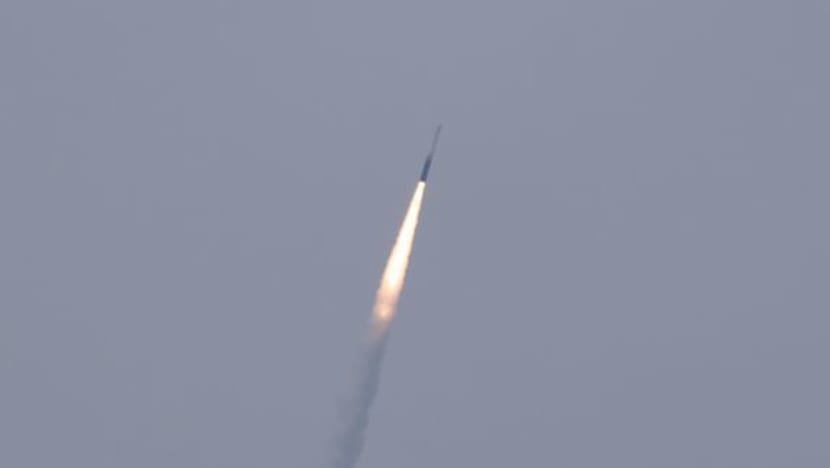
India's commercial space industry achieved a historic milestone on July 18 when Skyroot Aerospace's Vikram-1 successfully lifted off, marking India as the third country, after the United States and China, capable of orbital launches through a private enterprise.
Skyroot Aerospace became India's first space startup to surpass a US$1 billion valuation following a US$60 million funding round in May, co-led by Singapore's sovereign wealth fund GIC and Sherpalo Ventures. The Vikram-1, a seven-storey, multi-stage launch vehicle, is designed to carry payloads of up to 350kg into low-Earth orbit. This successful launch highlights the significant progress of India's private space sector since the government opened the industry to greater private participation in 2020.
The Indian government has been actively promoting private involvement. The Indian National Space Promotion and Authorisation Centre (IN-SPACe) was established to regulate and foster private participation in a sector long dominated by the Indian Space Research Organisation (ISRO). Currently, over 400 companies are part of India's private space ecosystem.
We are trying to see what technology transfer can be done with ISRO so they don’t reinvent the wheel. We are also trying to create technology adoption funds, different types of schemes, public partnerships, generating demand.
IN-SPACe director Rajeev Jyoti emphasized the importance of technology transfer from ISRO to avoid redundant efforts and mentioned the creation of technology adoption funds and public-private partnerships to generate demand. The agency recently selected its first group of startups for funding under its Technology Adoption Fund (TAF) scheme, including Bengaluru-based SatSure, which utilizes satellite imagery for decision-making in agriculture, infrastructure, lending, and insurance.
SatSure is developing Dhaarini, an Earth intelligence system powered by India-specific AI capabilities. Co-founder and CEO Prateep Basu described it as a "backbone" for interpreting vast amounts of satellite imagery, comparing its interface to ChatGPT for accessing land-related information. The demand for reliable satellite observations also creates opportunities for companies building and operating satellites, such as Pixxel, which is developing a "health monitor for the planet" using hyperspectral imagery.
You can simply interface like what you do on ChatGPT. You can interface over Dhaarini – tell me what happened on this particular piece of land and it will give you the answers.
DistantNews Editorial
Originally published by CNA in English. Translated, summarized, and contextualized by our editorial team with added local perspective. Read our editorial standards.
More Stories



From Our Blog

What Gets Lost (and Found) When News Is Translated

The Critical Role of Diaspora Media in Global News

What Travellers Should Know About Countries with Restricted Press

A Digital Nomad's Guide to Following Local News

How the Same Story Looks Different in Different Countries
