


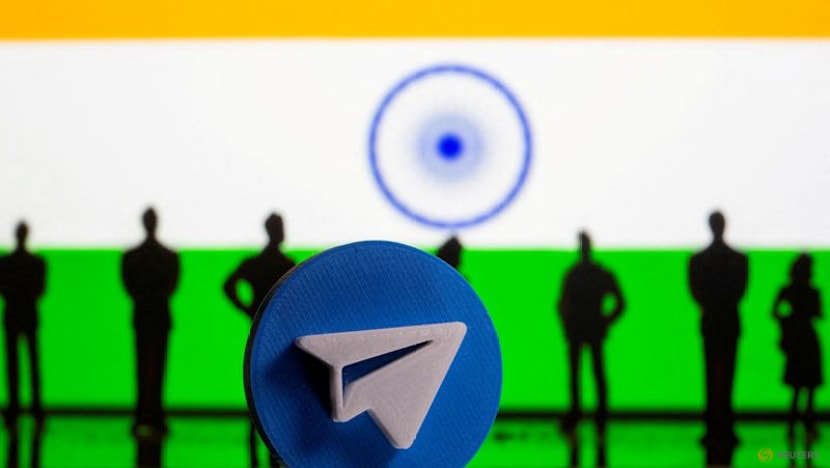
India Sparred With Telegram Over Leaked Papers Before App Ban
Translated from English, summarized and contextualized by DistantNews.
At a glance
News
Documents & data
Under investigation
- India privately criticized Telegram for failing to remove accounts offering leaked exam papers before banning the app.
- Telegram challenged the ban, arguing it violates free speech and constitutional rights.
- The dispute highlights ongoing tensions between India's government and tech platforms over content moderation.
India privately rebuked the messaging app Telegram for its perceived inaction on accounts allegedly distributing leaked exam papers, just days before imposing an unprecedented ban on the service. Documents reveal an impasse where Telegram accused New Delhi of misrepresenting meeting records, leading to the government invoking emergency powers to block the app until June 22.
inaction
The ban was enacted amid concerns that Telegram was being exploited to defraud candidates seeking admission to medical colleges through the NEET exam. The results of this prestigious national entrance test were canceled in May due to suspected paper leaks, with a rescheduled exam set for June 21. Telegram, which boasts 150 million users in India, its largest market, has contested the ban in the Delhi High Court, asserting that it infringes upon constitutional protections and free speech rights.
This confrontation marks the latest in a series of clashes between Prime Minister Narendra Modi's government and technology companies. Last year, the government engaged in a legal battle with Elon Musk's X over content moderation policies. Reuters obtained documents showing that the June 16 ban order followed two weeks of intense exchanges between India's IT ministry and Telegram officials. New Delhi accused Telegram of "inaction" regarding channels like "NEET PAPER LEAKED," which it claimed clearly indicated their suspicious nature and fraudulent intent.
surprised at the suggestion that it has been inactive in addressing unlawful content
Telegram, however, responded in subsequent emails, expressing surprise at the suggestion of inactivity and reiterating its policy against unlawful content. Neither India's IT ministry nor Telegram responded to Reuters' queries for comment. While WhatsApp remains India's most popular messaging app, Telegram's larger group capacity (up to 200,000 members) and anonymity features have also made it attractive for illicit activities, despite Telegram's denials and claims of prompt action against misuse.
the ban undermines constitutional protections and free speech rights
Telegram's founder, Pavel Durov, called the Indian government's ban "a mistake" that punishes legitimate users, suggesting that leaks would simply migrate to other platforms. He further criticized the move indirectly, posting on X: "Over 300,000 people die of drowning each year. In order to protect society, it is now illegal to consume or possess water." The Indian government maintains that the issue of purported frauds linked to the NEET exam is "most pronounced on Telegram."
the issue of purported frauds linked to the NEET exam is "most pronounced on Telegram."
DistantNews Editorial
Originally published by CNA in English. Translated, summarized, and contextualized by our editorial team with added local perspective. Read our editorial standards.
More Stories



From Our Blog

What Gets Lost (and Found) When News Is Translated

The Critical Role of Diaspora Media in Global News

What Travellers Should Know About Countries with Restricted Press

A Digital Nomad's Guide to Following Local News

How the Same Story Looks Different in Different Countries
