


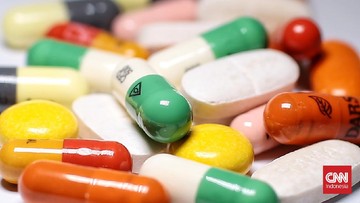
Indonesia assures JKN drug prices won't surge on rupiah's fall
Translated from Indonesian, summarized and contextualized by DistantNews.
At a glance
News
Sources not specified
New plan
- Indonesia's Health Ministry assures that the prices of medicines under the national health insurance program (JKN/BPJS) will not increase significantly due to currency fluctuations or rising oil prices.
- Minister of Health Budi Gunadi Sadikin stated that while some commercial drug prices might see reasonable adjustments, JKN-covered medications will remain stable.
- The ministry has calculated acceptable price increase limits, deeming 10-20% as reasonable, while higher increases would be considered exploitative.
Indonesia's Ministry of Health has moved to reassure the public that the prices of medicines covered by the national health insurance program, JKN or BPJS, will not experience sharp increases. This assurance comes amid concerns over the rupiah's weakening against the US dollar and rising oil prices.
Minister of Health Budi Gunadi Sadikin confirmed that the ministry has assessed which price hikes are justifiable and which are not. "For BPJS medicines, we have succeeded in maintaining stability," he stated. He explained that the rupiah's exchange rate fluctuations do not directly translate to equal price increases for medicines, as a significant portion of production costs are still in local currency.
The government has established what it considers a reasonable limit for price adjustments. Increases between 10% and 20% are deemed acceptable, but any rise exceeding this threshold will be viewed as an attempt to unfairly profit. "Ten to 20 percent is still reasonable. But if it's above that, don't take advantage of it," the minister cautioned.
Lucia Rizka Andalusia, Director General of Pharmaceuticals and Medical Devices at the Ministry of Health, echoed this sentiment. She confirmed that the ministry has been coordinating with the pharmaceutical industry on price calculations and stressed that the maximum allowable price adjustment for any drug will not exceed 20%. "The highest is 20 percent. Depending on the type of drug, some will only increase by 5 percent or 10 percent. But it cannot be more than 20 percent," she clarified. The government's commitment is to ensure that prices for JKN-covered medications remain unaffected, even as commercial drug prices undergo adjustments.
DistantNews Editorial
Originally published by CNN Indonesia in Indonesian. Translated, summarized, and contextualized by our editorial team with added local perspective. Read our editorial standards.
More Stories



From Our Blog

What Gets Lost (and Found) When News Is Translated

The Critical Role of Diaspora Media in Global News

What Travellers Should Know About Countries with Restricted Press

A Digital Nomad's Guide to Following Local News

How the Same Story Looks Different in Different Countries
