


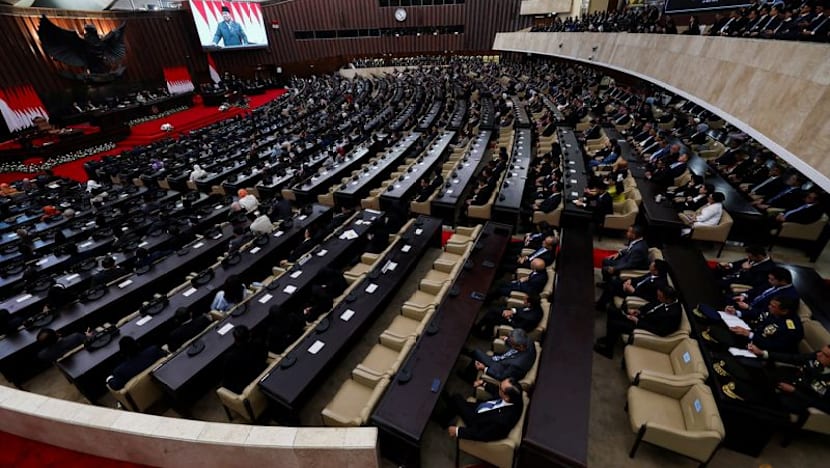
Indonesia passes sweeping bill expanding central bank role to spur growth
Summarized and contextualized by DistantNews.
At a glance
News
Official statement
Approved/passed
- Indonesia's parliament passed a bill expanding the central bank's role in supporting economic growth.
- The legislation also empowers lawmakers to evaluate independent financial regulators and the central bank.
- The move comes amid investor concerns about potential political interference and follows recent credit rating outlook downgrades for Indonesia.
Indonesia's parliament has approved sweeping legislation that broadens the mandate of Bank Indonesia, the nation's central bank, to prioritize economic growth. The bill, passed by acclamation with support from all parties, also grants lawmakers the authority to scrutinize independent financial regulators and the central bank itself.
This legislative development occurs as President Prabowo Subianto aims to achieve an ambitious 8 percent economic expansion during his term. Finance Minister Purbaya Yudhi Sadewa stated that the new law will require the central bank to implement policies that foster an economic environment conducive to real sector growth and job creation. The bill's passage was largely anticipated, given President Prabowo's "big-tent" coalition controls over 80 percent of parliament.
However, the expansion of the central bank's role has raised concerns among investors regarding the potential for political interference. These worries surface at a time when Indonesia, a $1.4 trillion G20 economy, is already facing a cooling investor sentiment. Both Moody's and Fitch recently revised their credit rating outlooks for Indonesia to negative from stable, citing diminished policymaking credibility and predictability.
The Indonesian rupiah has also experienced significant depreciation, losing over 7 percent against the U.S. dollar year-to-date, making it one of the worst-performing emerging Asian currencies. It reached a historic low of 18,045 per dollar on Thursday. The stock market has seen a substantial decline, plunging more than 30 percent so far this year. While promoting sustainable economic growth is already part of Bank Indonesia's mandate, alongside price and foreign exchange rate stability, the new legislation places a more explicit emphasis on this objective.
that create an economic environment conducive to real sector growth and job creation
DistantNews Editorial
Originally published by CNA. Summarized and contextualized by our editorial team with added local perspective. Read our editorial standards.
More Stories



From Our Blog

What Gets Lost (and Found) When News Is Translated

The Critical Role of Diaspora Media in Global News

What Travellers Should Know About Countries with Restricted Press

A Digital Nomad's Guide to Following Local News

How the Same Story Looks Different in Different Countries
