


Indonesia plans personal health accounts modeled on mobile banking
Translated from Indonesian and summarized by DistantNews. Read the original for the full story.
At a glance
News
Named sources
New plan
- Health Minister Budi Gunadi Sadikin said the government plans to create personal health accounts containing each citizen’s medical records.
- The system could combine diagnoses, laboratory results, medicines and radiology records, with possible artificial intelligence recommendations.
- The ministry wants about 98,000 health facilities, including hospitals and community health centers, to send complete data to the SATUSEHAT system.
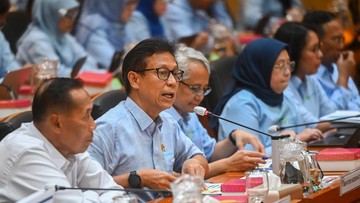
Indonesia’s government is preparing a personal health account that Health Minister Budi Gunadi Sadikin compared with mobile banking, except that it would show a person’s medical record instead of their finances.
Budi described the plan during the launch of the SATUSEHAT Electronic Medical Record Viewer in Jakarta. He said people should be able to check their health status whenever they want, much as they check their bank balance. “If we can know the condition of our financial account every minute, every hour, this can show us what the condition of our health account is,” he said.
If we can know the condition of our financial account every minute, every hour, this can show us what the condition of our health account is.
The planned account would collect records from different healthcare providers in one system. The ministry expects it to include diagnoses, laboratory results, medication and radiology data. Budi also envisioned linking the account to artificial intelligence so it could provide recommendations based on a user’s health condition.
Please make sure it is not only connected, not only sending data, but that the data is complete.
The Health Ministry has asked providers to integrate their data fully, rather than merely connect to the system or send partial records. The effort covers about 3,200 hospitals, 10,000 community health centers and a wider network of roughly 98,000 facilities, including clinics, pharmacies and laboratories.
Azhar Jaya, director general of advanced health services, said patients moving between facilities would no longer need to carry paper medical files. They would provide their national identity number, known as NIK, to access their medical history. He said the integration should speed up services and help doctors diagnose patients, while access to records would remain restricted to protect confidentiality.
When people move from one healthcare facility to another, they will not need to carry files. They only need to provide their NIK, and their complete medical history will appear.
About this summary
Originally published by CNN Indonesia in Indonesian. Translated, summarized, and contextualized automatically by DistantNews, with a note on how the source frames the story. Not individually reviewed before publishing. How this works.
More Stories


From Our Blog

What Gets Lost (and Found) When News Is Translated

The Critical Role of Diaspora Media in Global News

What Travellers Should Know About Countries with Restricted Press

A Digital Nomad's Guide to Following Local News

How the Same Story Looks Different in Different Countries
