


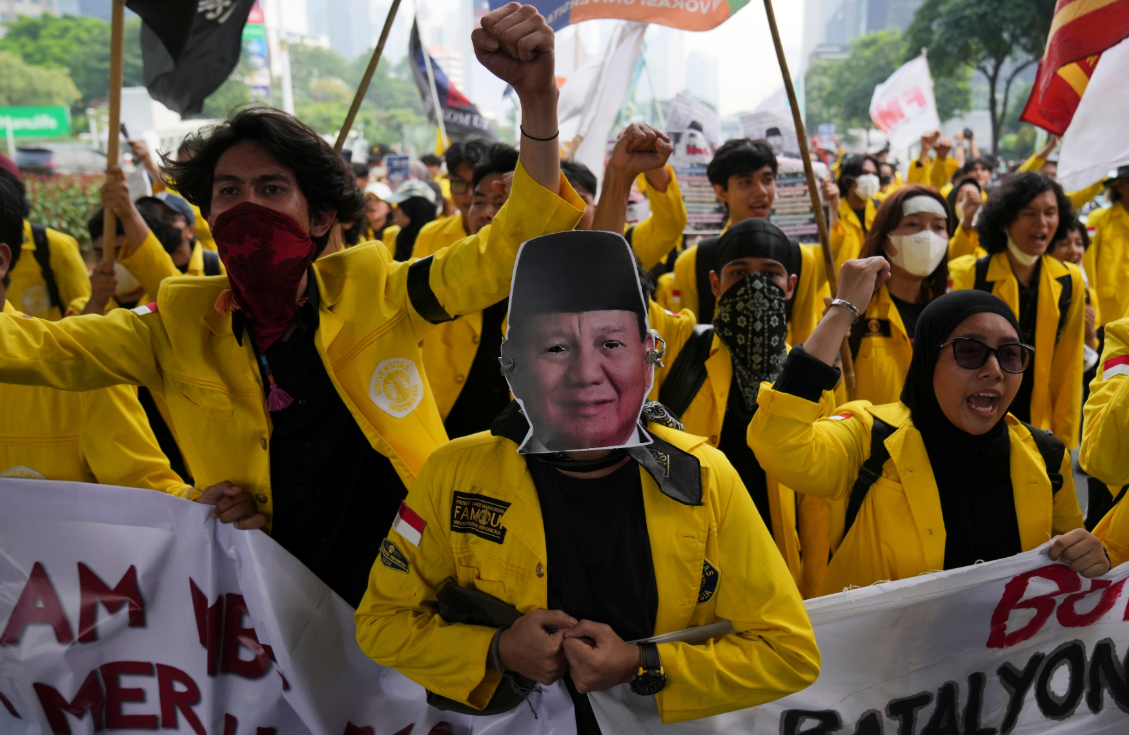
Indonesia's economy falters as students warn of bankruptcy amid policy concerns
Translated from Korean, summarized and contextualized by DistantNews.
At a glance
News
Named sources
Context piece
- Indonesia's stock market has plummeted 31% this year, making it the worst performer globally, while its currency has also fallen sharply, nearing a foreign exchange crisis.
- Investors are fleeing the Indonesian market, once hailed as a "darling of emerging markets," due to concerns over President Prabowo Subianto's policies, particularly his ambitious free school meal program.
- Despite strong GDP growth, the "3% rule" for fiscal deficit is under pressure, with the free meal program's massive budget and potential corruption raising alarms among students and investors.
Indonesia, once lauded as a prime investment destination, is now facing a severe economic downturn, with its stock market plunging 31% this year and its currency hitting historic lows against the dollar. This dramatic shift has led to a mass exodus of foreign investors, who once flocked to the nation's promising markets.
The country is heading towards bankruptcy.
The current economic anxieties are largely attributed to the policies of President Prabowo Subianto, who took office in October. A key concern is his flagship "free school meal" program, an ambitious initiative promising a daily meal to all students and pregnant women. While intended to benefit millions, the program's immense cost, estimated at 268 trillion rupiah (approximately $16 billion) this year, is straining the national budget.
The Jakarta Composite Index has fallen below 6,000 points in June. It has fallen 31% this year, recording the worst performance in the global stock market.
Adding to the concerns are allegations of corruption within the program's administration, with the head of the National Nutrition Agency arrested on charges of funneling contracts to his own foundation. Reports of frequent food poisoning incidents linked to the school meals and criticism over the low per-meal cost further highlight the program's operational issues. This has prompted student protests, with demonstrators warning that the country is heading towards bankruptcy.
The Indonesian rupiah exchange rate exceeded 18,000 rupiah per dollar in June. This is the highest level ever, not even surpassed during the 1998 foreign exchange crisis.
Indonesia's economic stability has long been anchored by the "3% rule," a law enacted after the 1998 Asian financial crisis, which limits the annual fiscal deficit to 3% of GDP. This rule, once considered sacrosanct, is now under immense pressure. The government's initial projections suggested the free meal program could be accommodated within this limit, but unforeseen global events, such as the Iran war and rising oil prices, have complicated budget calculations. The situation has led to emergency interest rate hikes by the central bank, further signaling the country's precarious economic standing.
The free meal program's massive budget is a huge sum, accounting for 7% of Indonesia's total budget this year.
DistantNews Editorial
Originally published by Dong-A Ilbo in Korean. Translated, summarized, and contextualized by our editorial team with added local perspective. Read our editorial standards.
More Stories

From Our Blog

What Gets Lost (and Found) When News Is Translated

The Critical Role of Diaspora Media in Global News

What Travellers Should Know About Countries with Restricted Press

A Digital Nomad's Guide to Following Local News

How the Same Story Looks Different in Different Countries
