


Indonesia's Press Council demands AI pay for journalistic work
Translated from Indonesian, summarized and contextualized by DistantNews.
At a glance
News
Named sources
New plan
- Indonesia's Dewan Pers is pushing for revisions to the Copyright Law to ensure journalistic products receive economic compensation from AI companies.
- AI companies currently use journalistic content for algorithms without paying royalties, threatening the sustainability of journalism.
- The proposed revision aims to establish that journalistic works have economic rights, requiring licenses and royalties for commercial use, including by AI platforms.
Jakarta, Indonesia – Indonesia's Press Council (Dewan Pers) is advocating for revisions to the nation's Copyright Law to secure economic rights for journalistic works, particularly in the face of artificial intelligence disruption. The council hopes the proposed amendments to Law Number 28 of 2014 will gain broad support.
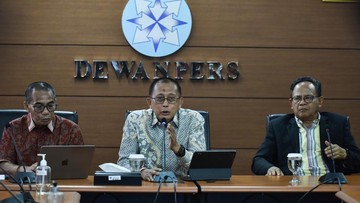
Dahlan Dahi, head of Dewan Pers's Digital and Sustainability Commission, stated that current AI algorithms freely utilize journalistic content for information distribution without any compensation. "Currently, journalistic works are used as the basis for algorithms to distribute information and news by artificial intelligence (AI) without any compensation at all," Dahlan explained at a press conference in Jakarta.
Currently, journalistic works are used as the basis for algorithms to distribute information and news by artificial intelligence (AI) without any compensation at all.
He argued that this practice is detrimental, as media companies invest significantly, and journalists often risk their lives to produce news, yet technology firms offer no remuneration. This trend, he warned, threatens journalism and the media's crucial role in verifying information for the public. The Ministry of Law and Human Rights is reportedly revising the Copyright Law to address these concerns.
Dewan Pers is in close communication with the ministry to formulate provisions for journalistic works within the revised law, aiming to create a healthier press ecosystem in Indonesia. Key proposals include recognizing journalistic works as having inherent economic rights belonging to the publishing company. Consequently, any commercial use of these works would require a license and royalty payments, including from AI companies. "So, there will be no more free journalistic works," Dahlan asserted, while clarifying that public access to information for non-commercial purposes, such as social, educational, or research aims, will still be accommodated.
So, there will be no more free journalistic works.
DistantNews Editorial
Originally published by CNN Indonesia in Indonesian. Translated, summarized, and contextualized by our editorial team with added local perspective. Read our editorial standards.
More Stories


From Our Blog

What Gets Lost (and Found) When News Is Translated

The Critical Role of Diaspora Media in Global News

What Travellers Should Know About Countries with Restricted Press

A Digital Nomad's Guide to Following Local News

How the Same Story Looks Different in Different Countries
