


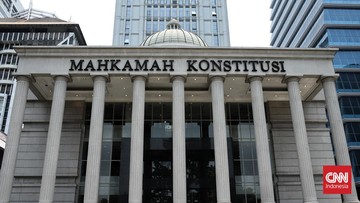
Indonesian President's Expert: Law on Insulting President Not a Threat to Free Speech
Translated from Indonesian, summarized and contextualized by DistantNews.
At a glance
News
Named sources
Context piece
- An expert for Indonesian President Prabowo Subianto argued that a law criminalizing insults to the president does not threaten freedom of expression.
- Albert Aries, a criminal law expert, stated that criticism of presidential actions or policies is not a criminal offense under the new Criminal Code (KUHP).
- He clarified that the law targets attacks on the president's honor and dignity, not general dissent, and that such cases are only pursued upon complaint.
A legal expert representing Indonesian President Prabowo Subianto has asserted that a provision in the new Criminal Code (KUHP) penalizing insults to the president does not infringe upon freedom of expression. Albert Aries, a criminal law expert, presented this argument during a judicial review hearing at the Constitutional Court.
One of the things that needs to be clarified in this judicial review is whether the issue circulating as a 'chilling effect' is true, that the existence of Article 218 of the KUHP will criminalize criticism or even become a threat to freedom of expression and opinion that differs from the president's and/or vice president's policies, even though since it came into effect on January 2, 2026, not a single complaint has been made under the article in question.
Aries explained that Article 218 of the KUHP, which addresses offenses against the honor and dignity of the president and vice president, is not intended to criminalize critics of the government. He pointed out that since the law took effect on January 2, 2026, no complaints have been filed under this article, countering claims that it creates a "chilling effect" on dissent.
According to Aries, the law specifically distinguishes between criticism of a president's actions or policies and direct attacks on their personal honor. He stated that criticism expressing disagreement is not a criminal act. The offense is defined as actions that demean or damage the president's reputation, including slander or insults like calling someone a "zoo."
Simply put, an unlawful act that can be punished according to Article 218 of the KUHP is one that attacks the honor or dignity of the president and/or vice president by means/actions that demean or damage their name or self-worth, including slander.
He further elaborated on the legal construction, noting that the KUHP's new provisions differ from the old law, particularly in that offenses against the president's honor are now considered "absolute complaint offenses." This means that while the object of the offense might seem similar to defamation, the new law allows for objective testing of the alleged facts and requires a formal complaint to initiate proceedings.
For example, with the words 'zoo' or slander.
DistantNews Editorial
Originally published by CNN Indonesia in Indonesian. Translated, summarized, and contextualized by our editorial team with added local perspective. Read our editorial standards.
More Stories


From Our Blog

What Gets Lost (and Found) When News Is Translated

The Critical Role of Diaspora Media in Global News

What Travellers Should Know About Countries with Restricted Press

A Digital Nomad's Guide to Following Local News

How the Same Story Looks Different in Different Countries
