


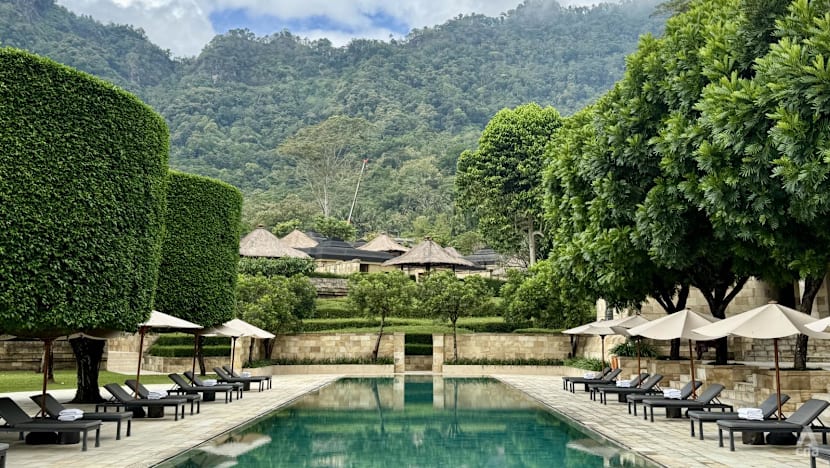
Inside Amanjiwo: Java's meditative resort inspired by Borobudur temple
Translated from English, summarized and contextualized by DistantNews.
At a glance
In-depth
Sources not specified
Context piece
- Amanjiwo resort in Central Java is designed to mirror the 9th-century Borobudur temple, offering a meditative experience.
- The resort's architecture features concentric crescents, descending terraces, and a central rotunda, echoing Borobudur's spiritual ascent.
- Located amidst scenic hills and volcanoes, Amanjiwo provides a tranquil retreat that slows down visitors and deepens their sense of peace.
Nestled in Central Java, Amanjiwo resort offers a unique architectural experience designed to evoke the spiritual journey of the nearby Borobudur temple. Opened in 1997, the Aman property is crafted from local limestone, its design intentionally mirroring the 9th-century Buddhist monument's tiered ascent towards enlightenment.
The resort's layout features suites arranged in concentric crescents, descending stone terraces, and a central rotunda topped with a dome. This design echoes Borobudur's symbolism of a spiritual progression, guiding visitors through curving passageways and stone steps that lead towards the distant temple and eventually to jade-green rice fields and volcanic vistas. The architecture itself encourages a slowing of pace and a deepening of breath, fostering a sense of serenity.
Amanjiwo is framed by the Menoreh Hills and four volcanoes, Merapi, Merbabu, Sumbing, and Sindoro, offering direct views of Borobudur, the world's largest Buddhist temple complex. The resort's secluded nature, enclosed by high stone walls, insulates guests from external noise, creating a profound sense of stillness and quietude. This tranquil environment, combined with the resort's design, aims to provide a meditative escape from the stresses of daily life.
Guests at Amanjiwo can engage in activities such as ancient archery and riverside picnics, further enhancing the connection to the natural and cultural landscape. The resort's name, meaning "peaceful soul," accurately reflects the experience it offers: a place where the architecture and surroundings converge to create pathways to inner peace and serenity.
DistantNews Editorial
Originally published by CNA in English. Translated, summarized, and contextualized by our editorial team with added local perspective. Read our editorial standards.
More Stories



From Our Blog

What Gets Lost (and Found) When News Is Translated

The Critical Role of Diaspora Media in Global News

What Travellers Should Know About Countries with Restricted Press

A Digital Nomad's Guide to Following Local News

How the Same Story Looks Different in Different Countries
