


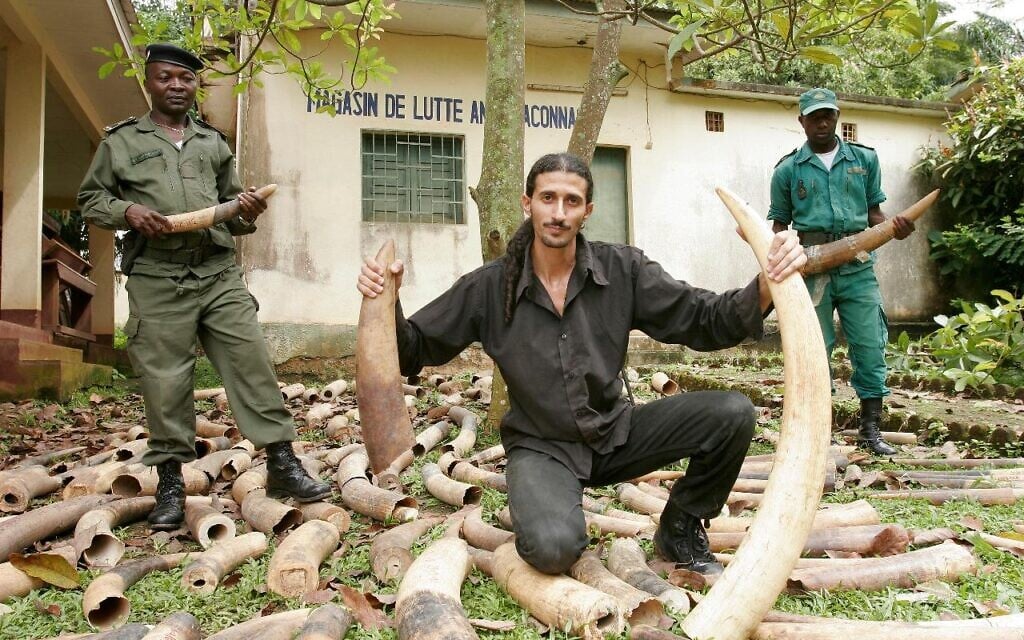
Inspired by IDF training, Israeli activist spearheads fight against global wildlife crime
Summarized and contextualized by DistantNews.
At a glance
In-depth
Named sources
Context piece
- Israeli activist Ofir Drori has spearheaded a global fight against wildlife crime, leading to the arrest of thousands of traffickers.
- Drori, inspired by his IDF training, uses a grassroots activist model to combat illegal wildlife trade.
- His work began after a pre-army trip to Kenya and subsequent travels through Africa, where he witnessed the lack of enforcement against trafficking.
Ofir Drori, an Israeli activist, has become a formidable force in the global battle against wildlife crime, successfully leading to the incarceration of approximately 3,000 major traffickers. Drori established a grassroots activist model that, despite persistent corruption, has brought about significant prosecutions where laws previously existed with little to no enforcement.
Drori's journey into activism began in the 1990s, long before his impactful work in Africa. Initially drawn to the continent by childhood stories of Tarzan, a pre-army trip to Kenya profoundly altered his path. Abandoning a planned academic career, he immersed himself in the continent's remote areas after his military service, traveling extensively by camel, horse, canoe, and on foot. During these travels, he engaged with various tribes, becoming an activist, educator, and photojournalist focused on humanitarian issues.
He credits his success to a combination of Israeli ingenuity, a willingness to think unconventionally, and skills honed during his officer training in the Israel Defense Forces (IDF). These IDF-acquired competencies include management, team building, motivation, and expertise in undercover operations and sting tactics. Drori's approach is characterized by a pragmatic and determined spirit, often described as "chutzpah."
Jane Goodall had written that apes were on borrowed time because of the illegal trade in chimp and gorilla bushmeat. I thought I’d write about it for an international magazine to raise money for NGOs fighting it. I wrote 20 pages, but I couldn’t finish because there were no heroes and nobody to fundraise for.
Drori's initial exposure to the illegal wildlife trade occurred while researching radical Islam in Nigeria, an endeavor that placed a price on his head and led him to Cameroon. It was there he encountered the devastating impact of the trade, particularly the trafficking of apes for bushmeat, a practice highlighted by Jane Goodall. Recognizing wildlife trafficking as the third-largest form of organized crime globally, after drugs and weapons, Drori dedicated himself to combating the slaughter of millions of animals for body parts used in traditional medicine and the lucrative trade in live animals and exotic meats.
One of his early significant operations involved traffickers in Cameroon attempting to sell him pangolin scales. This mission, like many others, underscores the scale and brutality of the trade, with one seizure in May 2026 alone involving 710 kilograms of pangolin scales from over 2,300 animals. Drori's work, often conducted from his Nairobi office, involves observing diverse wildlife outside his window, a constant reminder of what he fights to protect.
It’s said that wildlife trafficking is the third biggest form of global organized crime after drugs and weapons. Millions of animals, among them elephants, rhinos, pangolins and gorillas, are slaughtered for body parts that are used in Asian medicine and command high prices. There’s also a robust trade in live wild animals and in their meat, which many Africans consider a status symbol.
DistantNews Editorial
Originally published by Times of Israel. Summarized and contextualized by our editorial team with added local perspective. Read our editorial standards.
More Stories



From Our Blog

What Gets Lost (and Found) When News Is Translated

The Critical Role of Diaspora Media in Global News

What Travellers Should Know About Countries with Restricted Press

A Digital Nomad's Guide to Following Local News

How the Same Story Looks Different in Different Countries
