


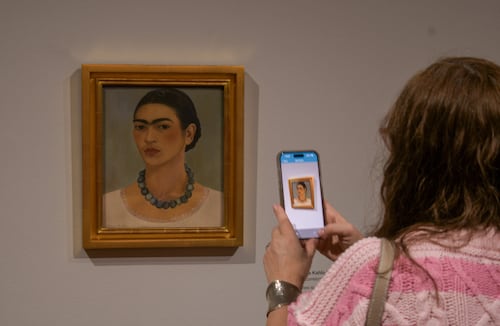
International Art Committee Raises Concerns Over Gelman Collection's Fate
Translated from Spanish, summarized and contextualized by DistantNews.
At a glance
News
Named sources
Context piece
- - The International Committee of Museums and Collections of Modern Art (CIMAM) expressed concern over the fate of the Gelman Collection.
- CIMAM highlighted risks to artistic heritage and institutional protection in the globalized economy.
- Concerns were raised about an agreement between owners, a foundation, and Mexico's National Institute of Fine Arts and Literature that lacks explicit terms for the collection's return to Mexico.
The International Committee of Museums and Collections of Modern Art (CIMAM) has voiced significant concern regarding the future of the Gelman Collection. The committee views this case as crucial not only for the heritage value of the artworks but also as an example of the broader risks facing artistic heritage and institutions' ability to protect it in today's globalized economy.
the risks that artistic heritage faces and the ability of institutions to protect it in today's globalized economy.
CIMAM noted that a five-year agreement between the collection's owners, the Zambrano family, Fundación Banco Santander, and Mexico's National Institute of Fine Arts and Literature (INBAL) does not explicitly include provisions for the collection's return to Mexico. This omission has caused considerable stir within the art community.
does not include explicit agreement for the return of the works
While acknowledging that national and international protests aim to prevent the collection's departure, CIMAM suggested that insufficient communication regarding the agreement might be a factor. The committee emphasized that clarity is a shared responsibility, extending to private individuals and organizations that own cultural heritage. They called for objective commitments from private owners and a review of legislation to identify and address any limitations.
Clarity is not only the responsibility of public institutions, but should also be demanded of private individuals and organizations that own, and therefore are responsible for, cultural heritage.
CIMAM also reflected on the issue's connection to colonialism, recalling how the heritage of colonized countries has historically been taken by colonizing nations. The high market value of such works often restricts acquisition to "first-world" collectors and institutions, leading to cultural dislocation. The committee, presided over by Amanda de la Garza, celebrated the recent announcement of the exhibition's return to Mexico in 2028 but stressed that much remains to be learned from this situation, especially in light of Mexico's Supreme Court reviewing a law that has protected Frida Kahlo's works since 1984.
The responsibility towards cultural heritage applies to both public and private owners, and ensuring its preservation cannot be separated from respecting the intangible and symbolic aspects of works that belong to the collective imagination and have special relevance in that specific context.
DistantNews Editorial
Originally published by El Universal in Spanish. Translated, summarized, and contextualized by our editorial team with added local perspective. Read our editorial standards.
More Stories



From Our Blog

What Press Freedom Means for the News You Read

What Gets Lost (and Found) When News Is Translated

The Critical Role of Diaspora Media in Global News

What Travellers Should Know About Countries with Restricted Press

A Digital Nomad's Guide to Following Local News
