

,xPosition=.5,yPosition=.5;Resize=(1200,675)&impolicy=medium)
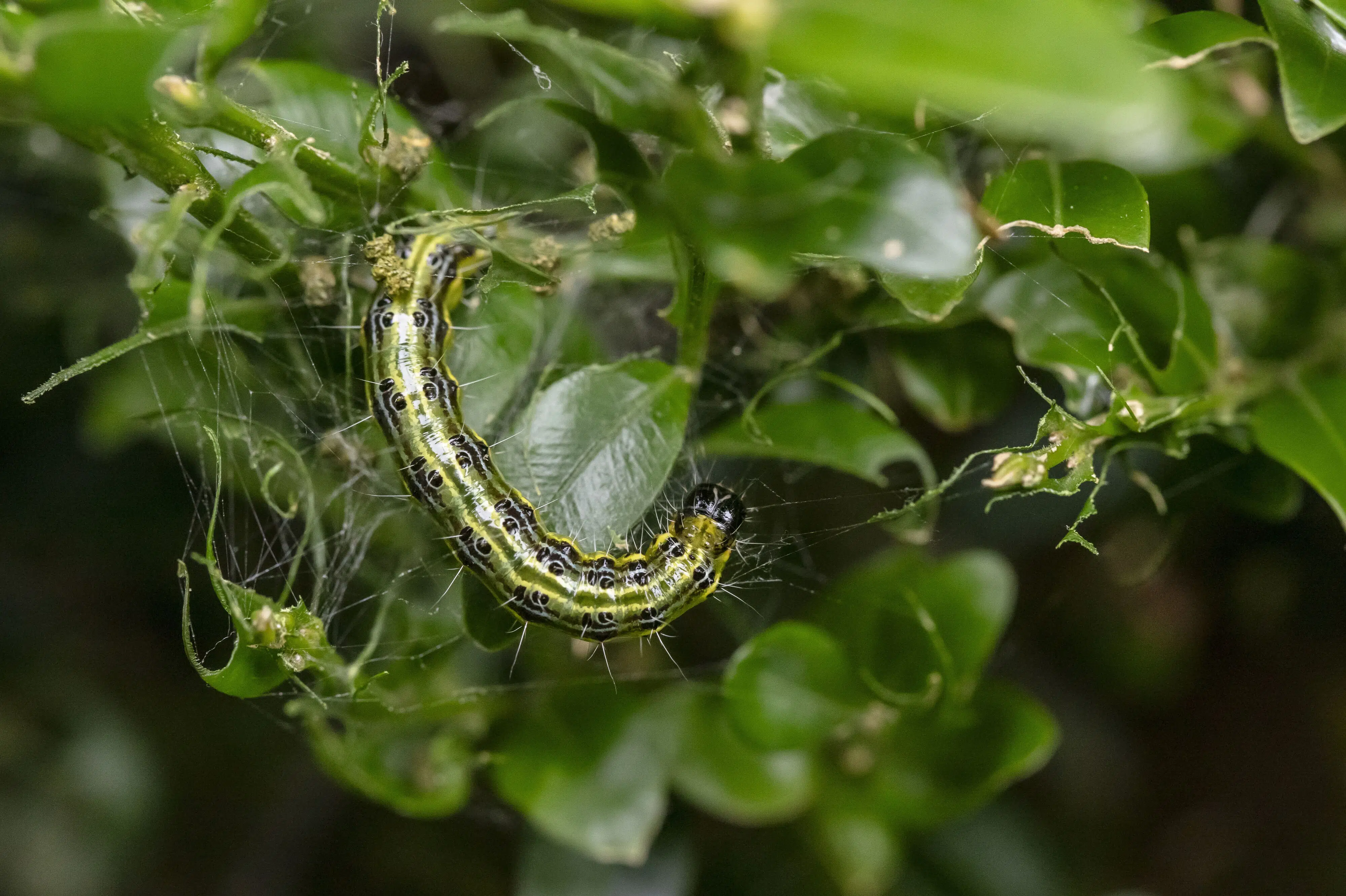
Invasive larva kills shrubs: It only appears to be getting worse
Translated from Danish, summarized and contextualized by DistantNews.
At a glance
News
Sources not specified
Context piece
- An invasive moth larva is devastating boxwood shrubs across Denmark, consuming leaves and stems.
- Pest control products are sold out, and municipalities are warning residents against discarding affected plants as garden waste.
- Experts predict the problem will worsen due to climate change and the larvae's ability to overwinter.
An invasive moth larva is causing widespread destruction to boxwood shrubs throughout Denmark, leading to a shortage of pest control products and urgent warnings from local authorities.
The larva and its attack will come again and again, and it only looks like it will get worse year by year. This is also because we are only getting a warmer climate.
The box tree moth larva feeds on the leaves and stems of boxwood plants, leaving them vulnerable to being choked and withered. Gardener technician Magnus Gammelgaard, a consultant for the Danish Horticultural Society, stated that the attacks are particularly severe and are expected to worsen annually. He attributes this to the warming climate, which allows the larvae to survive the winter more effectively than other species.
Originally from humid, subtropical regions of East Asia, the box tree moth larva can overwinter in its larval stage, making it ready to attack early in the season. Bushes in sunny, sheltered locations are especially at risk. The pest is currently active across a significant portion of Denmark.
The attacks are particularly severe because many box tree moths do not overwinter as eggs, as other larvae do. Instead, it is further along in the larval stage and is ready at a very early stage, so to speak.
Homeowners are desperately seeking ways to combat the infestation, with many garden centers reporting that pesticides are completely sold out. Martin Holmriis, a gardener and co-owner of Gug Anlæg & Planteskole, noted the high demand and queues of customers seeking these products. In response to the crisis, municipalities like Gladsaxe and Furesø have advised residents not to dispose of affected boxwood as garden waste. They recommend treating it as regular waste destined for incineration to prevent further spread.
People are desperate to get hold of it. There are many in line just to buy it.
Gammelgaard also advises gardeners with extensive boxwood plantings to consider alternative plant species to avoid future devastating attacks.
You risk getting a distribution center at recycling centers with garden waste. You should instead dispose of it as waste that goes to incineration, if you want to get rid of your boxwood plants.
DistantNews Editorial
Originally published by Berlingske in Danish. Translated, summarized, and contextualized by our editorial team with added local perspective. Read our editorial standards.
More Stories



From Our Blog

What Gets Lost (and Found) When News Is Translated

The Critical Role of Diaspora Media in Global News

What Travellers Should Know About Countries with Restricted Press

A Digital Nomad's Guide to Following Local News

How the Same Story Looks Different in Different Countries
