


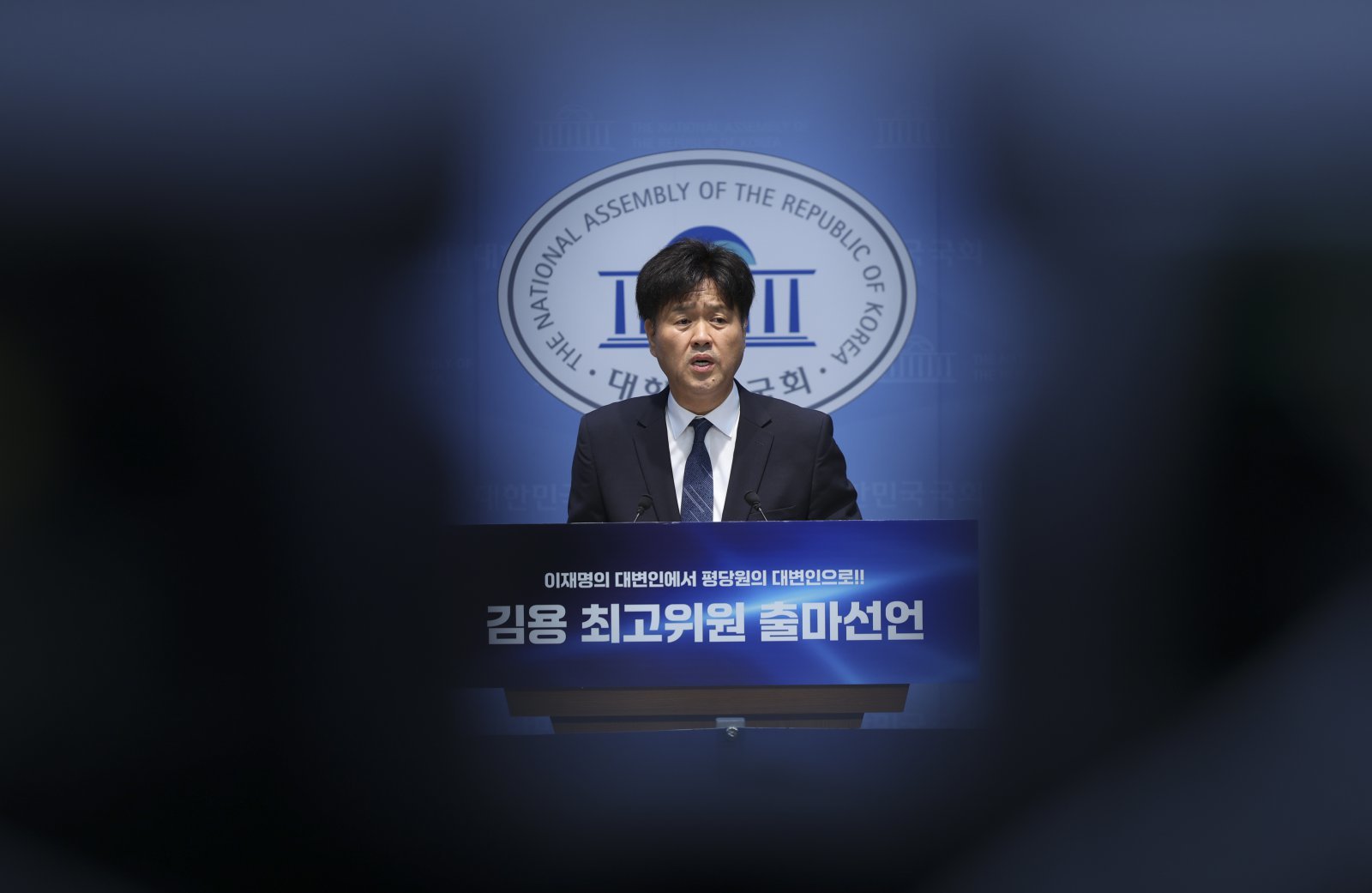
Investigation team denied access to Kim Yong trial records; plans to reapply
Translated from Korean, summarized and contextualized by DistantNews.
At a glance
News
Named sources
Under investigation
- South Korea's Supreme Court has denied a request by a special investigation team to review trial records related to former Democratic Party official Kim Yong.
- The investigation team plans to reapply, seeking clarification on the reasons for the denial, citing the need to examine evidence records.
- The court's decision has sparked internal debate within the prosecution regarding the legality and scope of the investigation team's authority.
A special investigation team's attempt to access trial records concerning former Democratic Party official Kim Yong has been blocked by South Korea's Supreme Court, leading to internal debate within the prosecution. The team, established under the Ministry of Justice's Prosecutor Human Rights Respect and Future Committee, sought to review the records as part of its investigation into Kim's alleged political fund violations and bribery.
There is a need to secure and review the prosecution's evidence records submitted to the court for related work.
The Supreme Court's decision, made on July 8, denied the team's request for access and copying of the trial records. While the specific reasons for the denial were not immediately disclosed, current criminal procedure laws generally restrict access to ongoing trial records to parties directly involved in the case, such as the defendant, lawyers, and victims.
The specific reasons for the Supreme Court's denial of access and copying of trial records could not be confirmed.
The investigation team, however, maintains that reviewing the evidence records, which include testimonies and seized items, is crucial for a thorough examination of the case. They plan to reapply to the Supreme Court, requesting a detailed explanation for the denial and intending to resubmit their application. This move comes amid growing internal criticism from within the prosecution regarding the legal basis and authority of the investigation team.
We plan to reapply to the Supreme Court after clarifying the reasons.
Several former high-ranking prosecutors have publicly criticized the team's actions, arguing that reviewing trial data for ongoing cases violates the principle of separation of powers and grants the team 초법적 (super-legal) investigative powers without clear legal grounding. Concerns have also been raised about the team's mandate, with some questioning whether it possesses actual investigative authority beyond fact-finding. The investigation team is set to relocate its office to the Seoul Central District Prosecutors' Office on July 13 for operational convenience.
Reviewing trial materials for cases currently being debated in court separately is a violation of the principle of separation of powers.
DistantNews Editorial
Originally published by Dong-A Ilbo in Korean. Translated, summarized, and contextualized by our editorial team with added local perspective. Read our editorial standards.
More Stories


From Our Blog

What Gets Lost (and Found) When News Is Translated

The Critical Role of Diaspora Media in Global News

What Travellers Should Know About Countries with Restricted Press

A Digital Nomad's Guide to Following Local News

How the Same Story Looks Different in Different Countries
