


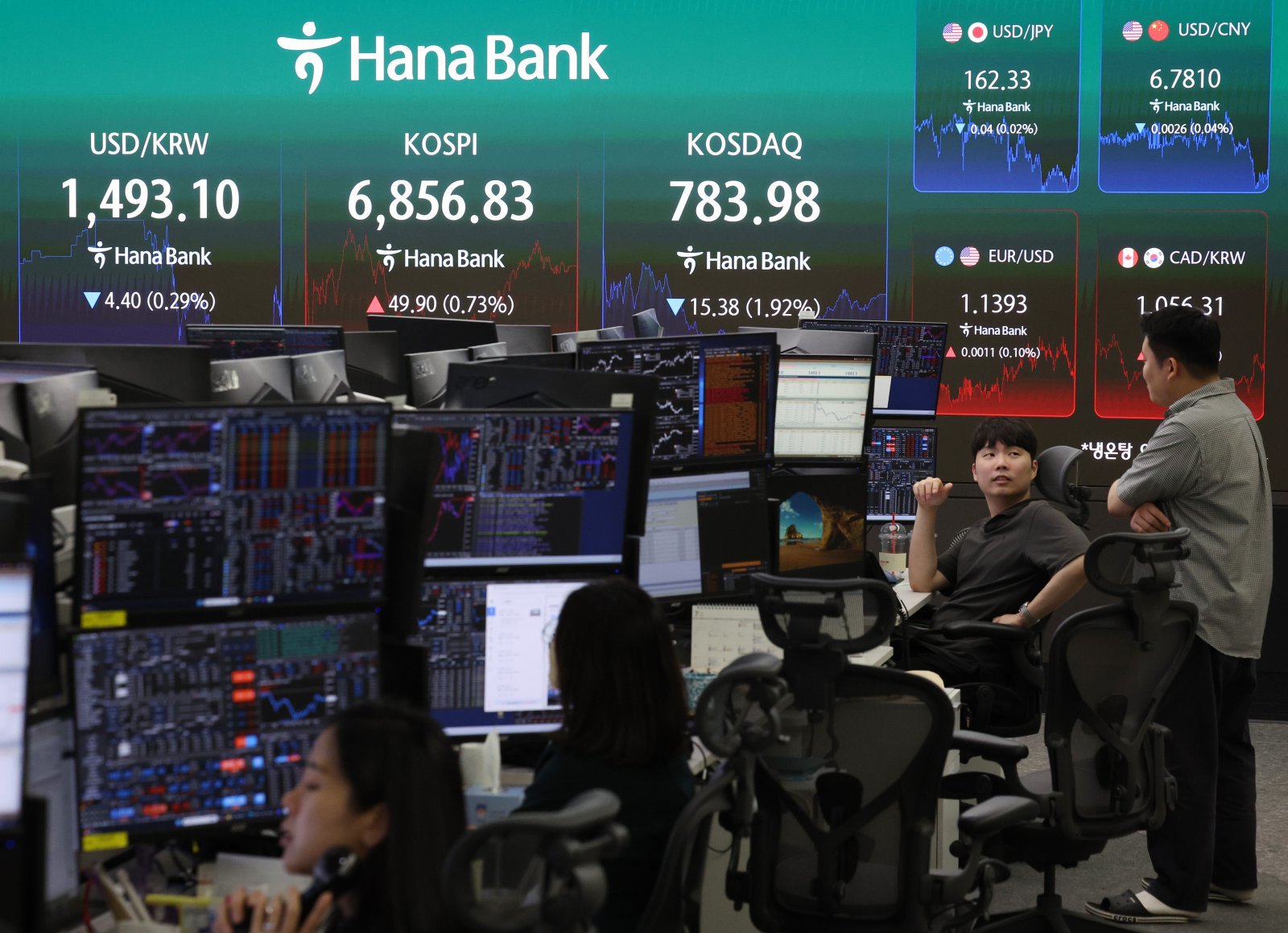
Investors flock to savings accounts as South Korean stock market tumbles
Translated from Korean, summarized and contextualized by DistantNews.
At a glance
News
Sources not specified
Context piece
- South Korean stock markets experienced a significant drop, with the KOSPI falling from over 9,000 to 6,000 points in about a month.
- In response to market volatility and rising interest rates, investors are shifting funds to safer savings accounts, with savings banks offering up to 4.5% interest.
- Both savings banks and traditional commercial banks have seen substantial increases in deposit balances, indicating a flight to safety amid economic uncertainty.
South Korean investors are increasingly seeking refuge in savings accounts as the stock market experiences a sharp downturn. The benchmark KOSPI index has plummeted from over 9,000 points to 6,000 points in roughly a month, prompting a shift in capital towards more secure financial products.
Savings banks are attracting significant attention with their competitive deposit rates, offering an average annual interest of 3.93% for one-year fixed deposits, a notable increase from the beginning of the year. Some institutions are even providing up to 4.5% interest when preferential rates are included. This surge in deposit rates reflects the broader trend of rising market interest rates as the Bank of Korea prepares for potential base rate hikes.
Even traditional commercial banks, despite offering lower interest rates (around 2.9% to 2.95% for their flagship fixed deposit products), are witnessing a substantial inflow of funds. The combined deposit balances of the five major commercial banks have increased by over 12 trillion won in the current month alone, following a similar significant rise in May and June. This indicates a widespread move towards perceived safety, regardless of the slight interest rate difference.
The trend is further supported by the recovery of savings bank deposit balances, which surpassed 100 trillion won in April for the first time in five months. Financial authorities anticipate this flight to safety could accelerate as the Bank of Korea is expected to raise its base interest rate, further influencing deposit and loan rates across the financial sector.
DistantNews Editorial
Originally published by Dong-A Ilbo in Korean. Translated, summarized, and contextualized by our editorial team with added local perspective. Read our editorial standards.
More Stories


From Our Blog

What Gets Lost (and Found) When News Is Translated

The Critical Role of Diaspora Media in Global News

What Travellers Should Know About Countries with Restricted Press

A Digital Nomad's Guide to Following Local News

How the Same Story Looks Different in Different Countries
