


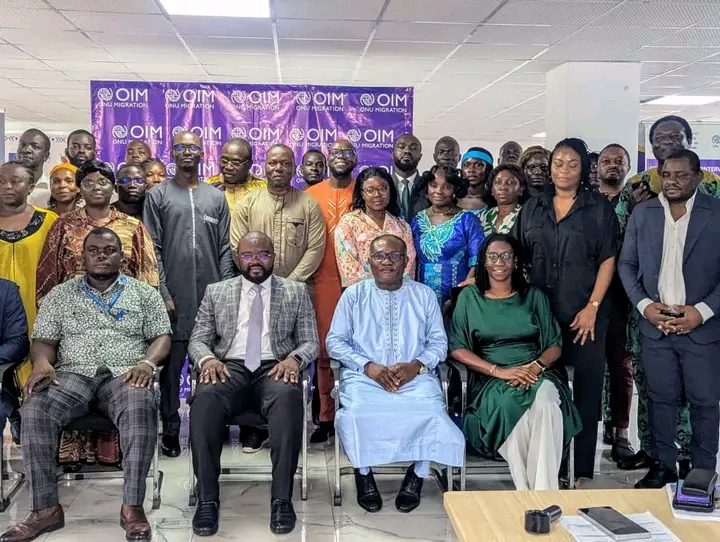
IOM: A Model Intervention for Children in Eastern Cameroon Achieves Success in Vaccination Drive
Translated from French, summarized and contextualized by DistantNews.
At a glance
News
Sources not specified
Context piece
- A vaccination reinforcement project in Cameroon's East region successfully reached remote populations.
- The initiative, supported by the IOM and Gavi, used migration mapping and mobile teams to improve vaccine coverage.
- Lessons learned from the project in Garoua-Boulaï and Ketté districts may inform future vaccination efforts in similar areas.
In Cameroon's East region, a project focused on strengthening vaccination for zero-dose children and under-vaccinated populations has yielded significant results. Implemented in the Garoua-Boulaï and Ketté health districts with support from the International Organization for Migrations (IOM) and Gavi, the program successfully reached communities previously underserved by health services.
The initiative was particularly effective in an area marked by high population mobility and access challenges. It employed strategies such as mapping migration dynamics, deploying mobile and outreach teams, and enhancing community engagement to bring vaccination services closer to vulnerable populations.
An evaluation workshop in Yaoundé, led by the Ministry of Public Health's Expanded Program on Immunization (EPI), brought together technical, humanitarian, and institutional partners. They reviewed the project's outcomes, identified effective approaches, and discussed sustainability prospects. Participants highlighted the importance of adapting strategies to local realities to boost vaccination coverage.
For the IOM and its partners, the East region experience demonstrates that reaching unvaccinated children requires a better understanding of population movements and accessible health services. The insights gained are expected to serve as a model for extending these successful approaches to other regions facing similar challenges.
DistantNews Editorial
Originally published by Journal du Cameroun in French. Translated, summarized, and contextualized by our editorial team with added local perspective. Read our editorial standards.
More Stories

From Our Blog

What Gets Lost (and Found) When News Is Translated

The Critical Role of Diaspora Media in Global News

What Travellers Should Know About Countries with Restricted Press

A Digital Nomad's Guide to Following Local News

How the Same Story Looks Different in Different Countries
