

Iran asks Houthi rebels to close Bab el-Mandeb strait if U.S. attacks energy infrastructure
Translated from Romanian, summarized and contextualized by DistantNews.
At a glance
News
Named sources
Ongoing story
- Iran has reportedly asked Houthi rebels in Yemen to close the Bab el-Mandeb strait if the U.S. attacks Iranian energy infrastructure.
- Houthi rebels have deployed missiles and drones near the strait and are awaiting orders from Iran.
- The move could disrupt global energy supplies, impacting Saudi Arabia and other nations reliant on Red Sea shipping.
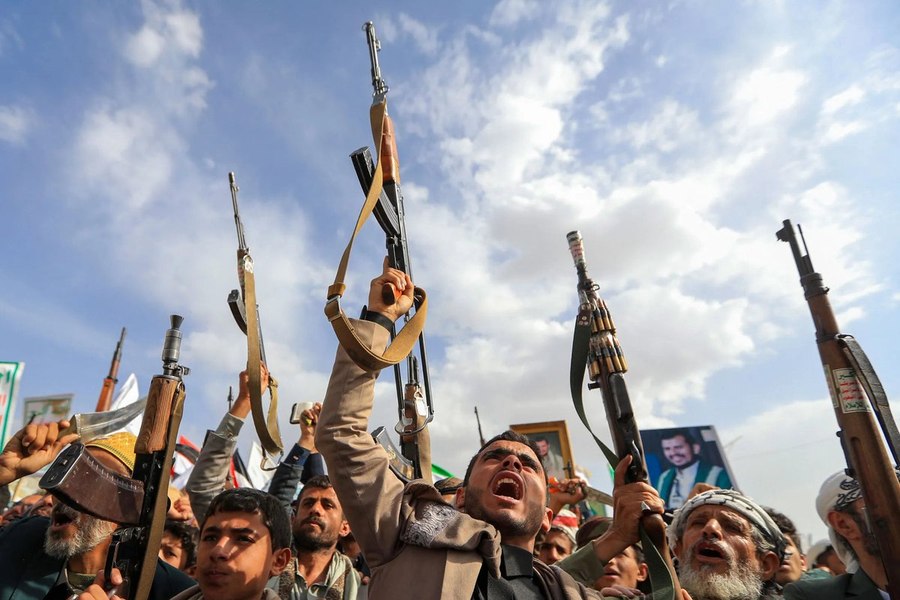
Iran has allegedly urged Houthi rebels in Yemen to block the Bab el-Mandeb strait, a critical chokepoint for Red Sea access, should the United States launch attacks on Iran's energy infrastructure. Sources cited by Reuters indicate that the Houthi movement has responded to Tehran's request by deploying missiles and drones to strategic high ground overlooking the strait and the Gulf of Aden. Rebel sources suggest the group is on high alert, awaiting direct orders from Iran, with the final decision resting with Iran's Islamic Revolutionary Guard Corps, whose representatives are reportedly in Yemen. The potential disruption of maritime traffic through Bab el-Mandeb comes amid escalating tensions, following U.S. President Donald Trump's announcement to resume blocking Iranian ports and threats to bomb Iranian energy and civilian infrastructure. Iranian authorities appear to be leveraging the threat to global trade and energy flows to exert pressure on the U.S. Any disruption to the Bab el-Mandeb strait would significantly worsen the energy crisis, especially impacting Saudi Arabia, which exports 70% of its energy resources via the Red Sea port of Yanbu. The kingdom views the escalating cooperation between Iran and the Houthis with extreme seriousness.
Anyone who has a rifle can disrupt maritime transport. Sophisticated missiles are not needed to disrupt maritime transport.
DistantNews Editorial
Originally published by Adevărul in Romanian. Translated, summarized, and contextualized by our editorial team with added local perspective. Read our editorial standards.
More Stories



From Our Blog

What Gets Lost (and Found) When News Is Translated

The Critical Role of Diaspora Media in Global News

What Travellers Should Know About Countries with Restricted Press

A Digital Nomad's Guide to Following Local News

How the Same Story Looks Different in Different Countries
