


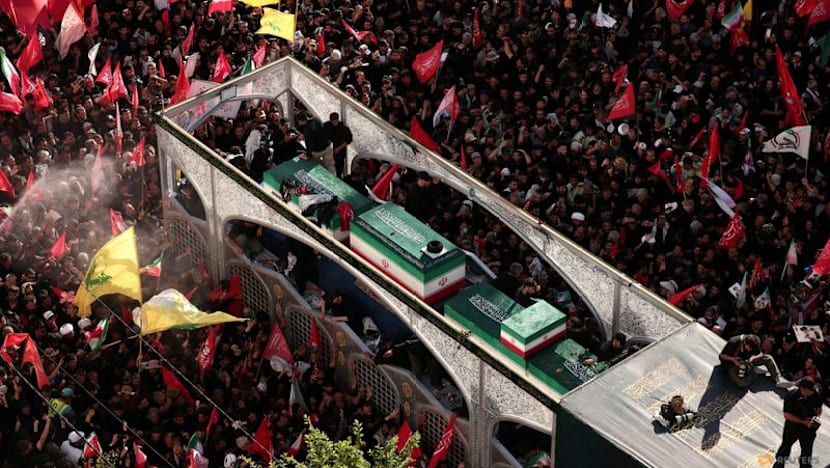
Iran buries Khamenei amid renewed US attacks, fears of escalation
Translated from English, summarized and contextualized by DistantNews.
At a glance
News
Named sources
Outcome reported
- Iran is laying to rest its former supreme leader Ali Khamenei following his killing in a US-Israeli airstrike.
- The burial coincides with new attacks between Iran and the US, fueling fears of escalating conflict.
- Senior figures attended the funeral, but Khamenei's son and successor, Mojtaba Khamenei, has not appeared publicly.
Iran was laying to rest its former supreme leader Ali Khamenei on Thursday, over four months after his killing in a US-Israeli airstrike. The burial in his home city of Mashhad occurred amidst reports of fresh attacks by both the US and Iran, intensifying fears of a return to all-out war.
Khamenei's coffin was carried into the shrine in Mashhad as a large crowd gathered outside. The funeral ceremonies have been closely watched for any sign of his son, Mojtaba Khamenei, who was named as his successor but has not appeared publicly since the February 28 strikes that killed his father and other family members. He has only communicated through written statements and is reportedly wounded.
Senior officials, including Parliament speaker Mohammad Bagher Ghalibaf and chief justice Gholamhossein Mohseni Ejei, were present at the shrine. State TV images showed some weeping over Khamenei's coffin. However, the absence of Mojtaba Khamenei remained a notable point.
The burial took place on the second day of renewed hostilities. Iranian officials reported that US strikes killed 17 people and hit a railway line. American strikes also targeted the perimeter of an Iranian nuclear power plant. Iran stated it had resumed attacks on US assets in Kuwait, Bahrain, and Qatar, while Jordan reported intercepting Iranian missiles.
Mourners in Mashhad, clad in black, chanted slogans calling for vengeance against US President Donald Trump, with banners reading "Hey Trump we will kill you."
Hey Trump we will kill you
DistantNews Editorial
Originally published by CNA in English. Translated, summarized, and contextualized by our editorial team with added local perspective. Read our editorial standards.
More Stories


From Our Blog

What Gets Lost (and Found) When News Is Translated

The Critical Role of Diaspora Media in Global News

What Travellers Should Know About Countries with Restricted Press

A Digital Nomad's Guide to Following Local News

How the Same Story Looks Different in Different Countries
