


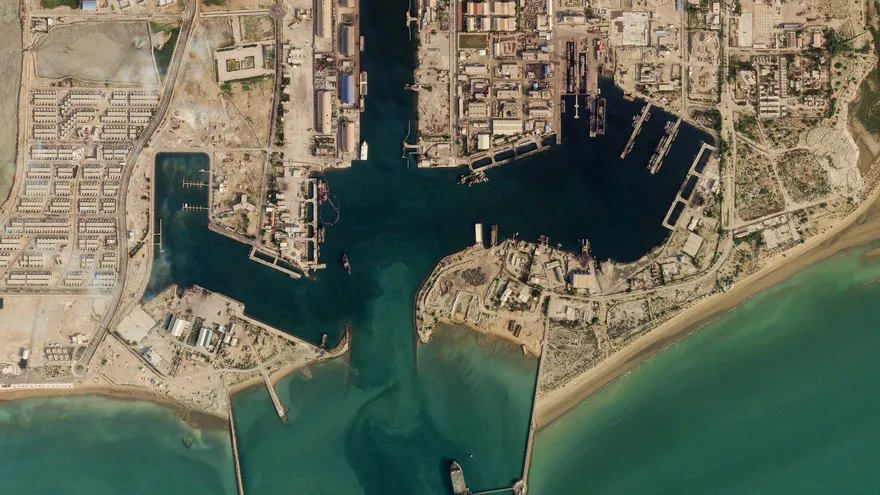
Iran closes Strait of Hormuz after U.S. attacks, escalating Gulf tensions
Translated from Spanish, summarized and contextualized by DistantNews.
At a glance
News
Sources not specified
Ongoing story
- Iran launched missiles and drones against Gulf neighbors and declared the Strait of Hormuz closed following U.S. attacks.
- The escalation jeopardizes truce negotiations and highlights the Strait of Hormuz as a critical point for an agreement.
- The U.S. military disputed Iran's claim of controlling the Strait, stating traffic continues to flow.
Tensions flared in the Persian Gulf as Iran launched missiles and drones against U.S.-allied neighbors and declared the Strait of Hormuz closed, a move that significantly escalates regional hostilities. This action follows retaliatory U.S. strikes against Iran in response to Iranian attacks on a commercial vessel.
The Strait of Hormuz will remain closed until further notice and until the end of American interventions in this region.
The escalating conflict casts doubt on ongoing negotiations aimed at permanently ending the war, with the Strait of Hormuz emerging as a key point of contention. U.S. President Donald Trump had previously declared the ceasefire "over" due to Iranian attacks on ships in this vital waterway. The U.S. Central Command (Centcom) reported conducting approximately 140 strikes against Iran, with Trump stating his country hit Iran "very hard."
this strategic step is more important than dozens of atomic bombs
In retaliation, Iran's Revolutionary Guard Corps announced the closure of the Strait of Hormuz "until further notice and until the end of American interventions in this region." Iranian media reported explosions in southern Iran and the death of a soldier. The control of the strait is considered a strategic asset for Iran, with a military advisor to the supreme leader calling the move more significant than "dozens of atomic bombs."
Iran does not control this passage
However, the U.S. military contradicted the Revolutionary Guard's claims, asserting that traffic is flowing through the Strait of Hormuz and that "Iran does not control" this passage. Pakistani diplomacy, acting as a mediator, urged both sides toward "de-escalation" and restraint. The current conflict stems from a truce agreement signed on June 17, which granted a 60-day period for negotiations to end a war that began on February 28. The U.S. bombed Iran on Tuesday and Wednesday after blaming Tehran for attacks on commercial vessels, prompting Iran's reprisal attacks.
de-escalation
DistantNews Editorial
Originally published by TVN Panamá in Spanish. Translated, summarized, and contextualized by our editorial team with added local perspective. Read our editorial standards.
More Stories

From Our Blog

What Gets Lost (and Found) When News Is Translated

The Critical Role of Diaspora Media in Global News

What Travellers Should Know About Countries with Restricted Press

A Digital Nomad's Guide to Following Local News

How the Same Story Looks Different in Different Countries
